

Latecomers on SBS is an important shift in disability representation
- Written by: Anna Hickey-Moody, Professor of Media and Communication, RMIT University
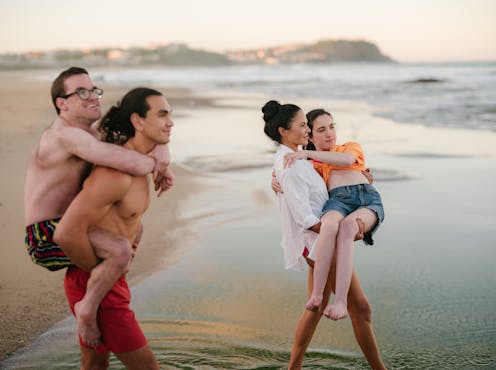
The SBS drama Latecomers is an insightful, witty and superbly produced exploration of the fragility of human life and the fear of rejection that accompanies the human need for intimacy.
Starring Angus Thompson (as Frank) and Hannah Diviney (as Sarah), actors with cerebral palsy, the show’s most distinctive appeal is how it explores the fear of rejection which accompanies all attempts at intimacy: successful or otherwise.
Globally, the screen industry has struggled to employ actors with a disability. Films such as Breathe (2017), Me Before You (2016), Margarita with a Straw (2014), The Diving Bell and the Butterfly (2007) and many others all employ actors without a disability in disabled roles.
Latecomers, however, stars actors with a disability playing characters with a disability. It is a joy to see.
Actors with a disability need to be included in screen media more often. Latecomers is particularly important because of the way it considers sex, pleasure and disability.
Disability, sexuality and sex in Australian cinema
Perhaps the one of the most significant early Australian films about living with a disability is Annie’s Coming Out (1984), an adaption of a book written by Rosemary Crossley and Anne McDonald based on a true story exploring the life of children with a disability who are institutionalised by their parents.
Annie’s Coming Out was significant because of the performance given by Tina Arhondis, an actor with cerebral palsy who was cast to play the role of Annie.
The film follows Annie’s institutionalisation and misdiagnosis as intellectually and physically disabled, before the realisation she has no intellectual disability.
Her physical therapist fights to have her released and succeeds.
The history of institutionalising people with a disability in Australia begins with colonisation. European settlers brought their asylums with them. Intellectually disabled people together with physically disabled people were also included in these group homes. By 1841, one eighth of the population in South Australia relied on public relief. The Adelaide Destitute Asylum was full beyond capacity.
Similar reliance on asylums characterised life for people with any kind of disability in Perth (Freemantle Asylum), Melbourne (the Ballarat Asylum and later the Kew Idiot’s Ward), Sydney (Parramatta, Callan Park, Gladesville Asylums). Intellectual disability was slowly extracted from psychiatric illness in the late 19th century.
By 1887 three million Australians were registered as “insane”, but institutions still housed people with “incurable” disabilities and women who had post natal depression. For example, in 1898 children with intellectual disability began being moved out of the Adelaide lunatic asylum.
It was not until the 1970s that institutional living began to be critiqued. De-institutionalisation took place unevenly over the 1980s and 1990s. In 1981, 195,243 people lived in health and welfare institutions in Australia. By 1991, this number had dropped to 168,940 and it continued to fall.
The film Dance Me to My Song (1998) also looked at women with disabilities in institutional living facilities. Written by the late Heather Rose, an actor and screen writer with cerebral palsy, the film explores Julia’s sexuality and her complicated relationship with her abusive carer.
The rates of sexual abuse of women with disabilities in institutional living facilities in Australia were alarming. Primarily instigated by male carers working in institutions, the forced sterilisation of women with disabilities in institutions became a way of “managing” – hiding – this abuse.
If women could not become pregnant there was no material evidence the abuse was taking place. Women were not only stripped of the right to choose to have sex, they have their reproductive rights taken away in an effort to cover up systemic sexual abuse.
Even today, one in four Australian women with a disability have experienced sexual violence after the age of 15, compared with 15% without disability.
This is the context in which Latecomers’ presents its exploration of disability and sexuality.
Just as Dance Me to My Song spoke to themes of power, sex and sexual control, Latecomers looks at the role of sex and sexuality in the lives of disabled people. But here, we get to join in with friendships, humour, the fear of rejection and the excitement of sex. We also get to laugh at the failure of sex at times.
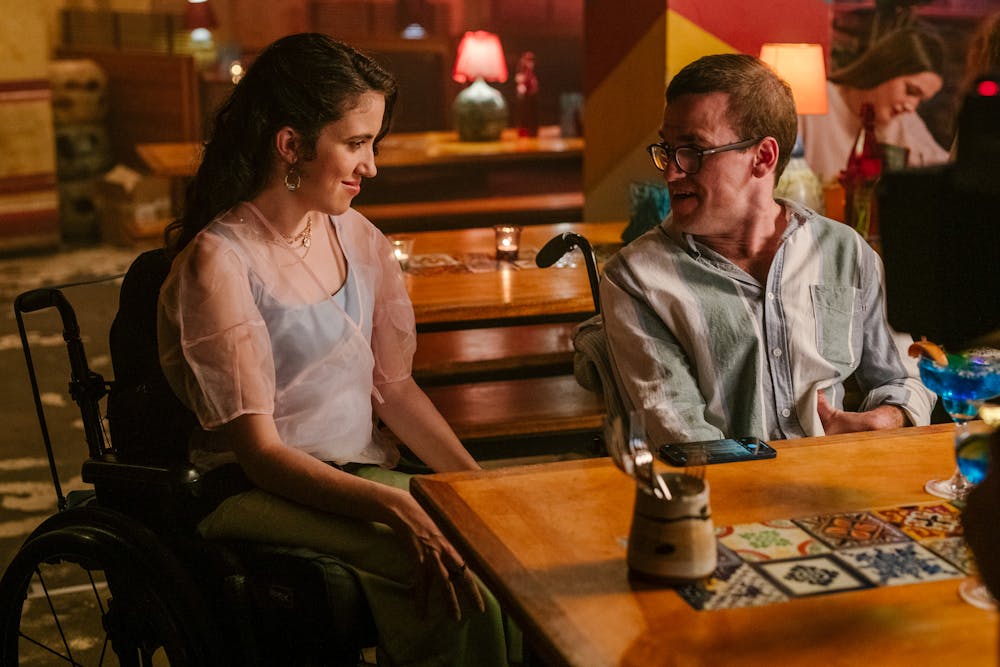
Witty approaches to disability and sex
Latecomers begins with a date. Angus Thompson’s Frank doesn’t care about a nice meal, or interesting conversation, Frank just wants to get drunk and get laid.
In trying to achieve these goals, Frank is keen to pursue the strategy made popular by generations of Australian men – tell Hannah Diviney’s Sarah she is “unfuckable”.
This statement has a complexity specific to Sarah and Frank’s disabilities that makes it more powerful than it might otherwise be. However, women who are both disabled and not disabled will relate.
These relationships are complicated by power relationships surrounding disability and these tensions play out as the show continues.
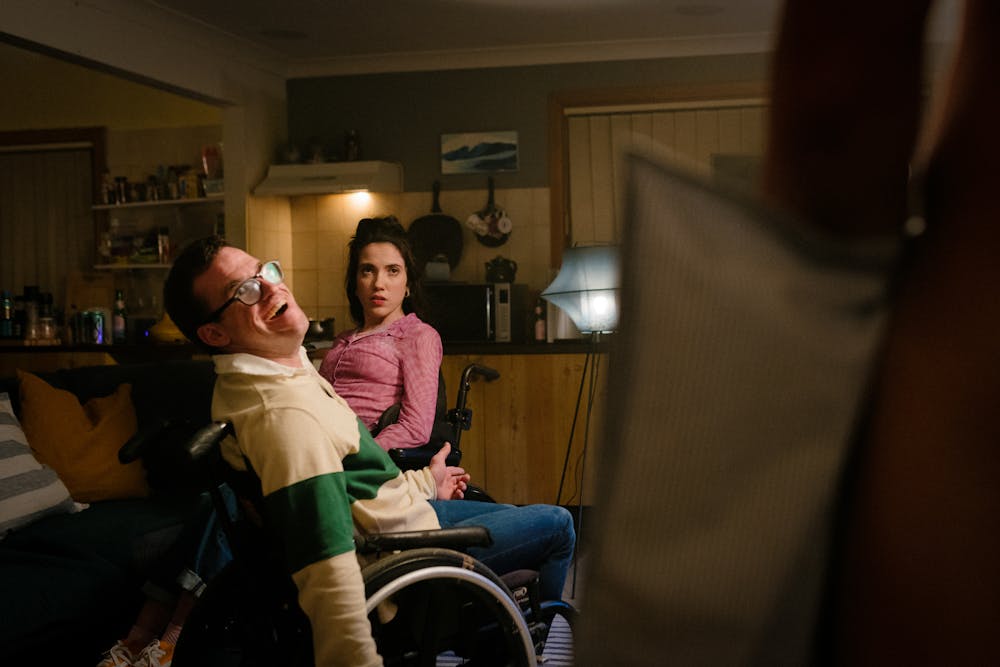 Renata Dominik/ SBS
Sarah ditches Frank for a nice guy, (Patrick Jhanur) who likes her for her wit and intelligence and who doesn’t want to tell his mates all about sex. In a media landscape characterised by sexual fantasies, I am personally relieved to see a sex scene that is not played out between two able-bodied white people.
It is a welcome change to see disabled people enjoying sex on screen. May we see much more of it.
Latecomers is a tonic for the pain and loneliness that is part of all our embodied lives – and an important step forward in how the stories of people with a disability are told on screen. Released in the same year that neurodivergent actor Chloé Hayden from Heartbreak High won the AACTA best actress audience choice awards, Latecomers signals a shift in consumer taste.
Authors: Anna Hickey-Moody, Professor of Media and Communication, RMIT University
Renata Dominik/ SBS
Sarah ditches Frank for a nice guy, (Patrick Jhanur) who likes her for her wit and intelligence and who doesn’t want to tell his mates all about sex. In a media landscape characterised by sexual fantasies, I am personally relieved to see a sex scene that is not played out between two able-bodied white people.
It is a welcome change to see disabled people enjoying sex on screen. May we see much more of it.
Latecomers is a tonic for the pain and loneliness that is part of all our embodied lives – and an important step forward in how the stories of people with a disability are told on screen. Released in the same year that neurodivergent actor Chloé Hayden from Heartbreak High won the AACTA best actress audience choice awards, Latecomers signals a shift in consumer taste.
Authors: Anna Hickey-Moody, Professor of Media and Communication, RMIT University 
















