

How common are severe side effects from COVID vaccines? And how are they detected?
- Written by: Kristine Macartney, Professor, Discipline of Paediatrics and Child Health, University of Sydney
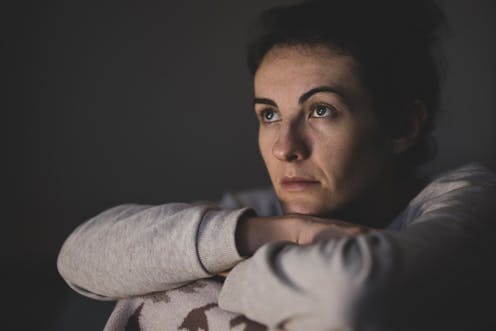
Former federal MP Dr Kerryn Phelps has talked this week about the medical problems she and her wife had after their COVID-19 vaccinations around 18 months ago.
In her submission to the parliamentary inquiry into long COVID, Phelps said her wife Jackie Stricker-Phelps had ongoing neurological problems after her first vaccine. Phelps herself experienced breathlessness and blood-pressure fluctuations after her second dose.
This has prompted public discussion about severe side effects, known as “adverse events”, after COVID-19 vaccines.
We’re vaccine experts and while we can’t specifically comment on Phelps’ concerns, here’s how adverse events are tracked, confirmed and prevented.
Understanding new health concerns
In any new large vaccine rollout, some people will experience a serious medical problem in the period after the new vaccine is given, and wonder “was it from the vaccine?”.
This is particularly the case when the problem has an uncertain cause, is not well understood or is only recently described. People naturally want to know the cause of a problem.
Good vaccine safety systems address these questions. The condition occurring in a window of time after vaccination is an obvious criterion. But other factors are crucial when determining whether one thing caused another.
It’s important to consider these other factors, because not everything that happens after a vaccine is due to the vaccine. Heart attacks, strokes, new autoimmune diseases, and death can all occur shortly after a vaccine. The key question is whether a vaccine caused or worsened the risk of a condition.
Read more: Just because someone had COVID before they had a heart attack doesn’t mean it was the cause
Tracking new adverse events
Strong vaccine safety systems are designed to identify and investigate potential new health issues related to a vaccine.
Safety assessments start early in product development then proceed to clinical trial assessments. Clinical trials, including for COVID-19 vaccines, compare a group who receive the vaccine with another receiving a placebo (or another vaccine).
These trials are large – around 20,000-30,000 people are closely monitored for many months – but can only detect relatively common side effects.
More than 13 billion COVID-19 vaccine doses have been given globally. As vaccines are given to the wider population, many countries (including Australia) monitor for rare and serious side effects.
Safety monitoring has occurred across the whole populations in more than 190 countries. Detailed epidemiological studies have also included many millions of people. These studies look at whether the risk of a condition is increased in people shortly after vaccination, compared to other times or in unvaccinated people.
So what have they found?
Some rare but serious events caused by COVID-19 vaccines were detected within months of the vaccine rollout.
Thrombosis with thrombocytopenia syndrome is a serious but rare clotting disorder. It occurs in around one in 50,000 doses of the AstraZeneca COVID-19 vaccine, with 173 cases reported in Australia. This was rapidly reported and its detection shaped the COVID-19 vaccine rollout.
Myocarditis (inflammation of the heart muscle) has been seen more frequently, particularly in teenage boys and young men after mRNA vaccines (around two to ten cases for every 100,000 second Pfizer COVID-19 vaccine doses). While most people with myocarditis related to vaccine have mild symptoms and recover over days or weeks, a small number have more serious disease or prolonged symptoms.
Other rare conditions related to COVID-19 vaccines include anaphylaxis, Guillain-Barré syndrome and immune thrombocytopenia. However, the risk for these events is lower than the serious risks from COVID-19 itself in the absence of vaccination.
There are many “signals” or suggestions that other conditions are linked to COVID-19 vaccines. A recent study, for example, suggests a common syndrome call postural orthostatic tachycardia syndrome (POTS) occurred after vaccination but was five times more common after COVID-19 itself. However, as the authors of the study pointed out, further studies are needed.
Other signals have not been substantiated by evidence at all.
The WHO Global Advisory Committee on Vaccine Safety releases regular statements as any new vaccine safety signals are investigated and confirmed.
So how does Australia track vaccine problems?
Australia monitors and assesses vaccine safety through the Therapeutic Goods Administration (TGA) and health departments, with close involvement of independent vaccine safety scientists and a range of clinical experts, by:
1) Asking clinicians and patients to report any adverse event after vaccination to the TGA
The TGA examines many severe adverse events in detail, sometimes through an expert panel. Others are tracked and classified to see if they’re being reported at unusually high rates.
The TGA has processed more than 136,000 reports for COVID-19 vaccines up to mid-November 2022. Not all reports represent events caused by the vaccine but reporting helps identify unusual patterns, including by comparing rates of a condition after vaccination to that seen usually in the population without vaccines (the background rate).
The TGA acknowledges receipt of reports but does not routinely give feedback on individual cases. In some cases, the person reporting is contacted if further information is required to either complete or assess the adverse event report.
2) Using active surveillance systems including AusVaxSafety
Researchers survey millions of people at regular intervals after vaccination to look for new signals and publish fortnightly real-time reports.
These reports and peer-reviewed studies show COVID-19 vaccines have a very good safety profile, including in people with a range of pre-existing medical conditions. These people benefit most from vaccination as they are at highest risk of complications from COVID-19.
3) Monitoring for conditions that could theoretically be a risk after vaccination
This occurs in all phases of vaccine development, clinical trials and program rollouts, often using specially designed studies and long term follow-up.
4) Getting information and safety reports from other countries, multinational groups and vaccine manufacturers
This is done continuously. Thrombosis with thrombocytopenia syndrome (the rare clotting disorder), for example, was first reported in Europe and myocarditis in Israel.
5) Looking at studies using large electronic health databases to check for for positive or negative links between vaccination and health conditions
These types of studies showed no link between measles, mumps and rubella vaccines and autism. They must take into account many factors, such as having COVID-19 itself.
A recent Danish study, yet to be peer-reviewed, for example, showed fewer new health problems four months after Omicron infection in people given a booster compared to those given only two doses of COVID-19 vaccine.
6) Using a national network of specialist clinicians to support GPs and specialists to assess patients with complex immunisation questions
This includes questions about health conditions before or after vaccines, and how to approach additional vaccine doses.
What if you have an adverse effect after vaccination?
The first thing to do is report it. Either patients or clinicians can report adverse events to the TGA.
Second, ensure your health care is managed by a GP and/or specialist who can investigate all possible causes, and seek expert support as needed.
When rare adverse events are shown to be caused by a vaccine, people should be compensated.
In August 2021, the Australian government announced a scheme to support individuals suffering from serious health conditions caused by a COVID-19 vaccination, joining many other countries in doing so.
Despite the slow implementation, no-fault vaccine compensation is a key component of a comprehensive vaccine safety program. We recommend ensuring this scheme is optimised and also includes all vaccines, not just those for COVID-19.
Transparency is essential
It’s important to have open and evidence-informed discussions about the benefits and risks of vaccination – both for COVID-19 and other vaccine-preventable diseases.
Vaccines are clearly life-saving. A recent study estimated there were 20 million fewer deaths in the first year of program rollout thanks to COVID-19 vaccines.
However, a key to achieving high coverage is confidence, which requires transparency about vaccine safety, as well as factual and empathic communication.
Authors: Kristine Macartney, Professor, Discipline of Paediatrics and Child Health, University of Sydney


















