

Already under fire politically, Three Waters is also threatened by NZ's critical shortage of skilled engineers
- Written by: Suzanne Wilkinson, Professor of Construction Management, Massey University
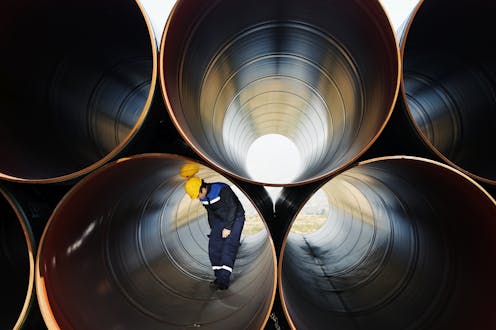
There were nearly 300 water engineer positions advertised on recruitment website Seek last month. The high demand for these specialist engineers bodes ill for the government’s Three Waters reform, which will rely heavily on experts the country currently doesn’t have in the required numbers.
The shortage mirrors the situation in other construction fields. Time and again, staff shortages have affected major infrastructure projects in New Zealand. It’s a chronic problem that needs addressing urgently.
Water engineers specialise in the design, construction and management of wastewater, drinkable water and stormwater systems. They will have typically completed a four-year engineering degree, usually civil or environmental engineering, before specialising. Competency can take an extra five years.
Currently, these specialists are in very high demand internationally. Companies regularly compete to employ engineers with five or more years’ experience, offering excellent wages and conditions. There is simply not a large enough pool of water engineers in New Zealand, and the situation is set to get worse.
A global skills shortage
The government announced the Three Waters reform program in July 2020, with the enabling (and contentious) legislation passed in December this year. It represents a radical reshaping of water, wastewater and stormwater delivery – renewing, consolidating and building a new integrated system across New Zealand.
The cost of the work is hard to determine, but is estimated to be between NZ$120 billion and $185 billion over the next three decades.
This massive infrastructure investment will clearly require a large number of staff, including unspecified numbers of engineers. A Department of Internal Affairs analysis estimates the reforms will create 6,000 to 9,000 jobs over the next 30 years.
Engineering New Zealand has outlined the need for specialised engineers that will arise from the water sector reforms. And a recent report from workforce strategists We Are Water also put a spotlight on the urgent and significant recruitment challenges:
Transformation will require thousands of new workers to design and complete capital projects and to operate the reformed industry.
To complete the Three Waters reforms, then, New Zealand will need to train more water engineers. This will take time, so the obvious next step is to look overseas. But New Zealand is competing for these specialists during a global shortage of engineers.
Water engineers and civil engineers with land development experience are on Immigration New Zealand’s “green list” for fast-track residency. It has estimated 1,500 more engineers will be needed across a range of specialities each year just to match economic growth – let alone replace those who retire or change careers.
Recruit and retain
The Association of Consulting Engineers New Zealand (ACENZ) released a report in 2021 outlining the need for 2,100 new engineers in the next 12 months.
Skills shortages can be solved with upskilling and retraining. But for water engineers, this would take a minimum of one year of specialised education or in-house company training.
Better pay and more attractive packages can help, too. But in a fiercely competitive environment, retention depends on a company’s resources, and retaining staff doesn’t actually increase the pool of available engineers.
Overseas recruitment and immigration are time-consuming, even when there isn’t an international shortage of engineers. Foreign-trained engineers would also need to complete some retraining to be familiar with New Zealand conditions.
Unless the government acts quickly, it’s hard to see how Three Waters will be started and progressed in a timely manner.
Deeper than Three Waters
Skills shortages in engineering are a perennial industry problem. New Zealand needs to balance the capacity and capability of the construction sector with all the national construction demands.
The construction sector in general faces frequent challenges in delivering the proposed national pipeline of construction work, a situation exacerbated by frequent stresses and shocks, including operating in the post-COVID environment.
Our government-funded research program CanConstructNZ has identified a need to focus on the overall sector, including planning for the entire pipeline of work and balancing this with sector capacity and capability to deliver projects.
To achieve this balance we need robust data, collected from the sector, which clearly identify capacity and capability. We can then match this data to forward work programs. CanConstructNZ is working with the Construction Sector Accord, Infrastructure NZ and the New Zealand Infrastructure Commission to help achieve this.
We have already identified that many government projects are delayed or postponed because of unfilled skills gaps in the construction sector. Without adequate long-term planning and good data, when huge projects like Three Waters disrupt the industry, skills shortages are the predictable outcome.
Authors: Suzanne Wilkinson, Professor of Construction Management, Massey University


















