

Help! My kid won't read chapter books. What do I do?
- Written by: Helen Harper, Senior Lecturer in English, Literacy and Language Education, University of New England
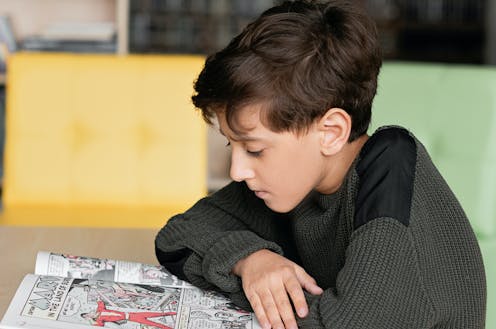
Many children start school excited about learning to read. And parents too! After many years of reading and re-reading (seemingly ad nauseam) favourite picture books aloud, it’s thrilling to see your child develop their own reading skills.
But what if they seem to be “stuck” on books that still use lots of illustrations, such as graphic novels, comics or picture books?
Many parents fret about their child still not having fallen in love with chapter books. You might mourn the fact they still aren’t reading the books you loved as a child – the Roald Dahl classics, the Narnia books or more recent releases such as the Harry Potter series.
But the fact is, it’s counterproductive to push your child to read a whole chapter book independently if they are not ready. You might turn them off reading altogether. Here’s what to do instead.
Read more: Book Week: it's not the costume that matters, but falling in love with reading
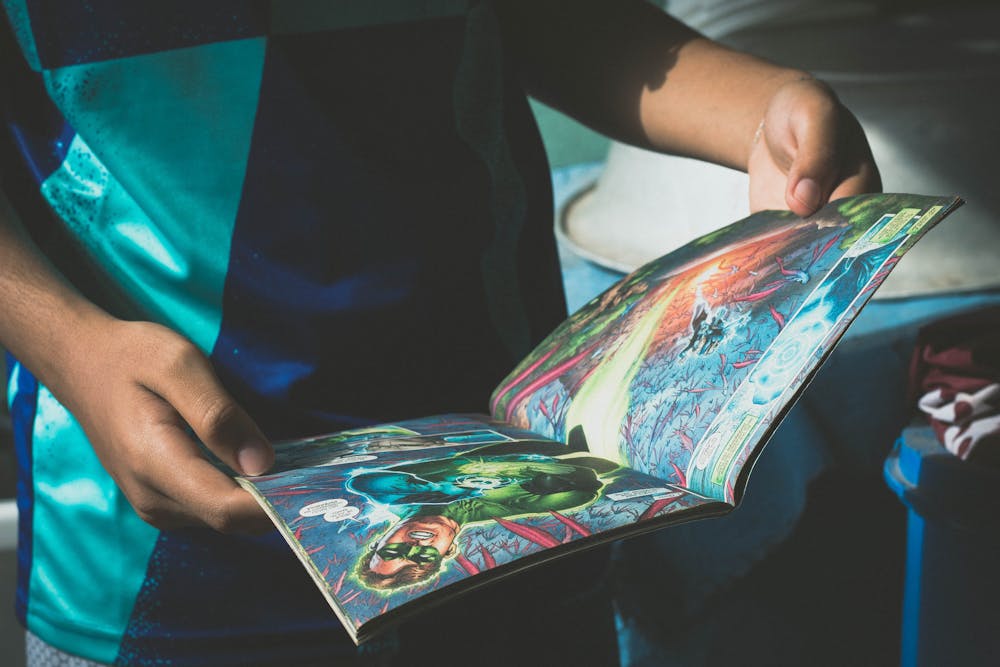
Yes, chapter books are important. But don’t rush
Chapter books are an important step in learning to read. They introduce increasingly complex storylines, themes, characters and settings.
They expand children’s vocabulary (which is essential for developing reading comprehension).
Importantly, when texts have no pictures, children must rely on decoding (recognising sound-letter relationships) to make sense of the words.
This helps with developing reading fluency (reading accurately with expression at a pace that allows for comprehension), and developing reading stamina (maintaining comprehension over longer passages of text).
But the transition to chapter books can be daunting for children. It’s a big leap from picture books, where so much meaning is carried in the illustrations, to books where readers rely solely on the print to make sense of the text.
Your child may not be ready to read entire chapter books independently. They may still not have developed what researchers call “automaticity” in their decoding skills (reading words without having to sound them out).
Automaticity frees up mental space for paying attention to meaning. In other words, if you have to stop and sound words out all the time, it’s hard to follow the plot and can take the fun out of reading.
Here are some ways you can help your child develop the skills they need to read and enjoy chapter books.
 Maybe your kids just aren’t into the same books you loved as a child – and that’s OK.
Photo by Pixabay via Pexels., CC BY
Maybe your kids just aren’t into the same books you loved as a child – and that’s OK.
Photo by Pixabay via Pexels., CC BY
Choose books that support the transition
Many books are designed to support young readers, with short chapters featuring plenty of images.
There are picture books for older children, and don’t be frightened of graphic novels. As well as visual richness, they often offer sophisticated storylines and themes.
Visit your local library and ask the children’s librarian for suggestions.
Share the reading, make it fun and keep the conversation going
Share the reading; you read a page or a paragraph, and they read a page or a paragraph, or even just a sentence or two.
This makes reading less overwhelming for kids, but still allows them to practise.
Plan reading time so it doesn’t compete with distractions such as screen time or siblings.
Your child may even like to help read a story to a younger sibling or to grandparents via Zoom.
Read alongside your child so you can share ideas about the story, author or series.
Talk with your child about movies, video games, images, art and comics. All of this talk helps build vocabulary and knowledge, which help them tackle more challenging texts.
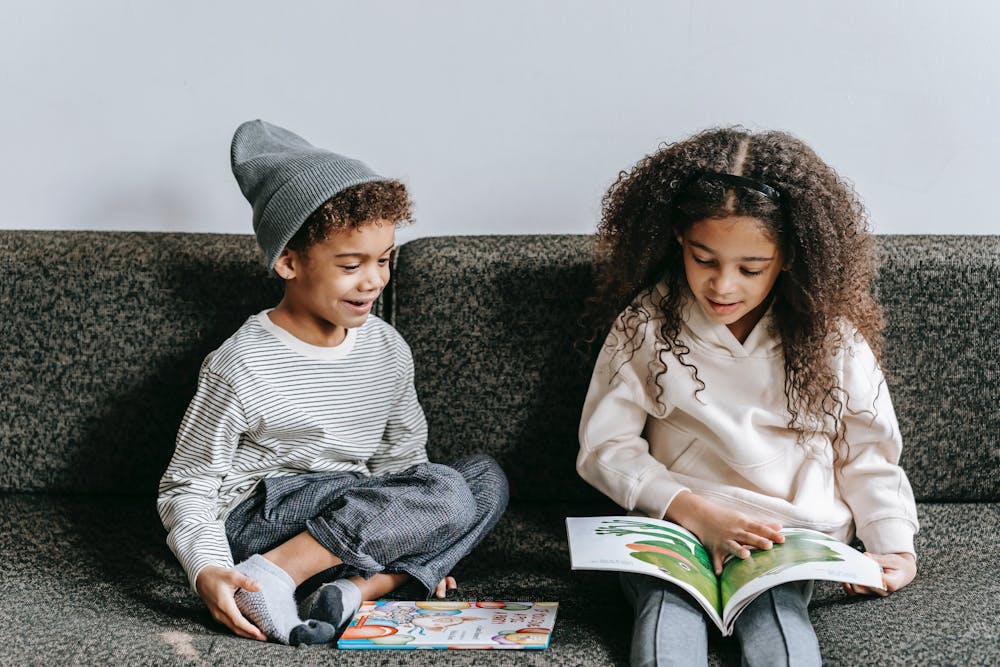 Let’s not think that picture books are only for little kids.
Photo by Marta Wave/Pexels, CC BY
Let’s not think that picture books are only for little kids.
Photo by Marta Wave/Pexels, CC BY
Respect their interests and keep it positive
Let your child explore the books they’re interested in.
Some children are not keen on fiction, and prefer to read about science or the world around them. These kinds of texts also help develop vocabulary and complex language.
Remember, reading for pleasure is associated with overall reading attainment and writing ability. It’s a big part of becoming a lifetime reader.
Yes, you can still suggest books to your child. But don’t get upset if they say no, and definitely don’t insult their tastes by putting down their favourite books and authors.
Whatever their response, keep the conversation channels open and help them feel confident about their own choices.
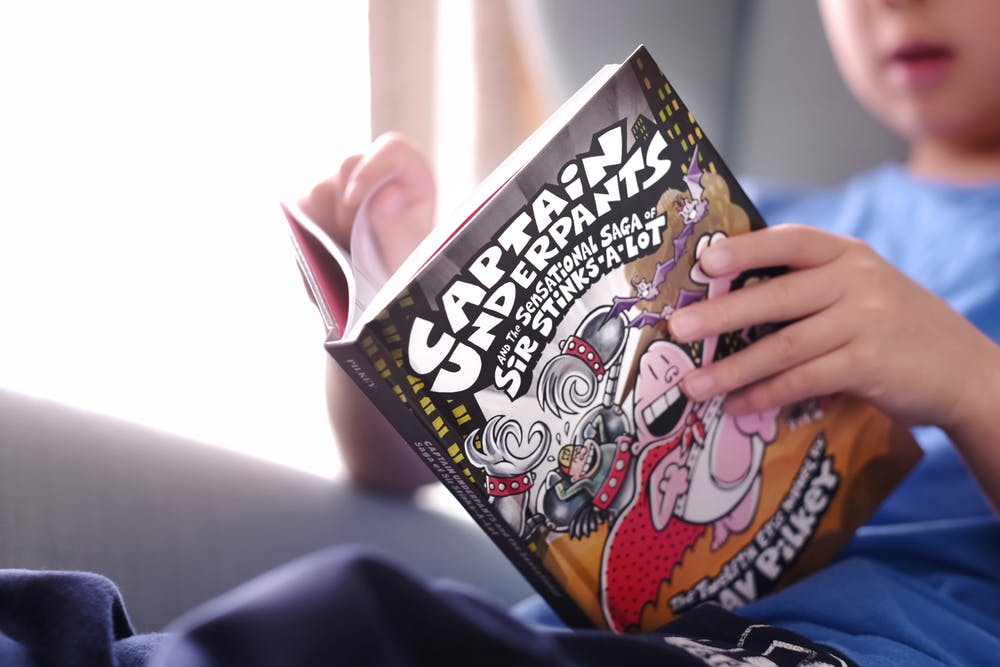 Don’t insult your child’s taste in books.
Shutterstock
Don’t insult your child’s taste in books.
Shutterstock
Check your own anxiety levels and accept it takes time
Children can pick up on parental anxiety about academic achievement.
Anxiety takes up mental space and interferes with your child’s work as they practise more challenging reading.
Children may seem to master their sounds and letters quickly, but still need years of schooling to develop the knowledge and language they need for skilled reading comprehension. They also need time to get used to the pages of full print and the smaller font size in chapter books.
Accept that learning to read is a marathon, not a sprint. It’s big work for a young person.
What if I’m still worried?
If you are really worried about your child’s reading, talk to their teacher and consider if a sight or hearing test is warranted (to check they can see the letters and discriminate language sounds).
If your child does have decoding difficulties, a systematic approach to learning about sound-letter relationships, and practice in reading accurately and fluently is important.
In the end, though, your most important role is to give time and encouragement, to maintain an interest and enjoyment in reading together and independently.
Read more: 5 ways to support children's early literacy skills and build family connections this summer
Authors: Helen Harper, Senior Lecturer in English, Literacy and Language Education, University of New England
Read more https://theconversation.com/help-my-kid-wont-read-chapter-books-what-do-i-do-195092


















