

How to maximise savings from your home solar system and slash your power bills
- Written by: Wasim Saman, Emeritus Professor of Sustainable Energy Engineering, University of South Australia
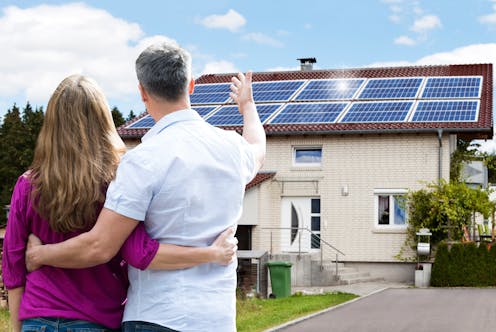
Soaring electricity prices have made 15% of Aussies think about installing solar panels, a recent survey found. Another 6% were already weighing up the move, on top of the 28% who had panels.
With costs falling, the average system size is growing rapidly. Households now typically install 8-10kW solar systems, often with a battery – roof area often limits the system’s size.
But does that guarantee no future electricity costs? No, some are still paying stubbornly high bills.
This is because they are often feeding energy into the grid during peak sunshine hours, when retailers pay low feed-in tariffs of five cents per kWh or less (a response to surging rooftop solar generation). To encourage customers to use energy at these times, retailers offer generous time-of-use (“solar sponge”) tariffs.
But the cost doubles during peak demand periods (around 6-10am and 3-11pm) when solar output is low or zero. Most rooftop solar owners are still paying for the electricity they use then.
The solution is a matter of getting three things right:
choosing efficient appliances
using smart technology or simple timers to run them during times of ample solar generation
choosing a retail electricity plan that best matches your use.
How much difference can appliances make?
To cut energy costs, the starting point is to understand your usage patterns.

Read more: Top 10 tips to keep cool this summer while protecting your health and your budget
Heating and cooling account for 30-45% of typical home energy use. Our testing at the University of South Australia suggests air conditioners use more energy as they age. Yet many homes have air conditioners older than ten years with 2-3 star ratings. Modern split systems with 6 stars use less than half as much electricity.
Users can program or control air conditioners remotely with a mobile phone to run for an hour or two before getting home. They then use cheap solar electricity to create a comfortable home. Smart and affordable controllers can also reduce cooling or heating when they sense a room is unoccupied or windows are open.
Typically, another quarter to a third of energy use is for water heating. Ample solar electricity and soaring gas prices make heat pump water heaters the best option. With government subsidies, their initial cost is similar to conventional gas or electric systems and they typically use a third of the energy.
Again, they can be programmed to heat water at times of peak solar generation and store it, thus providing almost free hot water when needed.
Many other smart appliances and lights are available. Induction cooktops deliver fast and impressive results using little electricity. Along with the microwave, air fryer and pressure cooker, they can reduce energy use. Ovens and slow cookers can be programmed to use solar power and have meals ready when we get home.
As well as having options with high star ratings, appliances to wash and dry clothes and dishes can easily be set to run during sunshine hours.
Energy-efficient fridges also cut costs. However, while people are happy to buy such fridges, our research survey found some keep the old one, using three to four times the electricity, for drinks.
Homes with swimming pools or spas are notorious for having the highest electricity bills. A pool will typically use 2,000-3,000kWh of electricity per year (depending on type of pump, hours of use and whether the pool is heated), at a cost of A$700-1,200. Solar pool heaters are an excellent alternative. A simple timer switch can ensure most power is consumed during sunshine hours.
A typical outdoor spa uses 5kW for water heating and circulating. Much heat is lost to the surroundings if you let the thermostat keep it warm all the time. By installing a timer switch, you can use solar power for heating and have the spa ready for use after working hours.
Use smart technology to control time of use
The key to making the best use of your solar output is avoiding energy wastage and matching the timing of energy supply with household demand. An affordable smart control system – for the whole home or individual appliances – can do this.
This system can set seven-day schedules for all appliances. It can turn off lights and air conditioning after you leave home. On a hot day, it can lower blinds and switch on the ceiling fan and air conditioner before you return, then adjust the bedroom temperature for comfortable sleep.
With improved energy supply and demand forecasting and artificial intelligence, future controllers will provide the optimal energy options with little human intervention. If smart gadgets are not for you, simple timer switches start at less than $10.
Energy storage remains a key technology for enabling use at night and on days of no sunshine. A recent Conversation article discussed home batteries.
Read more: Thinking of buying a battery to help power your home? Here's what you need to know
Another emerging technology is thermal batteries for heating and cooling. During sunshine hours a reverse-cycle air conditioner generates heat or cool to store in the thermal battery (commonly as hot or chilled water) for later use.
Electric vehicles that connect to the grid will go a long way towards making better use of rooftop electricity and storing it for evening use. Their battery capacity is several times that of home batteries.
Find the best energy plan for your home
With 45 energy retailers in southern and eastern Australia, each offering multiple tariffs, it’s no wonder consumers are confused about which one to choose. The Australian Energy Regulator provides the most reliable guide. By uploading a few basic details, including the National Meter Identifier (NMI) shown on your bill, you can find the best offers based on your recorded electricity use.
Using this site, my son, who had paid an $800 quarterly bill despite having a large solar system, achieved a potential annual bill below $1,500 simply by switching retailers. Installing a timer switch so their outdoor spa uses solar electricity, instead of paying 33c/kWh, is likely to further save up to $5 a day. Their goal of no electricity bills is becoming a reality.
We are seeing the emergence of a new Australian dream of living in a well-designed home with rooftop solar, an electric car and smartly controlled energy-efficient appliances. It will enable most single/double-storey households to be carbon-neutral while living in comfort without a big hit to their hip pockets.
Authors: Wasim Saman, Emeritus Professor of Sustainable Energy Engineering, University of South Australia


















