

two new books clarify what's at stake if we fail to mitigate climate change
- Written by: Kate Crowley, Adjunct Associate Professor, Public and Environmental Policy, University of Tasmania
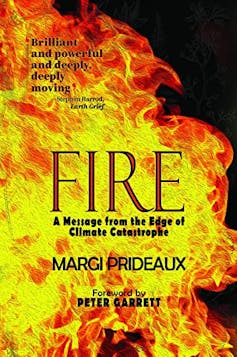
The Australian Black Summer fires of 2019-2020 were unspeakably grim. Twenty-four million hectares were burnt, 33 people died, and over a billion animals perished.
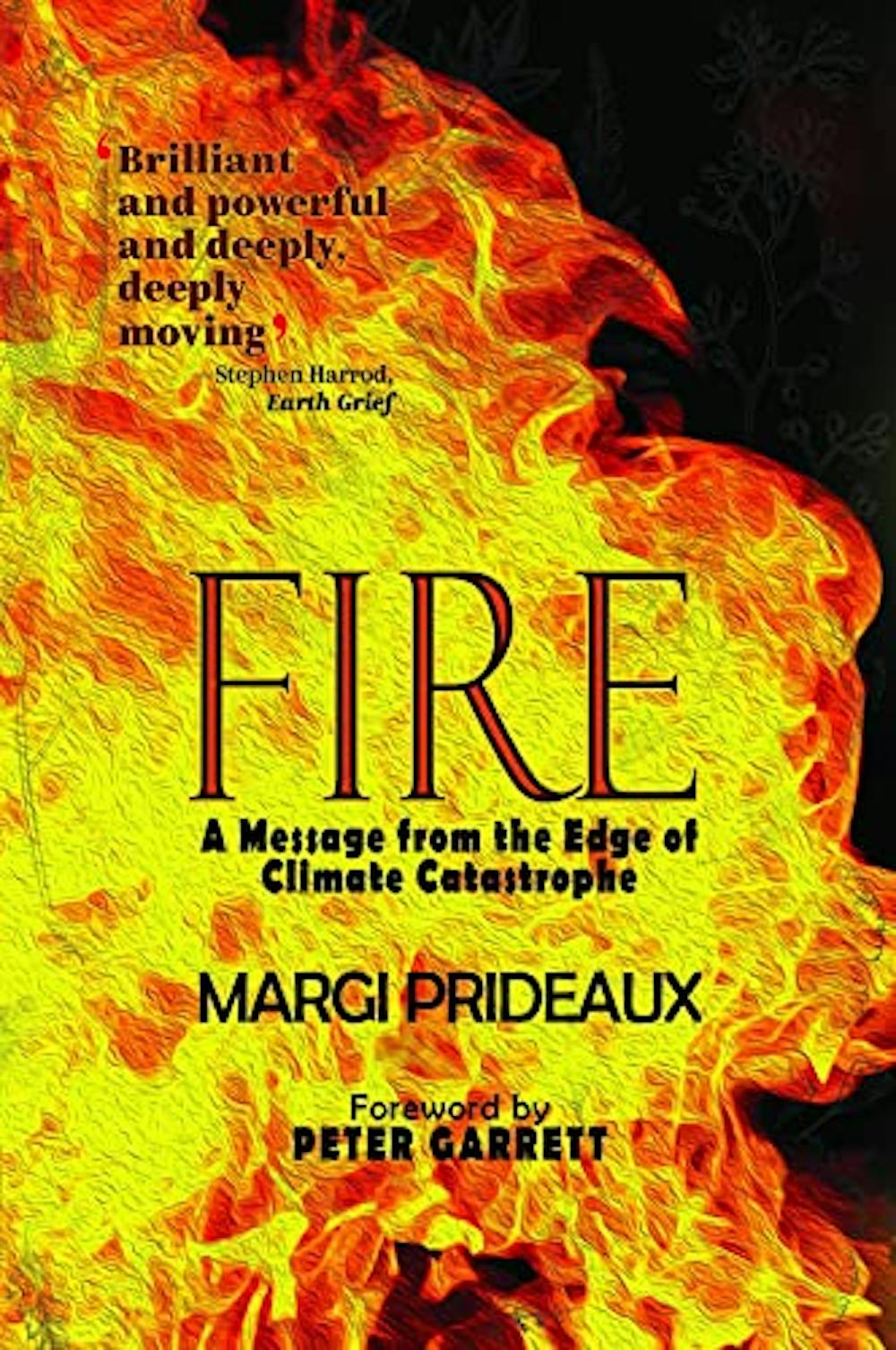
In Fire: A Message from the Edge of Climate Catastrophe, Margi Prideaux tells us that on Kangaroo Island, which lies off the Australian mainland, just south-west of Adelaide, 211,500 hectares were burnt, two human lives were lost – a fire-fighting father and son – and 60,000 farm animals died.
But so much more was lost as the Kangaroo Island community sought to save itself from the monster fire that was started by a lightning strike, burst into two pyrocumulonimbus clouds, and devoured everything before it at lethal, unstoppable speed.
It will take years before the toll on the island’s biodiversity is fully understood, not least because these fires burned “hotter, deeper and were far more extreme” than its landscape has adapted to.
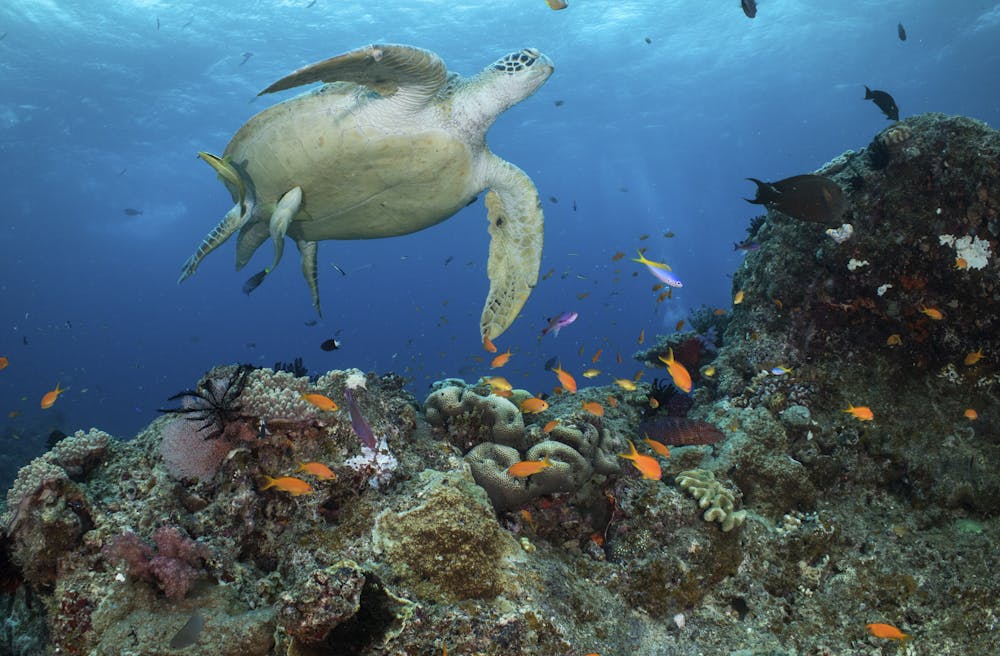 A green turtle swimming at Ribbon Reef near Cairns, Australia, 2019.
Great Barrier Reef Marine Park Authority.
HOGP/AP
Read more:
Australia's Black Summer of fire was not normal – and we can prove it
Reef in danger
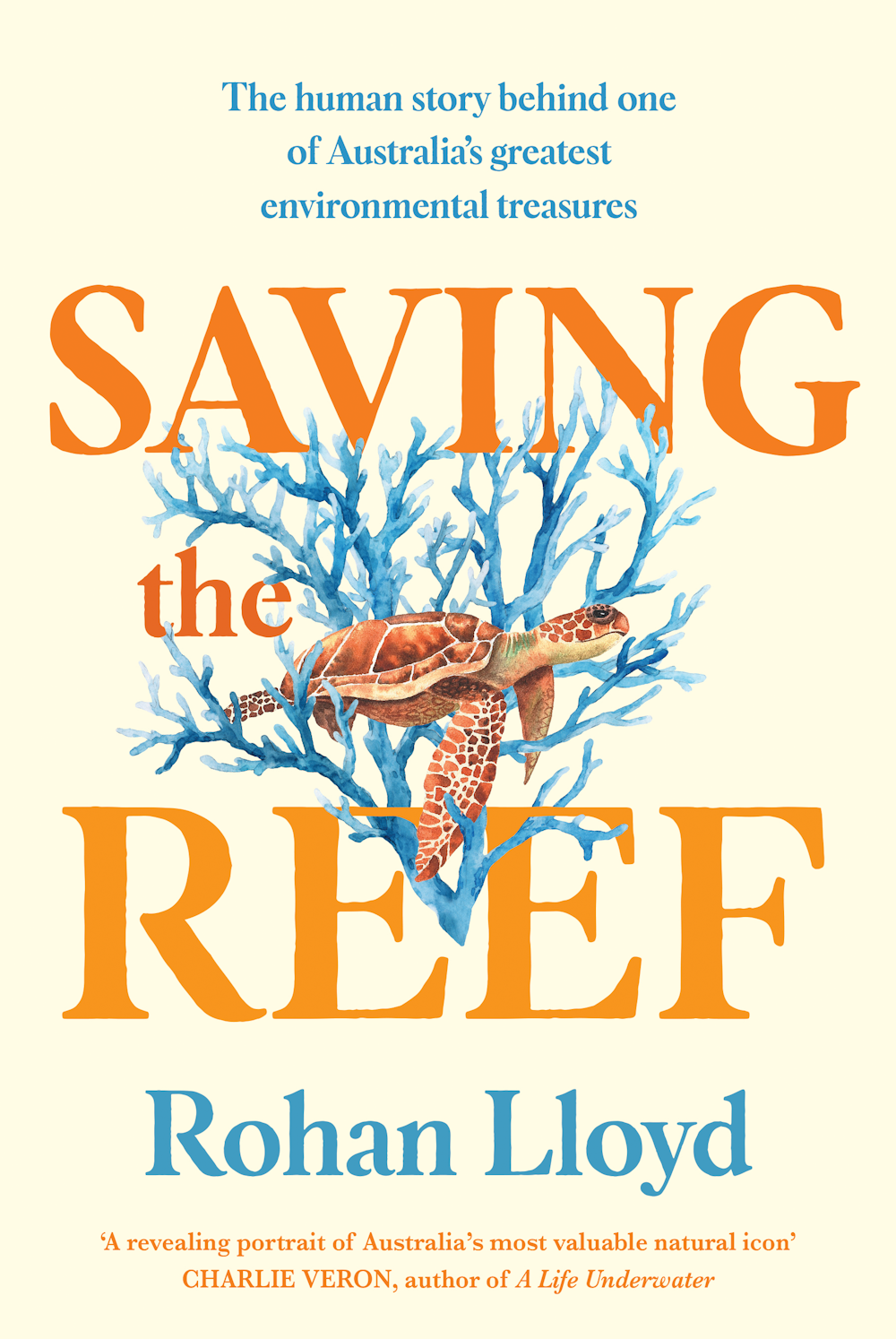
Loss also hits hard in Rohan Lloyd’s Saving the Reef.
The Great Barrier Reef is one of the seven wonders of the natural world. It is the only living thing on earth visible from space.
Since its inclusion in UNESCO’s World Heritage List in 1981, it has lost over half its coral. It is now listed as “in danger”. It will be gone, as will all coral reefs, if global warming is not held at 1.5 degrees above pre-industrial levels.
Saving the Reef is a forensic, historical cataloguing of loss. Lloyd describes an ecosystem suffering a gruesome death by a thousand cuts – from the loss of beche-de-mer, pearl and trochus shell fisheries, to the damaging effects of invasive species, coral mining, the oil and tourism industries, and, increasingly, from climate change.
Lloyd is an environmental historian, curious about the Western impact on the Great Barrier Reef since first contact. He pieces together the historical evidence and finds that the roots of the reef’s present danger can be readily found in the past.
“Our current crisis,” he writes, “is a messy knot that has threads entangling back through time that can’t be unravelled but can be seen.”
A green turtle swimming at Ribbon Reef near Cairns, Australia, 2019.
Great Barrier Reef Marine Park Authority.
HOGP/AP
Read more:
Australia's Black Summer of fire was not normal – and we can prove it
Reef in danger
Loss also hits hard in Rohan Lloyd’s Saving the Reef.
The Great Barrier Reef is one of the seven wonders of the natural world. It is the only living thing on earth visible from space.
Since its inclusion in UNESCO’s World Heritage List in 1981, it has lost over half its coral. It is now listed as “in danger”. It will be gone, as will all coral reefs, if global warming is not held at 1.5 degrees above pre-industrial levels.
Saving the Reef is a forensic, historical cataloguing of loss. Lloyd describes an ecosystem suffering a gruesome death by a thousand cuts – from the loss of beche-de-mer, pearl and trochus shell fisheries, to the damaging effects of invasive species, coral mining, the oil and tourism industries, and, increasingly, from climate change.
Lloyd is an environmental historian, curious about the Western impact on the Great Barrier Reef since first contact. He pieces together the historical evidence and finds that the roots of the reef’s present danger can be readily found in the past.
“Our current crisis,” he writes, “is a messy knot that has threads entangling back through time that can’t be unravelled but can be seen.”
 Lloyd appreciates the way that different voices, including the voices of First Nations people, have told differing stories about the reef. Differing economic, cultural and environmental values have been attributed to it. And the threats that it has faced have varied greatly over time.
Saving the Reef documents several fraught, but ultimately successful, efforts to stave off rampant exploitation of the reef’s resources. Mineral and oil exploration were early, significant threats. Then came the plague of crown-of-thorns starfish, followed by tourism and over-fishing.
Today the most immediate environmental concerns are marine debris, agricultural run off, and the overwhelming need to ward off the effects of extreme weather events and the ravages of global warming.
Lloyd describes the clash between exploitation and protection that led to the establishment of the Great Barrier Reef Marine Park Authority. Of particular note is his analysis of the tensions that arose between the Commonwealth and Queensland governments, with the oil companies and conservationists caught between.
Notable, too, is Lloyd’s awareness of the plethora of competing interests still staking a claim in the future of the reef. Conservationists, naturalists, geologists, developers, tourism operators, and industry lobby groups are all still looking to influence future decisions.
Read more:
Friday essay: 'I feel my heart breaking today' – a climate scientist's path through grief towards hope
Hope in the face of disaster
Fire and Saving the Reef are both written on the edge of catastrophe. But the catastrophe is clarifying for Prideaux, just as historical understanding is clarifying for Lloyd – and essentially for the same reason. The past offers our best hope, providing lessons for averting future disaster.
If we are on the brink of losing everything, Prideaux writes, having just lost everything herself, then we have no choice. We must radically empower local action. First Nations peoples, farmers, fishers, conservationists, landholders and scientists must sit and plan together to protect local communities and environments.
Both authors are wary of government and its motives. They see bureaucratic processes as distractions from real, measurable action. Bureaucrats have not prevented bush fire disasters, nor have they protected communities. Greenhouse gas emissions are not reducing and reef restoration simply tinkers in the face of catastrophic global warming.
But both books offer some hope. For Prideaux, the bushfire catastrophe inspires radical localism; for Lloyd, saving the reef is also a local project for many. Both authors are acutely aware, however, that the losses they document have global causes and that now is the time for Australia to act urgently to reduce its contributions to climate change.
Authors: Kate Crowley, Adjunct Associate Professor, Public and Environmental Policy, University of Tasmania
Lloyd appreciates the way that different voices, including the voices of First Nations people, have told differing stories about the reef. Differing economic, cultural and environmental values have been attributed to it. And the threats that it has faced have varied greatly over time.
Saving the Reef documents several fraught, but ultimately successful, efforts to stave off rampant exploitation of the reef’s resources. Mineral and oil exploration were early, significant threats. Then came the plague of crown-of-thorns starfish, followed by tourism and over-fishing.
Today the most immediate environmental concerns are marine debris, agricultural run off, and the overwhelming need to ward off the effects of extreme weather events and the ravages of global warming.
Lloyd describes the clash between exploitation and protection that led to the establishment of the Great Barrier Reef Marine Park Authority. Of particular note is his analysis of the tensions that arose between the Commonwealth and Queensland governments, with the oil companies and conservationists caught between.
Notable, too, is Lloyd’s awareness of the plethora of competing interests still staking a claim in the future of the reef. Conservationists, naturalists, geologists, developers, tourism operators, and industry lobby groups are all still looking to influence future decisions.
Read more:
Friday essay: 'I feel my heart breaking today' – a climate scientist's path through grief towards hope
Hope in the face of disaster
Fire and Saving the Reef are both written on the edge of catastrophe. But the catastrophe is clarifying for Prideaux, just as historical understanding is clarifying for Lloyd – and essentially for the same reason. The past offers our best hope, providing lessons for averting future disaster.
If we are on the brink of losing everything, Prideaux writes, having just lost everything herself, then we have no choice. We must radically empower local action. First Nations peoples, farmers, fishers, conservationists, landholders and scientists must sit and plan together to protect local communities and environments.
Both authors are wary of government and its motives. They see bureaucratic processes as distractions from real, measurable action. Bureaucrats have not prevented bush fire disasters, nor have they protected communities. Greenhouse gas emissions are not reducing and reef restoration simply tinkers in the face of catastrophic global warming.
But both books offer some hope. For Prideaux, the bushfire catastrophe inspires radical localism; for Lloyd, saving the reef is also a local project for many. Both authors are acutely aware, however, that the losses they document have global causes and that now is the time for Australia to act urgently to reduce its contributions to climate change.
Authors: Kate Crowley, Adjunct Associate Professor, Public and Environmental Policy, University of Tasmania 

















