

Streaming platforms will soon be required to invest more in Australian TV and films, which could be good news for our screen sector
- Written by Oliver Eklund, PhD Candidate in Media and Communication, Queensland University of Technology
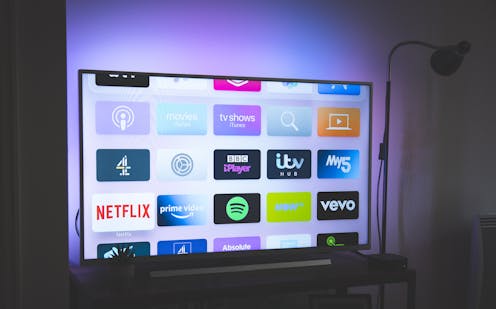
Streaming platforms like Netflix, Amazon Prime Video, and Disney+ will soon face regulations to invest in Australian content, as Australian regulations catch up to other world players.
Nearly eight years since the launch of Netflix in Australia in 2015, redressing the “regulatory gap” between unregulated streaming platforms and regulated traditional television is front-of-mind for Arts Minister Tony Burke.
Streaming regulations in Australia
Announced as part of the Labor Party’s new National Cultural Policy, a 6-month consultation period will commence looking at the shape and intensity of new streaming regulations. The implementation deadline for the new streaming regulations will be no later than 1 July, 2024.
The regulation is shaping up as a revenue levy, where a percentage of a streaming platform’s Australian-derived revenues will be required to be spent on local television and films. Existing television regulations in Australia include the transmission quota of 55% local content on commercial free-to-air television, and the 10% expenditure requirement on pay-TV drama content. A revenue levy would be a new policy mechanism in Australia’s television regulation arsenal.
There is a particular urgency to regulating local content on streaming platforms for the government – in 2020-21, Australians for the first time were more likely to watch online video than traditional television. Major American streaming platforms now dominate the viewing landscape, with Netflix a mass service in Australia reaching over 50% of television households.
The government is concerned with the growth of online video that lacks cultural regulation, and fears this, combined with the prominence of American platforms, could contribute to a “drowning out” of Australian voices and stories. Regulating local content on streaming platforms is a way to underpin Australian cultural identity, to ensure Australians will continue to see themselves reflected onscreen, and to support the screen sector with jobs and investment.
Some industry stakeholders like Screen Producers Australia are on record arguing strongly for a high revenue levy of 20%. There are estimates a levy of 20% would result in around $500 million a year alongside 10,000 jobs in the screen sector.
However, some experts have warned such a high levy on local and global platforms could backfire and reduce the competitive edge domestic service Stan might have with Australian content. If every service is required to invest in Australian content, there is less to distinguish Stan’s place in the sector.
Read more: How local content rules on streamers could seriously backfire
Opposition to the new regulation
Unsurprisingly, the major streaming platforms have previously expressed their opposition to new regulation, believing their current levels of investment in Australia are sufficient. The Australian Communications and Media Authority reported Australian content expenditure from five major platforms at $335.1 million in the 2021-22 financial year.
While lobbying against new regulations, the streaming platforms have also been planning ahead for potential obligations. Amazon’s revival of Neighbours for instance would be a big help towards meeting future Australian content obligations.
The government has not been drawn on what percentage a revenue levy would be set at – that’s what the consultation period is for, they say. Nonetheless, no figure has been ruled out either.
Streaming regulations around the world
Some countries around the world have much more advanced regulatory frameworks than Australia for regulating streaming platforms. There are important lessons to impart from these countries, both in terms of seeing what sort of regulation is possible, but also understanding the pitfalls of potential regulation.
The European Union is widely considered the global leader in the regulation of digital platforms. The EU legislated a 30% catalogue quota for European works on streaming platforms in 2018 under the Audiovisual Media Services Directive, which was intended to come into force in 2021. However, several EU member states were slow in implementing this.
The catalogue quota considers the overall size of a streaming library and requires that 30% of these titles are European. For example, the average Netflix library in major markets was around 5,300 movies and TV shows in 2021, which would result in approximately 1,590 European titles. The catalogue quota uses a broad definition of “European” works which includes a range of countries across Europe beyond the EU itself, such as Turkey and ironically the United Kingdom.
Australia’s focus on a revenue levy on streaming platforms looks more like some of the additional regulations from EU member states legislated under the Audiovisual Media Services Directive. France, which has a history of strong cultural policy and “cultural exception”, has been aggressive in legislating a high revenue levy. The French levy of 20-25% is at the higher end in Europe and is also a country that Screen Producers Australia explicitly referenced when arguing for a 20% levy in Australia.
Read more: Amazon's resuscitation of Neighbours: can Aussie TV become good friends with streaming?
The French levy is not without quirks nor criticisms, and was even considered too high by the European Commission. Part of the 20-25% revenue requirement can be satisfied with spending money on generally European content (which again could include UK content), as well as investing in things like restoring archival footage, and subbing and dubbing of content.
The variety of expenditure options are worth keeping in mind when attempting to compare potential regulation in Australia to the French setting. There are a range of other percentages that have been implemented across EU member states – after extensive negotiations in Denmark, the level reached was 6%. The process in Denmark demonstrated some of the challenges that can come during negotiation of new regulation – during a difficult period, Netflix and other services stopped ordering Danish productions entirely in light of what the services saw as over-burdensome proposals.
As well as the importance of debating the intricacies of policy mechanisms for regulating streaming platforms in Australia, the forthcoming consultation period is a vital opportunity to reflect on the cultural dividend Australian content can pay, as well as how much of the raised money should go to drama, children’s, or independent production. So far, Labor has prioritised First Nations stories and perspectives as the first pillar of the National Cultural Policy, which is a worthy goal to consider for streaming and local content regulation.
Authors: Oliver Eklund, PhD Candidate in Media and Communication, Queensland University of Technology

















