

Buildings used iron from sunken ships centuries ago. The use of recycled materials should be business as usual by now
- Written by: Salman Shooshtarian, Lecturer, School of Property, Construction and Project Management, RMIT University
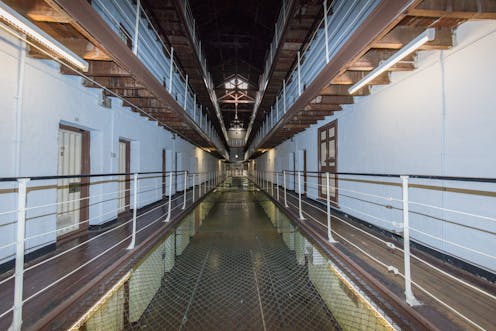
At Fremantle Prison in the 1850s, when metal was scarce, the prison gate and handrails were made from iron recovered from sunken ships. As I toured the prison recently, I reflected on how similar the situation was when COVID-19 disrupted building supply chains across Australia. The shortage of materials such as steel, which is still an issue, turned heads to using recycled steel, which would otherwise be exported overseas for full recovery.
Do we really needed material shortages for the construction industry to get serious about using products with recycled content? When resources are depleted, does it only then mean it’s time to go sustainable?
It is encouraging to see many state initiatives to recycle construction materials, such as Roads to Reuse in Western Australia. It offers a $5 per tonne incentive to use recycled materials such as road base and drainage rock for construction projects.
Are such programs enough to ensure the supply of construction materials is sustainable? No, and if you look back at the examples of the past two centuries, industry-wide reuse of such materials should have been business as usual by now.
Read more: How to make roads with recycled waste, and pave the way to a circular economy
What is the next step?
As awareness of waste recycling benefits has risen, recovery rates have improved. The National Waste Report 2022 shows Australia now has an 80% recovery rate for construction and demolition waste. That waste, 29 million tonnes of it, comprises 38% of all waste produced in Australia.
These recycled materials are becoming increasingly available to the market, but it isn’t being widely used.
The next challenge is to increase the use of these products across the construction sector. But how? That’s the focus of our recently completed research project.
Read more: A third of our waste comes from buildings. This one's designed for reuse and cuts emissions by 88%
Showcasing the use of recycled materials
We conducted four case studies in Victoria and Western Australia. The two states produce about 46% of Australia’s construction and demolition waste.
The case studies are Burwood Brickworks Shopping Centre and Mordialloc Freeway in Victoria and the Tonkin Gap Project and OneOneFive Hamilton Hill in WA. They comprise two road projects, a shopping centre and a housing development. One goal of these projects is to showcase the possibilities for using recycled materials in the construction industry.
Brickworks Shopping Centre was completed in 2019 and has won numerous awards for its demonstration of sustainability. The project achieved full accreditation under the rigorous criteria of the Living Building Challenge.
The large amounts of recycled materials used in the project include crushed concrete in a sub-base of bitumen, salvaged timber for ceiling cladding, and recycled brick for the floor and as a finish on the building façade.
Brickworks Shopping Centre in Melbourne has been hailed the world’s most sustainable retail centre.The head contractor explained the use of recycled products for these architectural features:
The end user, who’s the consumer at Burwood Brickworks, they can see it and it’s front of mind that, hey, we can reuse these things.
The Mordialloc project created a 9km freeway link between Dingley Bypass and Mornington Peninsula Freeway. Dubbed “Australia’s greenest freeway”, it was completed in 2021.
The project saved more than 300,000 tonnes of waste from going to landfill (or 3 hectares of land would have been needed for stockpiling). It used 675 tonnes of plastic waste in noise walls and drainage pipes and 21,000 tonnes of reclaimed asphalt in pavements.
The Mordialloc Freeway project used more than 300,000 tonnes of recycled waste materials.A member of the project’s design team said:
It was a good example of taking a design and […] looking at ways where you could improve it in terms of using recycled materials. So I know it’s got a tagline as Australia’s greenest freeway at the moment, but I’m sure it’s just setting a precedent now. And almost all, if not all, future road projects will incorporate an increasing amount of recycled materials in them.
The Tonkin Gap Project is upgrading the Tonkin Highway east of Perth with extra lanes, new interchanges, bridges and a shared cycling and walking path.
By July 2022, the project had used 430,000 tonnes of recycled materials including:
296,000 tonnes of sand
105,000 tonnes of treated spoil
27,000 tonnes of crushed recycled concrete
1,200 tonnes of reclaimed asphalt pavement.
A Main Roads WA representative said:
The culture comes down to a lot of experience. You need to make sure that there’s a positive experience using the [recycled] product, and make sure that there’s enough training and education and awareness that can be delivered to the industry on using the product and what they need to do to use it safely.
Read more: With the right tools, we can mine cities
OneOneFive Hamilton Hill redeveloped an old high school and neighbouring lands (11.9 hectares) as a residential estate. It was one of DevelopmentWA’s Innovation Through Demonstration projects to showcase sustainability in the built environment. It was recognised as a sustainable project by the national EnviroDevelopment initiative.
Recycled materials in this project included:
salvaged timber in landscaping features such as shade structures and seating
40,000 clay bricks and roof tiles reused as aggregates under the drainage infrastructure
old bricks in brick walls and a toilet block
crushed brick, tiles and concrete in the road sub-base
2,425 cubic metres of recycled concrete in retaining walls
400 tonnes of other recycled products in various constructions including temporary access roads.
The project’s client representative said:
We want to be showing that we’re pushing the boundaries and trying to, I suppose, provide demonstration projects that show what can be done within a normal commercial environment.
Read more: Australia needs construction waste recycling plants — but locals first need to be won over
What are the barriers and how do we overcome them?
Case study participants said the major barriers to optimal industry use of recycled materials include:
unsupportive regulations
limited availability of quality recycled materials
lack of expertise and understanding of their applications
inconsistency in recycled materials quality and performance.
They said education, investigation and demonstration activities together with effective project management planning could help overcome these barriers.
We thank our collaborators in the research Professor Tim Ryley (Griffith University), Dr Savindi Caldera (University of Sunshine Coast), Associate Professor Atiq Zaman (Curtin University) and Professor Peter S.P. Wong (RMIT University).
Authors: Salman Shooshtarian, Lecturer, School of Property, Construction and Project Management, RMIT University


















