

Killing dingoes is the only way to protect livestock, right? Nope
- Written by: Dr. Louise Boronyak, Research Affiliate, University of Technology Sydney
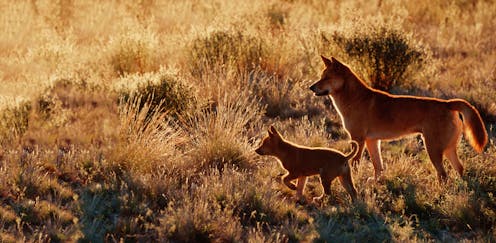
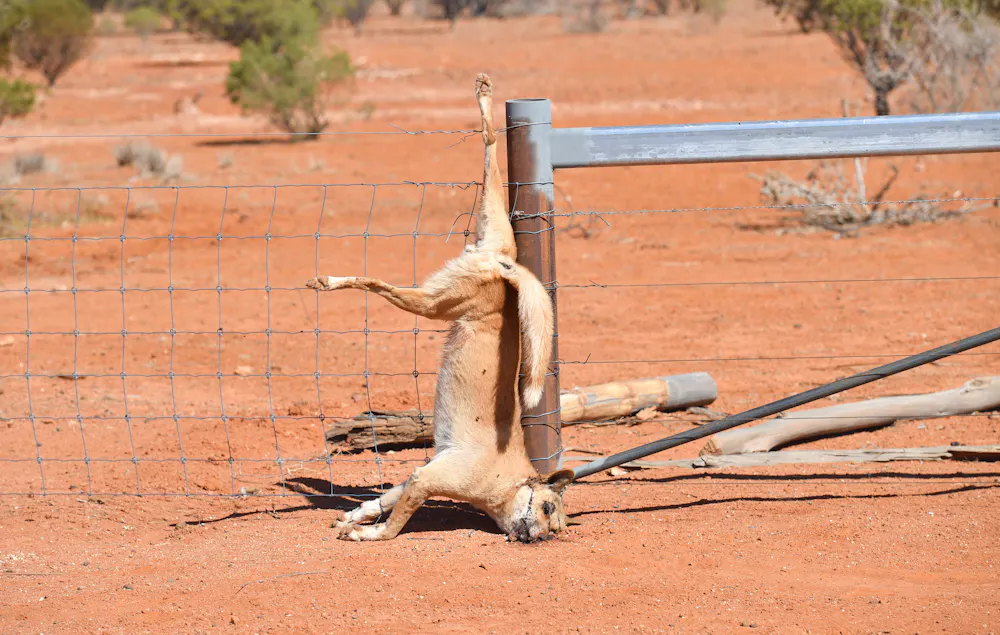
Since European colonisation, farmers have often viewed dingoes as the enemy, waging war against them to protect their livestock. Farmers felt they had no option but to eradicate dingoes using traps, shooting, poisoned baits (such as 1080) and building a 5,600km long dingo fence, the world’s longest.
Killing dingoes costs millions of dollars each year. But it hasn’t resolved the conflict. In many cases it has made the threat to livestock worse by breaking up dingo families and removing experienced adults which hunt larger, more mobile prey.
The alternative? As some farmers are discovering, there are unexpected benefits of learning to coexist with dingoes instead. As Western Australian cattle grazier David Pollock told us:
I reckon my dingoes are worth $20,000 each, probably more. So, killing them would be the last thing that I did.
Can dingoes really help graziers?
Yes. In many cases, they can be allies for graziers by reducing the competition for pasture from wild herbivores such as kangaroos and goats, as well as killing or scaring off foxes and feral cats.
As our understanding of the importance of predators has grown, a new approach has taken root: human-wildlife coexistence. Recently recognised by the United Nations Convention of Biological Diversity, this field offers a path to stem the global loss of biodiversity by balancing the costs and benefits of living alongside wildlife.
Our new research lays out seven pathways to shift from the routine killing of dingoes towards coexistence.
What does coexistence look like?
One path to coexistence is supporting graziers to adopt effective tools and strategies to reduce the loss of livestock while capitalising on the benefits of large predators. This is known as predator-smart farming
Our research on this area has led to a new Australian guide. This approach relies on a variety of effective non-lethal tools and practices to protect livestock three main ways:
humans or guardian animals such as dogs and donkeys watch over and defend livestock from dingoes, as well as using fencing to create a physical barrier
using knowledge about dingo biology and behaviour to find better deterrents, such as the use of lights, sounds or smells
stronger land management and livestock husbandry to increase the productive capacity of pastures and livestock resilience.
This approach helps ensure the livelihoods of farmers remain resilient and makes the most of the benefits of dingoes for productive agricultural landscapes and ecosystem health.
As one New South Wales cattle producer found, these approaches work. He told us:
Three years ago, we were losing 53% of our calves to dingoes. We started looking into alternatives that were cost and time effective and decided to try guardian donkeys. We purchased two jacks (male donkeys) and now we have 94% calving rate. Donkeys saved our business.
So what’s stopping us?
We now know it’s entirely possible to live and farm alongside dingoes. So why do we still resort to lethal control?
Inertia is one barrier to change. The default option is to kill dingoes. Laws, policies and funding by government and industry have institutionalised lethal control.
But there are other barriers, such as a lack of funding for different approaches from government and a lack of support from the community and graziers. Despite this resistance the number of graziers adopting predator smart farming is growing.
To overcome these barriers, we believe it’s important to undertake research alongside graziers to field-test and demonstrate how these methods actually work, and which combinations work best.
Changes like this take time. We also have to build connections and rapport through agricultural networks, as well as tackle the institutional infrastructure built up around dingo control.
It’s natural for farmers, graziers and state government representatives to be sceptical of such a big change. But the status quo isn’t working. Living alongside dingoes could help us make some of the fundamental changes needed to stop the loss of biodiversity.
To that end, public awareness and talking about this openly can help bring something which has long gone unquestioned into the spotlight.
Our research emerged from in-depth interviews with Australian livestock producers, ecologists, conservation and animal welfare groups, industry representatives and policy makers as well as field observations and analysis of Australia’s wild dog action plan.
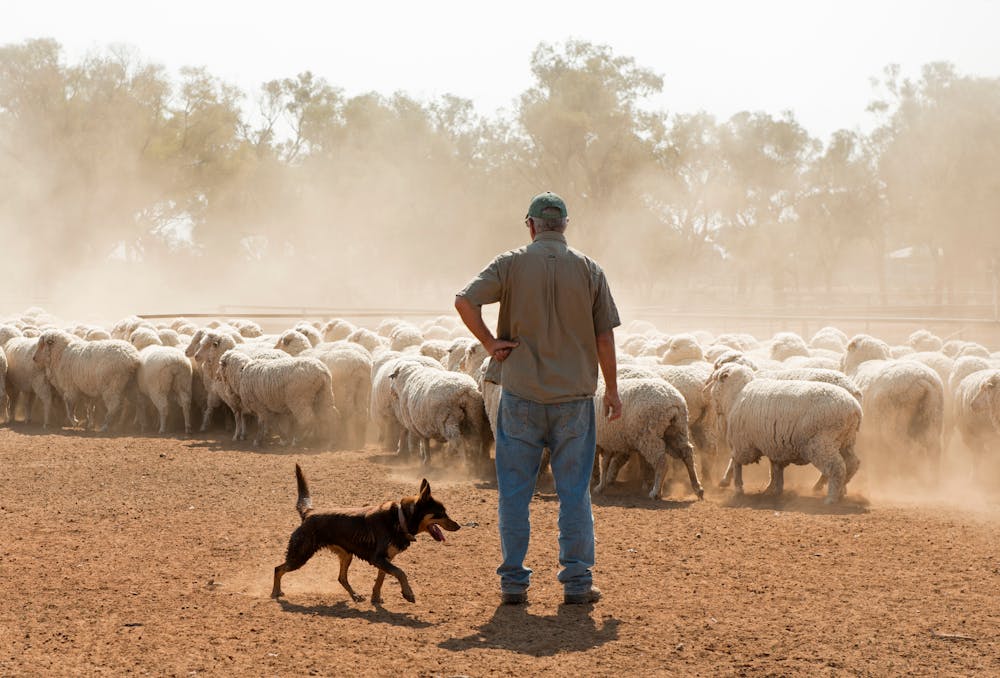 Coexisting with dingoes could be a win-win for livestock farmers.
Shutterstock
Coexisting with dingoes could be a win-win for livestock farmers.
Shutterstock
If we do make progress towards coexisting with dingoes, we could embed predator-smart techniques in the way we farm to boost biodiversity, landscape resilience, food security and livelihoods. We would bring back dingoes as apex predators and regulators of healthy ecosystems. Politics would take a step back, in favour of scientific, evidence-based approaches and First Nations input into environmental policies.
This is not hypothetical. Graziers and landholders already using predator-smart tools and strategies report many benefits. They include:
- fewer animals injured or killed by dingoes
- less time spent stalking and killing dingoes
- lower total grazing pressure from feral grazers such as goats
- boosting pasture growth and livestock profitability.
Landholders for Dingoes promotes the work of landholders who are coexisting with dingoes.
It’s time to modernise Australia’s approach to dingoes. This approach offers a potential win-win for farmers and dingoes, as well as significant gains for nature.
But to make this happen, we will have to shift our attitude towards dingoes, gain support from graziers and other stakeholders, and make non-lethal coexistence tools and approaches the new standard practice.
Read more: From the dingo to the Tasmanian devil - why we should be rewilding carnivores
Authors: Dr. Louise Boronyak, Research Affiliate, University of Technology Sydney
Read more https://theconversation.com/killing-dingoes-is-the-only-way-to-protect-livestock-right-nope-200905


















