

PFAS for dinner? Study of 'forever chemicals' build-up in cattle points to ways to reduce risks
- Written by: Antti Mikkonen, Principal Health Risk Advisor – Chemicals, EPA Victoria, and PhD Candidate, School of Pharmacy and Medical Sciences, University of South Australia
PFAS, known as “forever chemicals”, have been found just about everywhere on Earth, including in toilet paper.
These chemicals are a group of artificial compounds based on carbon and fluorine – per- and polyfluoroalkyl substances, or PFAS. They comprise thousands of individual chemicals with hundreds of documented uses, including water proofing and fire suppression. It is likely every household has products or textiles that contain or were treated with a product that contained PFAS (including some non-stick cookware and stain-resistant fabrics).
Studies have shown most people have one or more PFAS compounds in their blood. We live in a world full of chemicals, so why do we care about these ones? Well, some PFAS have been associated with a wide range of adverse human health effects, such as cancer and immune problems. However, there is limited evidence of human disease resulting from environmental exposures.
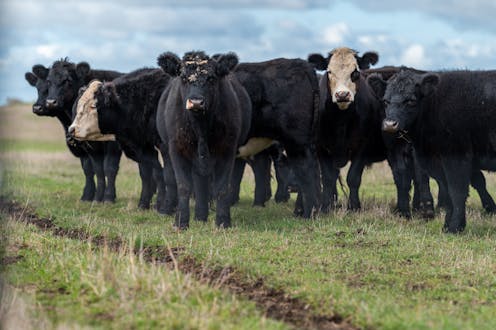
Our study investigated the uptake of PFAS into livestock at ten PFAS-impacted farms in Victoria. Our analysis also shows how risks can be reduced.
Our findings show the land and livestock can be managed to reduce PFAS levels in the animals before they enter the food chain. This means good management practices can protect food quality and reduce consumer exposure.
Read more: PFAS might be everywhere – including toilet paper – but let's keep the health risks in context
How do PFAS get in your blood?
Exposure to household dust and consumption of contaminated food or water are major contributors to human exposure to PFAS. It then accumulates in our blood.
As the name would suggest, forever chemicals persist in the environment. As a result, when released into the environment, they disperse and over time can contaminate surrounding areas.
Firefighting and training activities have historically resulted in large releases of PFAS into the environment. This includes farming areas.
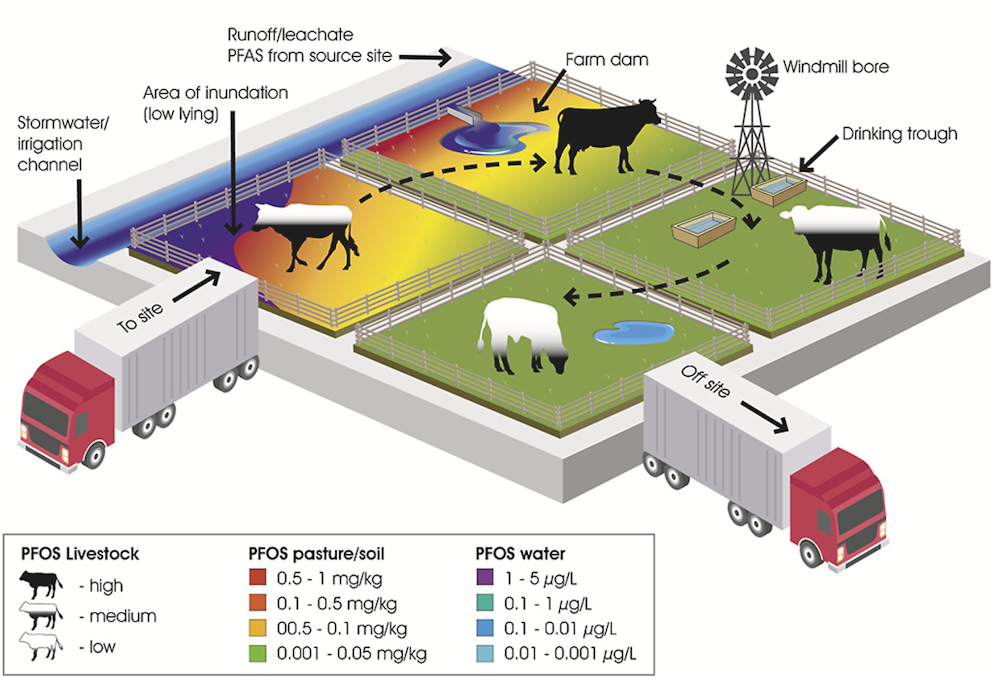
As livestock feed and drink from contaminated sources, this leads to PFAS accumulation in tissues. From there, PFAS can be transferred into the food chain, including products we eat such as meat and milk.
The causal links and what levels of PFAS exposure are harmful are still being investigated. The scientific community has yet to reach a consensus on how “bad” these compounds are, or conversely what the safe exposure levels are.
In the meantime, it is important to limit exposure through regulation. Australia has adopted environmental and health-based guideline values for three PFAS of concern: perfluorooctane sulfonate (PFOS), perfluorooctanoic acid (PFOA) and perfluorohexane sulfonate (PFHxS).
Australian food quality is high. In a 2021 study, scientists tested for 30 different PFAS in a broad range of Australian foods and beverages. Only one specific PFAS (PFOS) was detectable. It was found in just five out of 112 commonly consumed foods and beverages at levels below concern.
These findings would suggest PFAS contamination is not an issue at most farms in Australia. The risks are likely to be higher from food produced at PFAS-contaminated sites. At such locations, PFAS can affect a range of foods, including eggs, vegetables and livestock.
Read more: Backyard hens' eggs contain 40 times more lead on average than shop eggs, research finds
What did the study investigate?
We collated data from environmental investigations at ten PFAS-impacted farms in Victoria. This included testing about 1,000 samples of soil, water, pasture and livestock blood for concentrations of 28 types of PFAS. Our analysis also included information about farm practices, including livestock rotation, access to clean pasture and water.
We found:
two specific PFAS compounds (PFOS and PFHxS) made up more than 98% of total PFAS detected in livestock blood
PFAS concentrations in water were correlated to concentrations in livestock blood, implying water was a critical exposure pathway, while the relationships between livestock and PFAS levels for soil and pasture were weaker
livestock exposure to PFAS varies over time and across paddocks. Seasonal patterns in PFAS blood concentrations were linked to seasonal grazing behaviours and the animals’ need for drinking water.
What’s the next step?
Environment Protection Authority Victoria (EPA) is leading research and policy to understand how environmental PFAS risks can be better managed. In this regard, EPA along with research partners, is working to develop predictive models to estimate PFAS accumulation in livestock over their lifetime. This research will help determine when a site is too contaminated for livestock production and which ones to prioritise for PFAS remediation in soil and water.
Ultimately, this will allow more effective management of PFAS accumulation and reduce the likelihood of having PFAS for dinner.
Authors: Antti Mikkonen, Principal Health Risk Advisor – Chemicals, EPA Victoria, and PhD Candidate, School of Pharmacy and Medical Sciences, University of South Australia

















