

Google AI


Modern Australian

Why sports stars get less support than other injured workers – and how we can fix it

  • Written by: Eric Windholz, Senior Lecturer and Associate, Monash Centre for Commercial Law and Regulatory Studies, Monash University
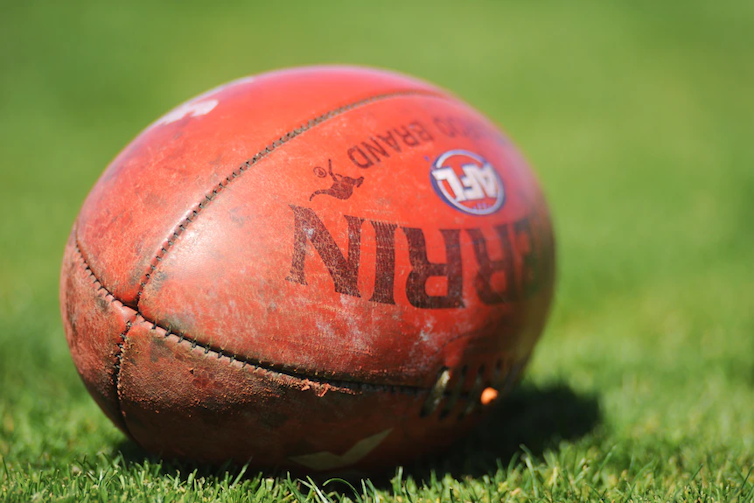
Why sports stars get less support than other injured workers – and how we can fix it

Inadequate, inequitable, and in some cases possibly in breach of workers’ compensation laws. That’s how bad the current insurance arrangements are for Australia’s professional sports people, who get less support for long-term injuries than other workers, and less support than if they’d been playing in New Zealand.

That is part of what I told the current Senate inquiry into concussion and repeated head trauma in sport, speaking as a researcher in work health and safety law in professional sport, and as a former general counsel and general manager with the Victorian WorkCover Authority and WorkSafe Victoria.

The AFL has been in the spotlight following news of a class action led by retired Geelong premiership player Max Rooke, on behalf of more than 60 former Australian Football League players. The law firm leading the class action claims Rooke suffered “permanent, life-altering injuries” from concussion.

The lawsuit comes as the AFL prepares to follow the NRL and Rugby Australia in appearing before the Senate inquiry.

However, as my submission to the inquiry pointed out, the issue of workplace safety and injury support affects far more than just Australia’s football codes.

Players are employees – who aren’t covered for long enough

Last month, I told the Senate inquiry that professional sporting organisations were employers, and their players employees.

Under work health and safety law, employer sporting organisations have a statutory duty to do what is reasonably practicable to prevent injuries to their employees.

Because eliminating all injuries is not a realistic expectation, employers provide insurance to support injured players.

The first symptoms of chronic traumatic encephalopathy (CTE) take years to decades to develop, by which time the players who have them are usually no longer playing professionally and no longer insured.

Read more: What does concussion do to the brain?

Their employer-supported insurance arrangements usually lapse either when their contracts expire or shortly after. This means they don’t adequately support the treatment of injuries that become evident years after the athlete’s career ends.

There are many stories of former AFL players and players in other leagues who suffer such severe memory loss that they can no longer recall their achievements and their clubs and leagues won’t help.
Joe Castro/AAP No workers’ compensation, unlike NZ Worse still, exemptions from state and territory employer-funded workers’ compensation schemes deny professional sportspeople the fallback protection afforded to other workers. In the absence of workers’ compensation, the primary medical obligation transfers to Medicare, shifting it from employers and state governments to taxpayers and the federal government. The exemptions were introduced in the 1970s at a time when athletes first started to be paid well and leagues and clubs were concerned about their financial capacity to pay workers’ compensation premiums. There also were perceptions that sport was not “normal” work, and (part-time) athletes were not workers. The arguments are redundant in a world in which sport has been corporatised and commercialised. Read more: Is the NRL legally liable for the long-term impacts of concussions? Confusing things still further is that some of the exemptions from workers’ compensation are ineffective, failing in NSW and Tasmania to exclude professional players whose contracts remunerate them for activities other than sport such as promotions. In the Northern Territory, players who earn more than 65% of average weekly earnings are not excluded. There, the intention is to ensure coverage for professional players who derive a substantial part of their livelihood from sport, the opposite of the intention in other jurisdictions. The exemptions stand in stark contrast to New Zealand, where its accident compensation scheme draws no distinction between sport and other injuries. Sporting organisations with operations in NSW, Tasmania and the Northern Territory that have not taken out workers’ compensation policies for their players may be operating in breach of their obligations. This should not come as a total surprise. Sporting organisations have a history of failing to comply with their obligations as employers. For many, the reality is even worse Down the hierarchy from elite sports, to sports where professionals are part-time (including many women’s sports), the insurance offered shrinks. It has time limits to payments for lost income – the highest I have seen is 104 weeks. It has excesses. For payment of medical expenses, it often requires the athlete to take out private health insurance. And while many sports pay out-of-pocket gap fees, that obligation usually expires on, or shortly after, termination of the contract. The longest obligation I’ve seen after the termination of a contract – and these contracts are generally not public – is 18 months. That’s shorter than it takes for many traumatic brain injuries to become evident, and those injuries last a lifetime, well beyond 18 months after playing. Legal action isn’t the best solution The rationale for the continued exclusion of professional players from workers’ compensation rests on the assumption that employers are making alternative arrangements, and that they are adequate. This clearly isn’t the case for long-term and long-latency injuries arising from concussions and repeated head trauma. Expensive, time-consuming and unpredictable litigation of the kind now underway is a poor substitute for properly compensating athletes for injuries suffered in their line of work. The insurance and compensation arrangements for professional players ought to be no less than that provided to other Australian workers. The starting point should be their inclusion in workers’ compensation schemes. The Senate inquiry presents an opportunity to construct a scheme tailored to the unique circumstances of professional sport – one that is no less generous than those applying to other Australian workers. Read more: Concussion risks aren't limited to the AFL. We need urgent action to make sure our kids are safe, too Authors: Eric Windholz, Senior Lecturer and Associate, Monash Centre for Commercial Law and Regulatory Studies, Monash University

Read more https://theconversation.com/why-sports-stars-get-less-support-than-other-injured-workers-and-how-we-can-fix-it-200702

Downsizing or Upgrading Your Caravan? Here's How to Sell It Without the Hassle

Selling a caravan can feel like a major task, especially when you are unsure about its value, paperwork, or how to find a buyer. Whether you are dow...

The Best Overseas Adventure Holidays for Australians Who Love the Outdoors

Australia offers no shortage of incredible outdoor experiences, but sometimes the best way to satisfy your sense of adventure is to head overseas. A...

Cape Town Wine Shuttle: Winelands Tasting & Tours

Embark on an unforgettable journey through the picturesque Cape Winelands, where world-class wines and breathtaking scenery await. Our Cape Town Win...

Why Giant Rats Tail Grass Keeps Coming Back After Spraying

Giant Rats Tail Grass (GRT) is one of the most frustrating pasture weeds for farmers and lifestyle property owners. You spray an infested area, see th...

When Custom Cardboard Boxes Make Sense for Your Business

Custom cardboard boxes can be useful when a standard carton does not fit a product, packing method or presentation requirement particularly well. A ...

Virtual Livestock Fencing and GPS Tracking: Improving Visibility Across Cattle Properties

What Virtual Livestock Fencing Means for Modern Cattle Management Managing cattle across extensive properties requires more than knowing where anim...

Sydney Pawnbrokers Explained: How Hocking Your Car Actually Works

Sometimes you need cash, and you need it soon. If you own a car, you may already have a way to get it. That's what people mean when they say they've...

Moving Interstate from the Gold Coast to Brisbane (or Back)? What Removalists Wish You Knew First

Have you talked to anyone who’s done the move? They say the same thing: the drive up the M1 is the easy part. It's everything around it that catches...

Why the Spring School Holidays Are a Great Time to Visit Coffs Harbour

The spring school holidays are a good time to spend a few days on the Coffs Coast. The weather is starting to warm up, there is plenty to do outdoor...

What to Do When an Older Car Is No Longer Worth Keeping in Melbourne

Ever looked at another repair quote and wondered whether your old car is still worth the trouble? It is a common turning point for Melbourne motoris...

Your Baby's First Year: A Local Guide to Feeding, Sleep, and When to Get Extra Support

Ask ten parents in a Brisbane mothers' group how their baby is feeding or sleeping, and expect ten different answers.  Someone's baby sleeps throug...

Kitchen and Laundry Makeover Ideas That Don't Require a Full Renovation

Full kitchen renos are expensive — and most people don't actually need one.  They need the kitchen to stop looking like it's stuck in 2009, or they...

How Technology Is Reshaping the Modern Australian Commercial Kitchen

The commercial kitchen has always been shaped by technology. Refrigeration changed how ingredients could be stored, modern ventilation transformed k...

The Number on a Roller Blind Fabric That Nobody Explains

Somewhere in the fabric book, next to the colour name, there is a percentage. Three per cent. Five per cent. Ten per cent. Nobody explains it, most c...

What’s Trending in Men’s Jewellery This Father’s Day!

Finding a Father’s Day gift that feels personal, stylish and genuinely wearable is not always easy. While socks and novelty mugs have traditionally ...

Road Signs: Understanding Their Role in Clear and Effective Signage

Effective signage and display hardware can help businesses communicate information, promote products and organise customer or visitor movement. Road...

Bottle Label Printing: Key Factors to Consider Before Your Next Packaging Run

Effective packaging begins with understanding the product, bottle material, artwork and production requirements when planning bottle label printing. H...

Planning a Long-Distance Move With Interstate Movers Melbourne

Moving between states involves more planning than a typical local relocation. Along with packing and transporting household belongings, you need to...
















