

The Great Southern Reef is in more trouble than the Great Barrier Reef
- Written by: Graham Edgar, Senior Marine Ecologist, Institute for Marine and Antarctic Studies, University of Tasmania
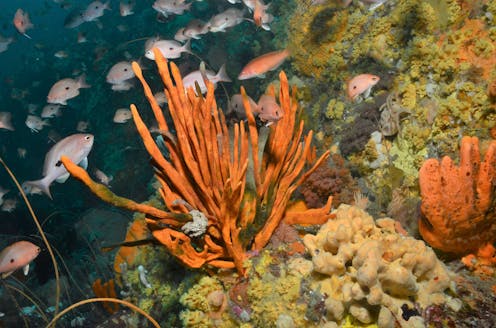
Marine heatwaves are damaging reef ecosystems around Australia, but while the tropical north has received the lion’s share of the attention to date, we equally need to worry about the temperate south.
That’s partly because the Great Southern Reef is of immense biodiversity value. Species found here are found nowhere else in the world. Even their distant relatives are long gone. It’s also because these temperate reefs are suffering even more from heatwaves than the Great Barrier Reef.
After 30 years counting thousands of marine species on Australian reefs, we could see the situation was changing rapidly. But our research team wasn’t able to survey enough locations to adequately track the changes. These occurred out of sight, beneath the waves, off coastlines extending thousands of kilometres. We realised we needed help.
So we enlisted the help of enthusiastic volunteer divers to complete the world’s first continental audit of shallow marine life. This unique Australian effort was a tremendous collaborative achievement. But it’s nothing compared to what’s needed in the years to come, to defend our reef ecosystems from the impacts of climate change and other human pressures.
Reef Life Survey makes the underwater world visible.Read more: Australia's 'other' reef is worth more than $10 billion a year - but have you heard of it?
Answering questions with data
Our goal was to answer crucial questions from managers, including:
which marine species are rapidly heading towards extinction?
how can threats to reef species be addressed cost effectively?
how large do marine reserves need to be, to achieve conservation goals?
which regulations work best?
Our solution was to headhunt the most enthusiastic and experienced recreational divers, then train them to scientific standards in underwater survey methods.
More than 200 highly trained volunteers have now participated in the Reef Life Survey of Australia. Together they have counted more than 3,000 species of fishes, corals and other invertebrates at over 2,500 sites around Australia, including offshore locations not previously visited by divers.

This information, combined with survey data from the Australian Temperate Reef Collaboration (collected using similar methods) and the Australian Institute of Marine Science in Queensland, has allowed us to produce the first continental audit of shallow marine life completed anywhere in the world. Our new research is published today in the journal Nature.
Our investigation revealed that heatwaves have damaged many (but not all) reef communities over the past decade. The effects have been patchy. Some reef populations have been devastated, other reefs nearby have declined and recovered, and others have flourished.
Species tended to increase numbers in years when water temperatures rose less than 0.5℃ above average, but declined rapidly once this heatwave threshold was passed. Overall, more species were declining than increasing.
Coral density has showed little overall change across the Great Barrier Reef since 2010. Many, but not all, coral reef communities impacted by the 2016 heatwave have recovered. Coral populations tended to decline in the north, show little change in the central region, and increase in the south.
 Although some locations on the Great Barrier Reef had suffered catastrophic coral losses, heatwave impacts were highly patchy, with no consistent trend for population increase or decrease among the 51 tropical coral species investigated. This photo was taken on Elizabeth Reef, a southern coral reef off the coast of northern New South Wales.
Scott Ling, courtesy Great Southern Reef Foundation 2023
Although some locations on the Great Barrier Reef had suffered catastrophic coral losses, heatwave impacts were highly patchy, with no consistent trend for population increase or decrease among the 51 tropical coral species investigated. This photo was taken on Elizabeth Reef, a southern coral reef off the coast of northern New South Wales.
Scott Ling, courtesy Great Southern Reef Foundation 2023
Around Australia, fishes, mobile invertebrates such as crabs, snails and seastars, and seaweeds showed similar responses to warming. Numbers typically declined in the north of species’ ranges and increased in the south. The increasing abundance of warm water species in the south has, however, squeezed populations of cold water species.
At the limit, southern Tasmanian species trapped by the deep Southern Ocean barrier cannot migrate further south. The common sea dragon (Phyllopteryx taeniolatus), for example, has declined in numbers by 57% over the past decade across monitoring sites.
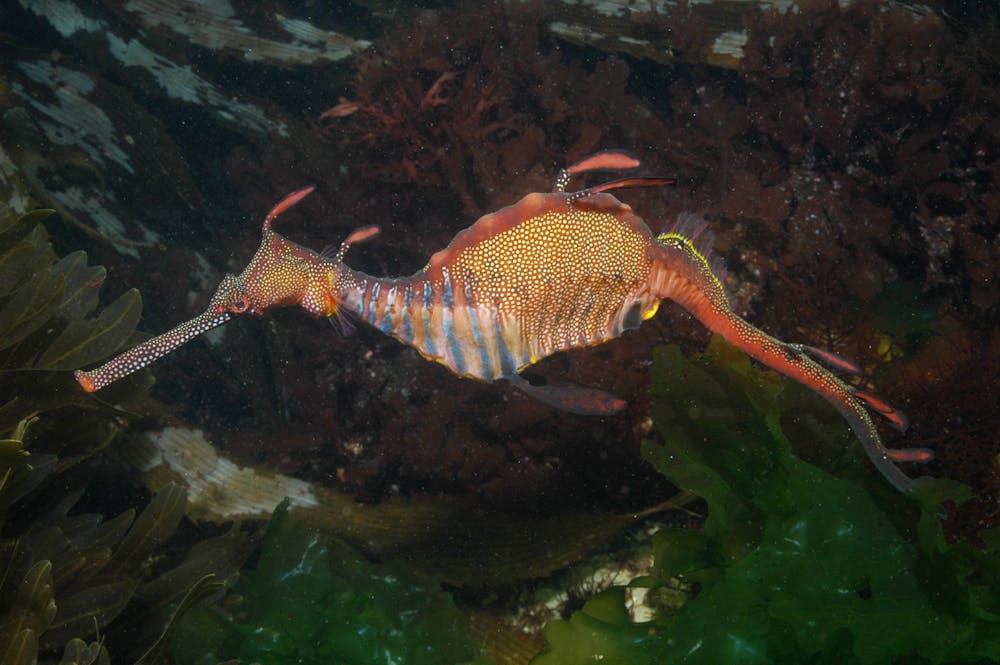 Numbers of the common sea dragon (Phyllopteryx taeniolatus) have halved across the 43 Great Southern Reef dive sites. This beautiful specimen was spotted at Blackmans Bay.
Graham Edgar/Reef Life Survey, Author provided
Numbers of the common sea dragon (Phyllopteryx taeniolatus) have halved across the 43 Great Southern Reef dive sites. This beautiful specimen was spotted at Blackmans Bay.
Graham Edgar/Reef Life Survey, Author provided
Many species living on Tasmanian reefs, particularly echinoderms such as sea stars and sea urchins, have shown precipitous population declines over the past decade.
A strong heatwave off southwestern Australia in 2011 also caused seaweed populations to drop rapidly. Most affected seaweeds remain at greatly reduced levels.
Read more: Can seaweed save the world? Well it can certainly help in many ways
Overall, cool-temperate species inhabiting the Great Southern Reef - the interconnected network of kelp-covered rocky reefs that extends from northern New South Wales to southwestern Australia — are generally declining in number more rapidly and are more threatened with extinction, than tropical species.
This is perhaps not surprising given that Great Southern Reef species live in a climate change hotspot (where sea temperatures are rising more rapidly than elsewhere worldwide) along the most densely populated Australian coast. Impacts from infrastructure development, catchment degradation, pollution and fishing are widespread.
Why the southern reef is so great
Australia’s southern reefs - in temperate waters between the tropical north and the Southern Ocean - are hotspots of biodiversity. Most species are found nowhere else in the world (70% of the temperate species surveyed were endemic to Australia). In contrast, almost all of the tropical species censused in our study are widely distributed across the Indo-Pacific (only 3% endemic to Australia).
Furthermore, temperate Australian species often have no close relatives. Their evolutionary roots run deep. Examples include the red velvet fish (Gnathanacanthus goetzii) and the giant creeper snail (Campanile symbolicum). Both species sit alone in their families, and were found in our census to have rapidly declining populations.
Worldwide, the most threatened fish family is the handfishes. This is a group of 14 species restricted to southeastern Australia, primarily Tasmania. The critically endangered red handfish (Thymichthys politus) and spotted handfish (Brachionichthys hirsutus) have declined to tiny populations of around 100 (red) and 5000 (spotted) individuals living in shallow bays near Hobart. The smooth handfish (Sympterichthys unipennis) is probably already extinct.
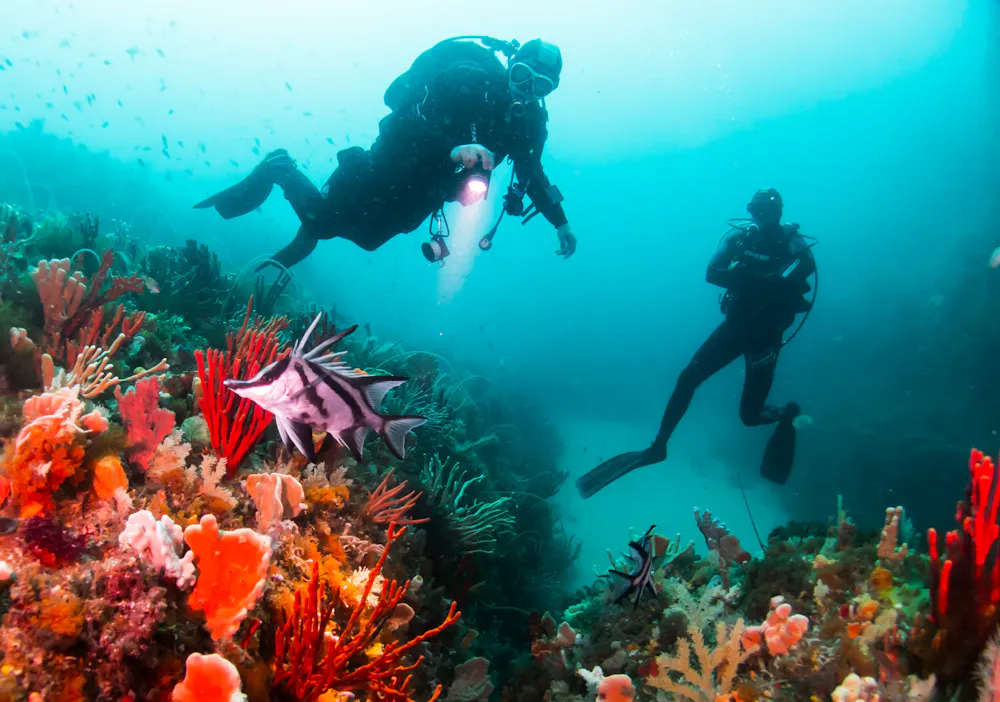 Abundant sponge gardens, impressive kelp beds, prolific fish life and caves packed with delicate invertebrates make Bicheno an ideal destination for SCUBA divers, snorkelers and underwater photographers.
Scott Ling, courtesy Great Southern Reef Foundation 2023
Abundant sponge gardens, impressive kelp beds, prolific fish life and caves packed with delicate invertebrates make Bicheno an ideal destination for SCUBA divers, snorkelers and underwater photographers.
Scott Ling, courtesy Great Southern Reef Foundation 2023
What we stand to lose
The loss of most Australian marine species will likely occur unseen. Government funding does not generally support systematic monitoring of native plants and animals.
Data provided by volunteer Reef Life Survey divers has provided the only population trend information for over 1,000 species, while tens of thousands of species lack any information at all. Only the Great Barrier Reef Long Term Monitoring Program run by the Australian Institute of Marine Science receives dedicated funding covering marine habitats.
Until more attention is paid to the conservation of temperate marine species, the living heritage of future generations will continue to slip away. We will also remain in the dark as to what already has been lost. The little public, scientific or management attention paid to the Great Southern Reef belies its status as a global marvel, and one that is highly threatened.
Read more: Playing sea soundscapes can summon thousands of baby oysters – and help regrow oyster reefs
Authors: Graham Edgar, Senior Marine Ecologist, Institute for Marine and Antarctic Studies, University of Tasmania


















