

a kaleidoscopic portrait of a diverse nation
- Written by: Jen Webb, Director of the Centre for Creative and Cultural Research, University of Canberra
The Miles Franklin award is famously for “a novel which is of the highest literary merit and presents Australian life in any of its phases”. That’s a very broad palette, yet for most of the award’s existence — 1957 to the present — it has recognised a rather narrow field of “Australian life”.
The 60 novels honoured to date include 42 written by 28 men, and 18 written by 14 women. Almost to a person, these winning authors are Anglo-Australian. While their narratives cover an impressive range of issues, topics, periods, structure and narrative voice, it is notable that in a country described by our prime minister as “the world’s most successful multicultural society”, the Miles Franklin seems to have remained a bastion of monoculture.
Until recently, that is. Women authors are appearing more frequently - on the shortlists and as prize winners - and the cultural and linguistic heritage of authors is similarly expanding. This year the mix of shortlist authors, and the content of their novels, is impressively diverse.
Border Districts
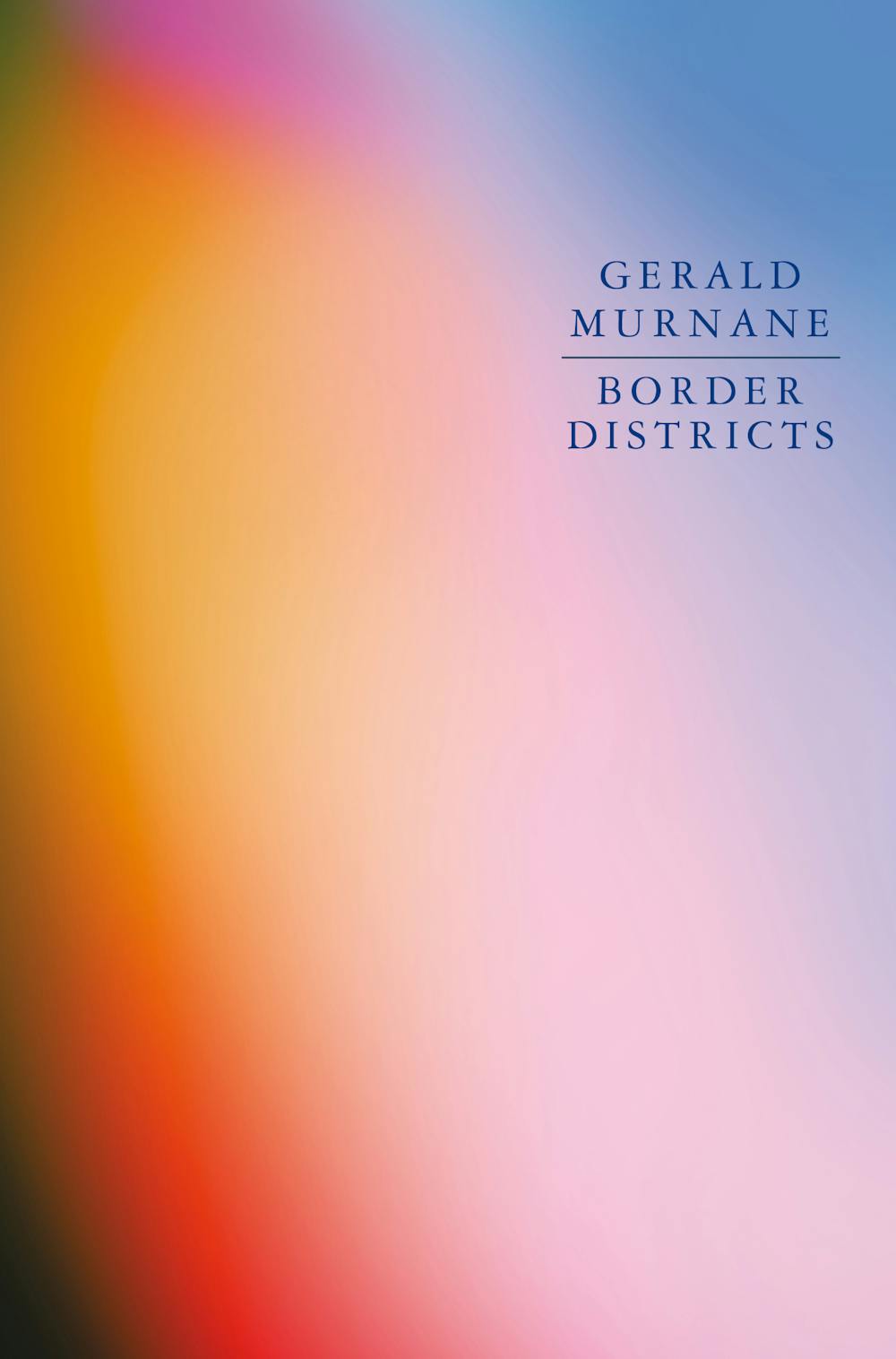 Gerald Murnane’s Border Districts is explicitly a literary novel, one with no overt plot and really only one voice. The narrator is fastidious to the point of primness, narrow and self-absorbed: a fussy old man who drifts into Grandpa Simpson moments, telling stories that wander from point to point with no apparent destination. Yet this work is also a remarkable account of memory, its fractures, and its fragments. This gives the lie to the narrator’s insistence that he is writing a report, not a novel, and casts a gentle melancholy over the work.
The unnamed narrator seems to have lived a life at arms length, remaining encased in abstractions, neglecting to experience anything at first hand. What I found the most desolate image in the novel is his childhood collection of glass marbles. The material expression of his life’s effort to “recollect” and “preserve” his memories and moods, they are no more than tiny flashes of colour, frozen in their glass bubbles, seeing and saying nothing.
In his sense of colour, and his hankering for the clarity of memory, is the suggestion that he contains within himself another man, one who yearns to feel.
No More Boats
Gerald Murnane’s Border Districts is explicitly a literary novel, one with no overt plot and really only one voice. The narrator is fastidious to the point of primness, narrow and self-absorbed: a fussy old man who drifts into Grandpa Simpson moments, telling stories that wander from point to point with no apparent destination. Yet this work is also a remarkable account of memory, its fractures, and its fragments. This gives the lie to the narrator’s insistence that he is writing a report, not a novel, and casts a gentle melancholy over the work.
The unnamed narrator seems to have lived a life at arms length, remaining encased in abstractions, neglecting to experience anything at first hand. What I found the most desolate image in the novel is his childhood collection of glass marbles. The material expression of his life’s effort to “recollect” and “preserve” his memories and moods, they are no more than tiny flashes of colour, frozen in their glass bubbles, seeing and saying nothing.
In his sense of colour, and his hankering for the clarity of memory, is the suggestion that he contains within himself another man, one who yearns to feel.
No More Boats
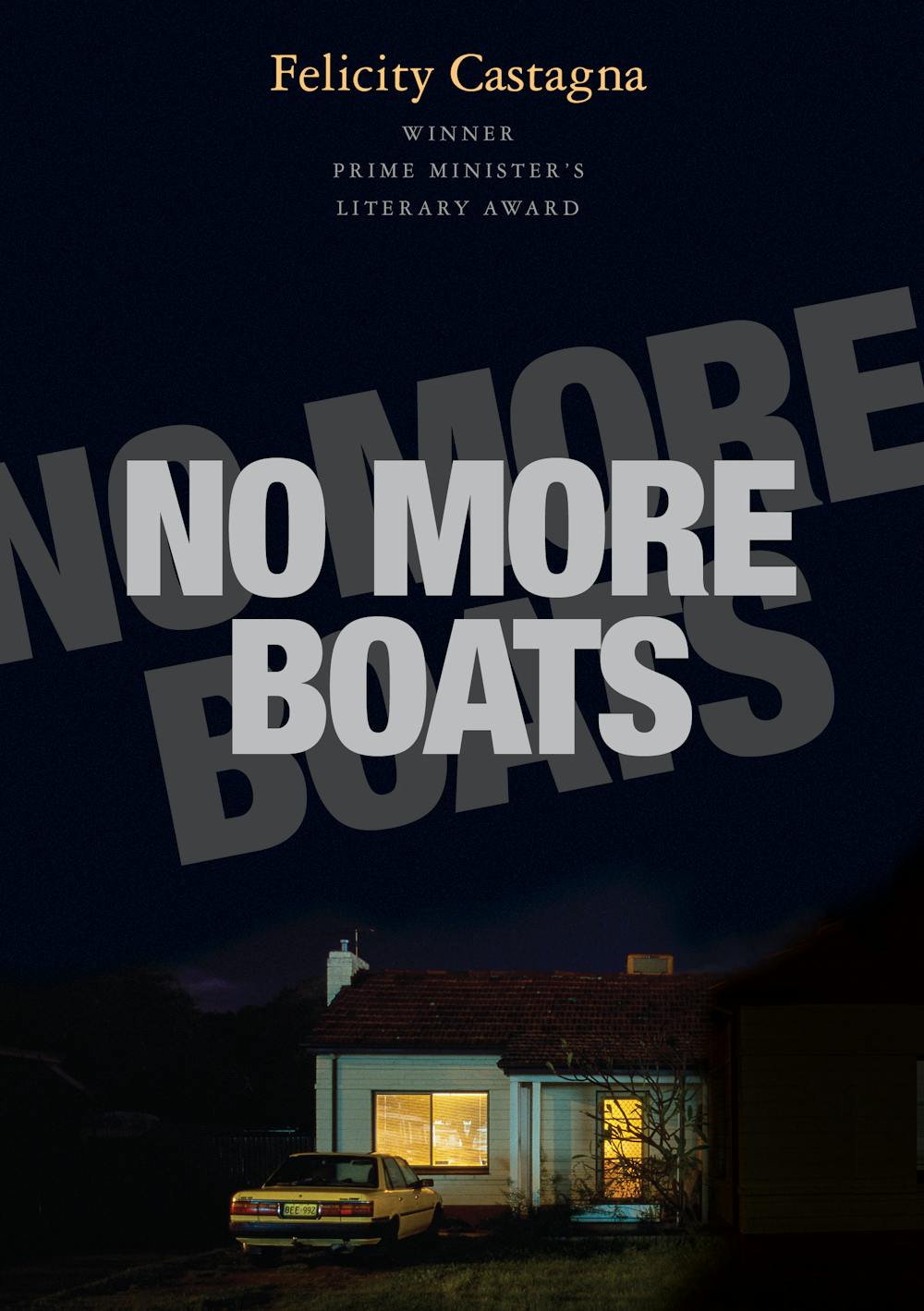 Felicity Castagna’s No More Boats opens in 1967, the year Harold Holt disappeared and, through the magic of narration, incorporates in the opening pages what is yet to come: 2001, the Tampa crisis, the September 11 attacks. In these pages, Antonio, the protagonist, is both young Italian migrant, and the ageing man who has become the face of: “We will decide who comes to this country …”
He and Rose live in Parramatta, where young men like their son Francis are testing out models of masculinity; where young women like their daughter Clare are crafting lives beyond their parents’ oversight; a rich human zoo that provides the stage for a brilliantly observed and sensitively recounted novel illuminating the politics of identity, family, community and nation.
His family are forced to confront the public scandal of Antonio’s xenophobia, to understand why a migrant in a migrant community could be so thoroughly seduced by the violent logic of the hard right. There are no real answers, of course; but beyond the family’s distress and the community’s upheaval is the shadow of two centuries of Australia struggling against “too many boats”.
The Last Garden
Felicity Castagna’s No More Boats opens in 1967, the year Harold Holt disappeared and, through the magic of narration, incorporates in the opening pages what is yet to come: 2001, the Tampa crisis, the September 11 attacks. In these pages, Antonio, the protagonist, is both young Italian migrant, and the ageing man who has become the face of: “We will decide who comes to this country …”
He and Rose live in Parramatta, where young men like their son Francis are testing out models of masculinity; where young women like their daughter Clare are crafting lives beyond their parents’ oversight; a rich human zoo that provides the stage for a brilliantly observed and sensitively recounted novel illuminating the politics of identity, family, community and nation.
His family are forced to confront the public scandal of Antonio’s xenophobia, to understand why a migrant in a migrant community could be so thoroughly seduced by the violent logic of the hard right. There are no real answers, of course; but beyond the family’s distress and the community’s upheaval is the shadow of two centuries of Australia struggling against “too many boats”.
The Last Garden
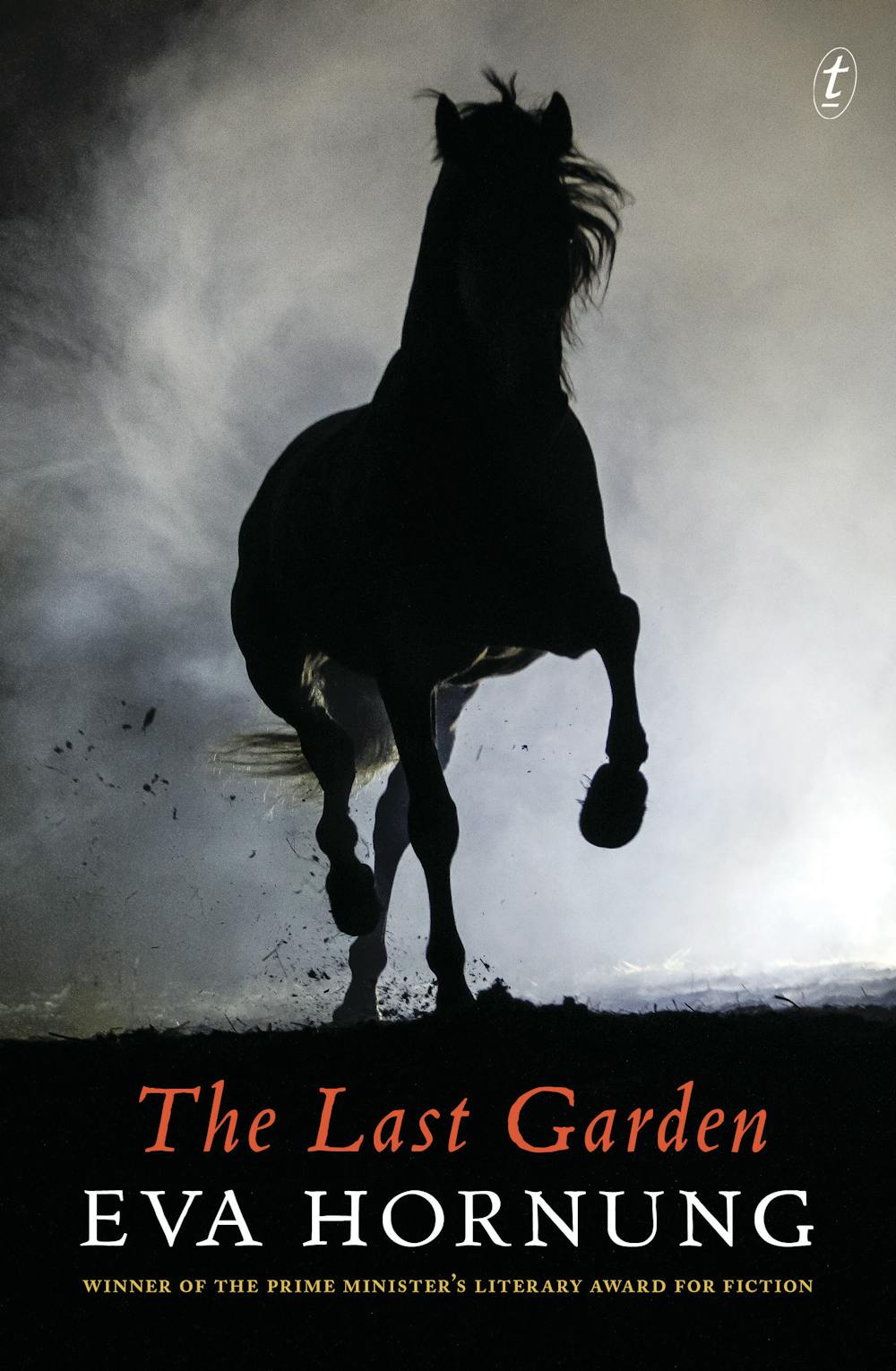 Eva Hornung’s The Last Garden is based in a South Australian religious community named – perhaps ironically – Wahrheit. There is little truth here though, and easily as many secrets and violences as are found beyond Wahrheit’s boundaries. These are flushed out by the tragedy that opens the novel, where Matthias Orion, not-fully-committed member of the church, destroys everything he can reach on his property, and slaughters first his wife and then himself.
Their 15-year-old son Benedict arrives home from boarding school to discover this horror; and even as it breaks him, so too it marks the end of the community’s Nebelung, their mythical home. The novel is told through a careful interlacing of Benedict’s and the pastor’s perspectives. The latter fails miserably to care sufficiently for the deeply traumatised Benedict, who after all has become “part of the wound” the community finds itself suffering.
Left largely to himself, and to the horses that escaped his father’s murderous rampage, and to the fox that stands in for that angel of death, Benedict lives with, and like, the animals. In that living he finds a way to recover some sense of self, and to re-enter his community: though whether as messiah or as restored son is uncertain.
The Life to Come
Eva Hornung’s The Last Garden is based in a South Australian religious community named – perhaps ironically – Wahrheit. There is little truth here though, and easily as many secrets and violences as are found beyond Wahrheit’s boundaries. These are flushed out by the tragedy that opens the novel, where Matthias Orion, not-fully-committed member of the church, destroys everything he can reach on his property, and slaughters first his wife and then himself.
Their 15-year-old son Benedict arrives home from boarding school to discover this horror; and even as it breaks him, so too it marks the end of the community’s Nebelung, their mythical home. The novel is told through a careful interlacing of Benedict’s and the pastor’s perspectives. The latter fails miserably to care sufficiently for the deeply traumatised Benedict, who after all has become “part of the wound” the community finds itself suffering.
Left largely to himself, and to the horses that escaped his father’s murderous rampage, and to the fox that stands in for that angel of death, Benedict lives with, and like, the animals. In that living he finds a way to recover some sense of self, and to re-enter his community: though whether as messiah or as restored son is uncertain.
The Life to Come
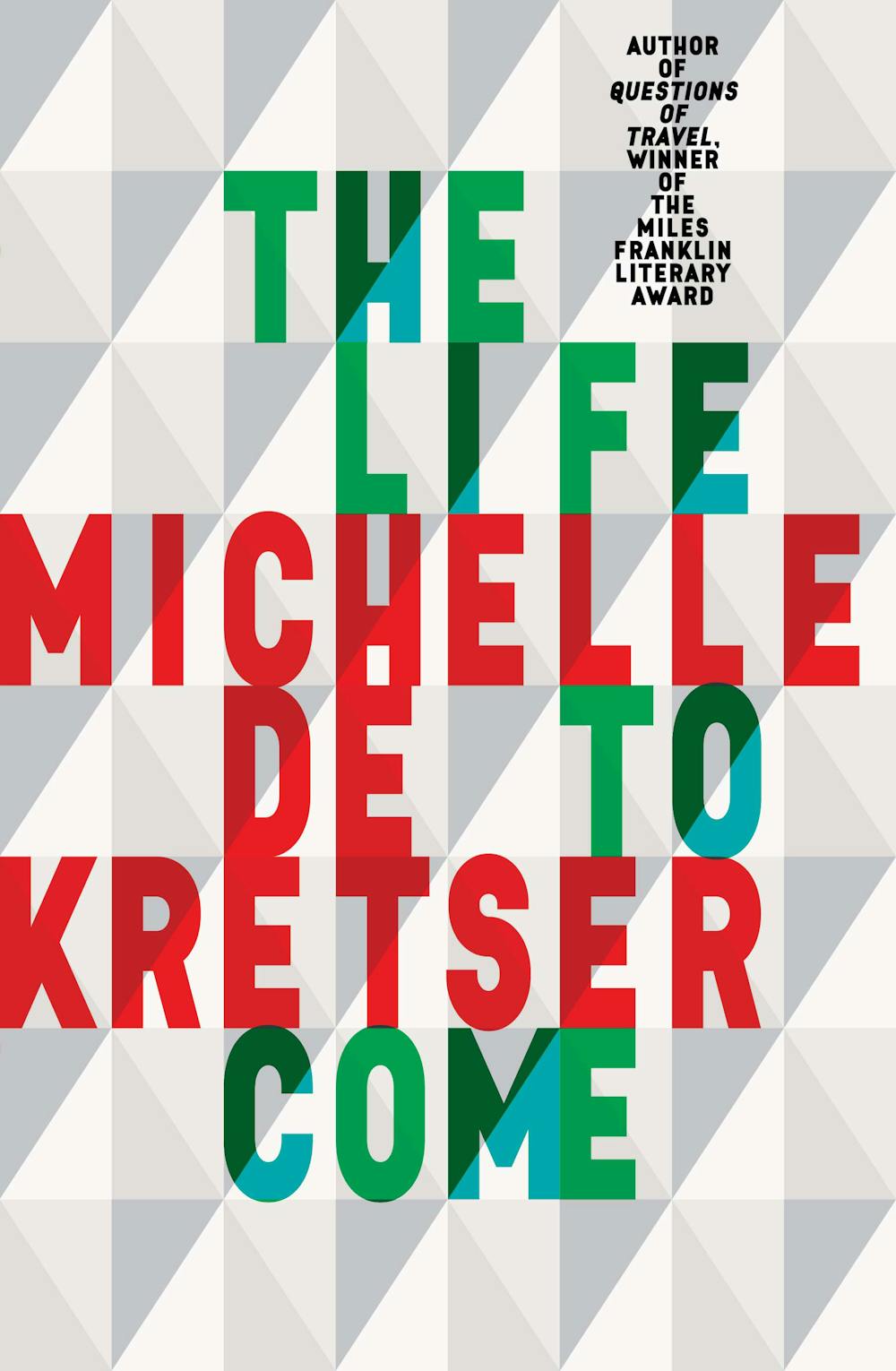 The Life to Come, Michelle de Kretser’s new novel – actually a discontinuous narrative in five sections – offers an insider-outsider view of contemporary Australian society through the shifting focalisations, points of view and voices that comprise the sections. The threads that weave it together are Pippa, a self-satisfied, hyper-performative, not-quite-good-enough novelist, and “real” novelist George Meshaw, who disdains her shallow conceits and her populist writing style.
Pippa is the more visible of the two. She spends much of the novel charming and then disappointing friends, and struggling under the burden of her mother-in-law’s condescension, while always firmly focused on herself. George appears principally through his novels – the last of which, along with Pippa’s last, are tossed in the bin by Pippa’s disenchanted neighbour, who had hoped to find warmth and meaning in these works, but found only words.
While the stories are set in Sydney and in Paris, with references also to Sri Lanka, the twin foci of this novel (for me, at least) are, first, an excoriating critique of Australian colonialist attitudes and politics, and next the burning realisation that – as one character observes – “The only life in which you play a leading role is your own”; we are all merely bit players in the lives of others.
Storyland
The Life to Come, Michelle de Kretser’s new novel – actually a discontinuous narrative in five sections – offers an insider-outsider view of contemporary Australian society through the shifting focalisations, points of view and voices that comprise the sections. The threads that weave it together are Pippa, a self-satisfied, hyper-performative, not-quite-good-enough novelist, and “real” novelist George Meshaw, who disdains her shallow conceits and her populist writing style.
Pippa is the more visible of the two. She spends much of the novel charming and then disappointing friends, and struggling under the burden of her mother-in-law’s condescension, while always firmly focused on herself. George appears principally through his novels – the last of which, along with Pippa’s last, are tossed in the bin by Pippa’s disenchanted neighbour, who had hoped to find warmth and meaning in these works, but found only words.
While the stories are set in Sydney and in Paris, with references also to Sri Lanka, the twin foci of this novel (for me, at least) are, first, an excoriating critique of Australian colonialist attitudes and politics, and next the burning realisation that – as one character observes – “The only life in which you play a leading role is your own”; we are all merely bit players in the lives of others.
Storyland
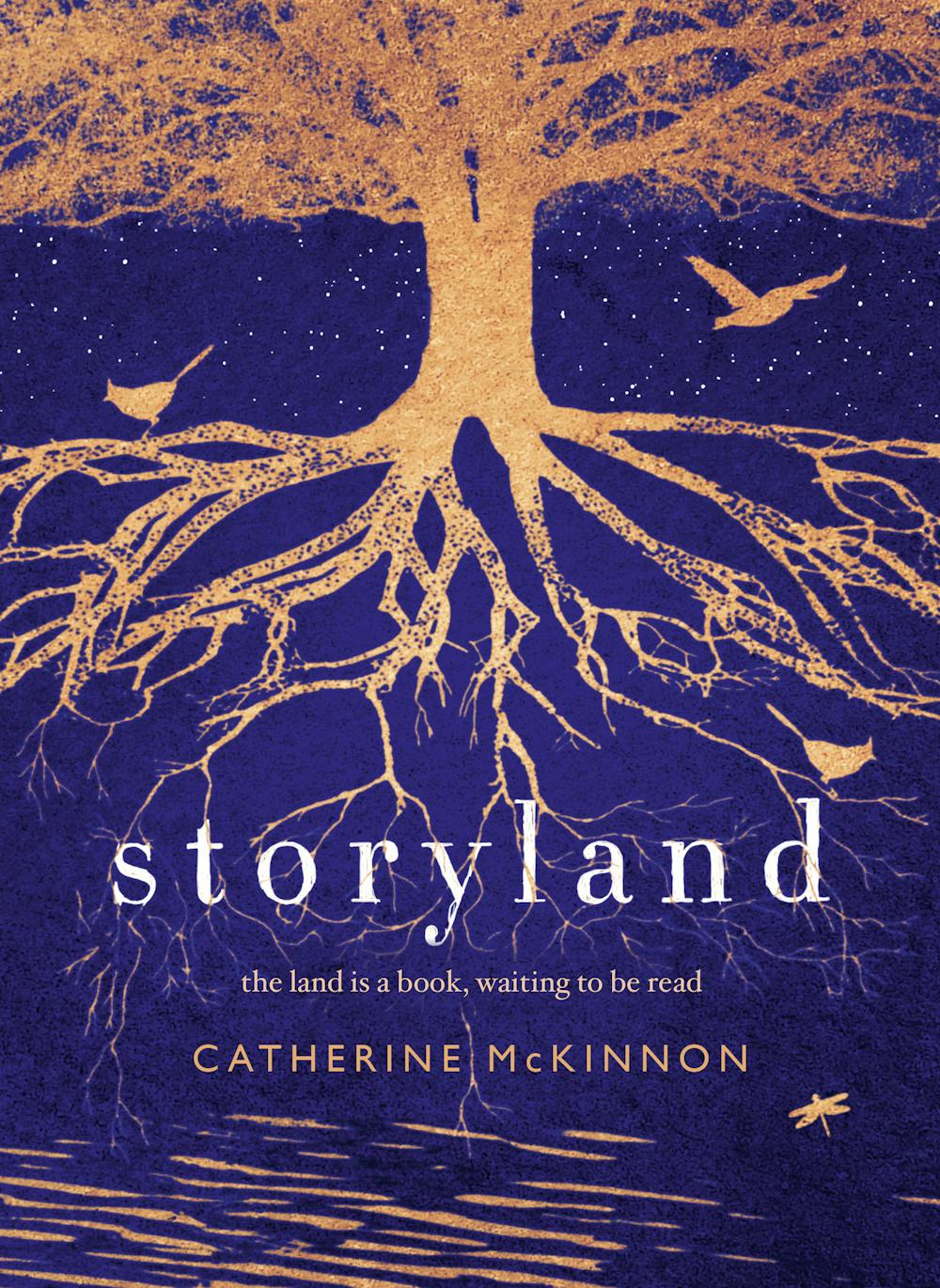 Catherine McKinnon’s Storyland is also structured in five discrete sections, the transitions here being characterised by the pulsing of time, rather than the geographical shifts of de Kretser’s work. Storyland starts and ends in the Illawarra region, during the early days of colonisation, where the possibility of trust or friendship between the local Wadi Wadi people and the invading British is constantly thwarted.
The sections between swoop up through the 19th and 20th centuries to a post-apocalypse future, and then cascade down again. Key elements – a river, a cave, a clever man’s axe – appear in each time period, connective tissue that binds them together. Characters too reappear, individuals or their descendants struggling with colonial society and its mores, with missed opportunities for connection, with the collapse of the environment and human society.
I read this novel as a migrant, and as a person of European descent, so I am not well positioned to evaluate the merits of McKinnon’s use of Aboriginal language and representation of the Aboriginal characters, but for me they were both convincing and moving. Story is not politics, but in it we can find ways to review ourselves and our histories, and perhaps begin to find points of conciliation.
Taboo
Catherine McKinnon’s Storyland is also structured in five discrete sections, the transitions here being characterised by the pulsing of time, rather than the geographical shifts of de Kretser’s work. Storyland starts and ends in the Illawarra region, during the early days of colonisation, where the possibility of trust or friendship between the local Wadi Wadi people and the invading British is constantly thwarted.
The sections between swoop up through the 19th and 20th centuries to a post-apocalypse future, and then cascade down again. Key elements – a river, a cave, a clever man’s axe – appear in each time period, connective tissue that binds them together. Characters too reappear, individuals or their descendants struggling with colonial society and its mores, with missed opportunities for connection, with the collapse of the environment and human society.
I read this novel as a migrant, and as a person of European descent, so I am not well positioned to evaluate the merits of McKinnon’s use of Aboriginal language and representation of the Aboriginal characters, but for me they were both convincing and moving. Story is not politics, but in it we can find ways to review ourselves and our histories, and perhaps begin to find points of conciliation.
Taboo
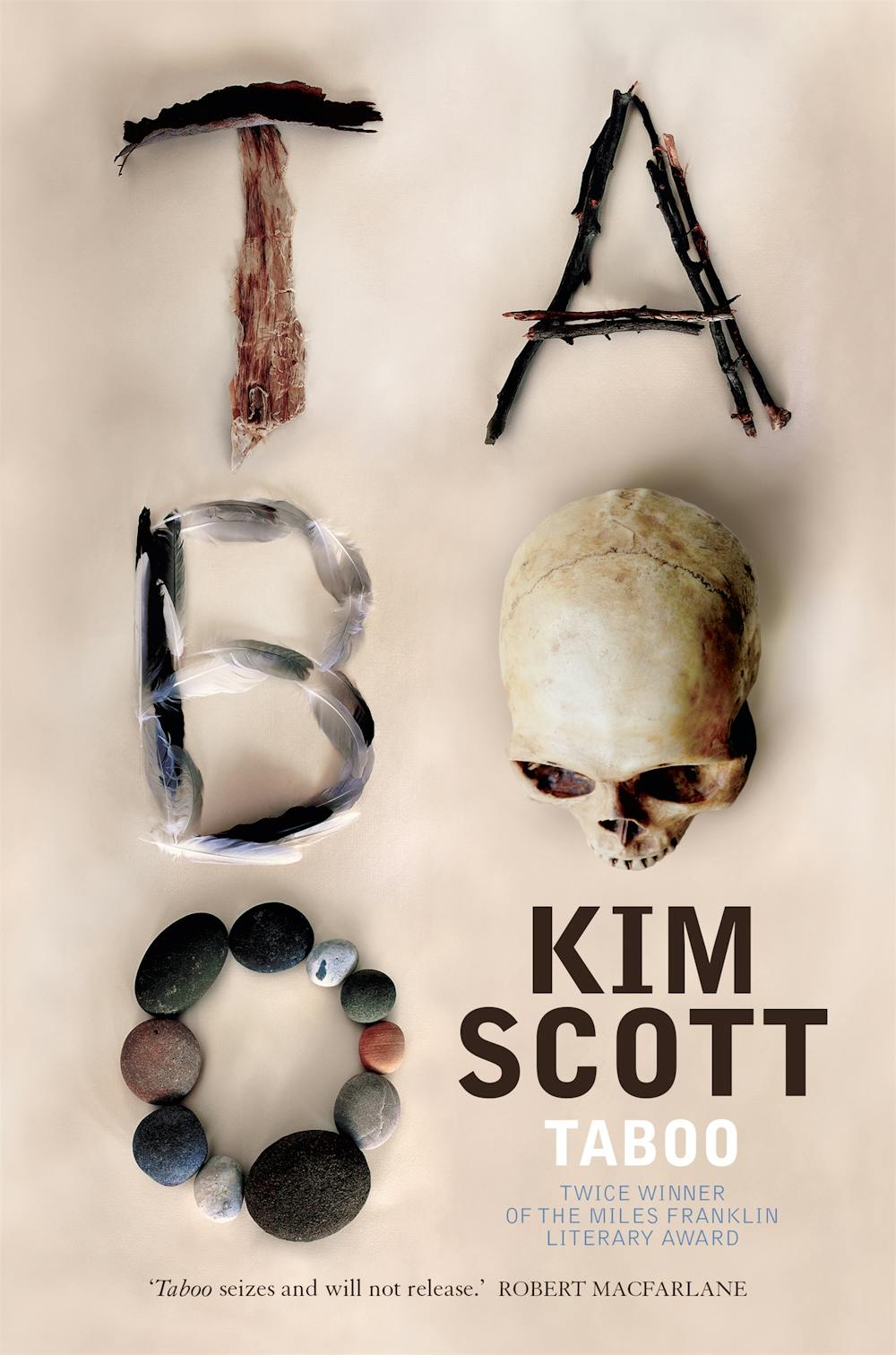 Taboo, by Kim Scott, is located squarely in the post-Apology present, when the Australian government can express regret for the Stolen Generations while maintaining the Northern Territory Intervention; and when Aboriginal communities across the country are building new ways to enter the future without deserting the past.
Focalised primarily through the young woman Tilly, daughter of an Aboriginal man who, toward the end of his life, realised the power of language to heal his community’s wounds, it follows the people of Kepalup and their establishment of a Peace Park to settle the ghosts of local Aboriginal people slaughtered by the ancestors of local pastoralists.
Though the novel is necessarily tragic – killings, stolen children, wrecked lives – it also has something generous and pragmatic at its heart. Says Uncle Wilfred of the white community: “Sorry for the history, they say. Know it’s our country, our ancestral country. They’re not gunna give the land back, but know we’re the right people.”
Despite the record of massacre, despite the clumsy interventions by white people – well-meaning but condescending, unaware of how little they know of Noongar culture – the community turns to recovering their language, retelling stories, reclaiming culture, and finding “magic in an empirical age”.
These six novels convincingly meet the criteria of the Miles Franklin, providing accounts of Australian life in all its phrases, in stories of “the highest literary merit” that craft a kaleidoscopic portrait of this society.
The winner of the Miles Franklin will be announced at the Melbourne Writers Festival on Sunday 26th August from 4pm at Deakin Edge, Fed Square.
Taboo, by Kim Scott, is located squarely in the post-Apology present, when the Australian government can express regret for the Stolen Generations while maintaining the Northern Territory Intervention; and when Aboriginal communities across the country are building new ways to enter the future without deserting the past.
Focalised primarily through the young woman Tilly, daughter of an Aboriginal man who, toward the end of his life, realised the power of language to heal his community’s wounds, it follows the people of Kepalup and their establishment of a Peace Park to settle the ghosts of local Aboriginal people slaughtered by the ancestors of local pastoralists.
Though the novel is necessarily tragic – killings, stolen children, wrecked lives – it also has something generous and pragmatic at its heart. Says Uncle Wilfred of the white community: “Sorry for the history, they say. Know it’s our country, our ancestral country. They’re not gunna give the land back, but know we’re the right people.”
Despite the record of massacre, despite the clumsy interventions by white people – well-meaning but condescending, unaware of how little they know of Noongar culture – the community turns to recovering their language, retelling stories, reclaiming culture, and finding “magic in an empirical age”.
These six novels convincingly meet the criteria of the Miles Franklin, providing accounts of Australian life in all its phrases, in stories of “the highest literary merit” that craft a kaleidoscopic portrait of this society.
The winner of the Miles Franklin will be announced at the Melbourne Writers Festival on Sunday 26th August from 4pm at Deakin Edge, Fed Square.
Authors: Jen Webb, Director of the Centre for Creative and Cultural Research, University of Canberra


















