

What makes a good parent? Is acting on climate change as important as love and bedtime stories?
- Written by: Craig Stanbury, PhD Candidate, Monash University
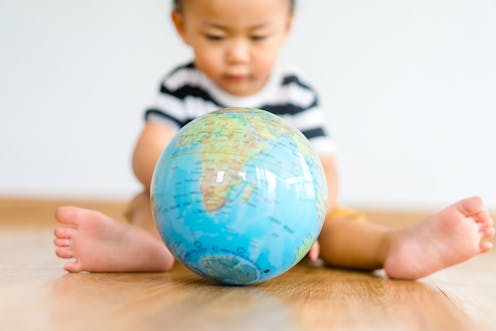
What makes a good parent? Most would say a good parent loves and nurtures their child with the ultimate aim of helping them flourish – now and into the future. A good parent will feed their child, give them space to play and time to use their imagination, make sure they get an education and medical care, listen to their troubles, and teach them to one day be autonomous adults.
However, does being a good parent involve anything more than this?
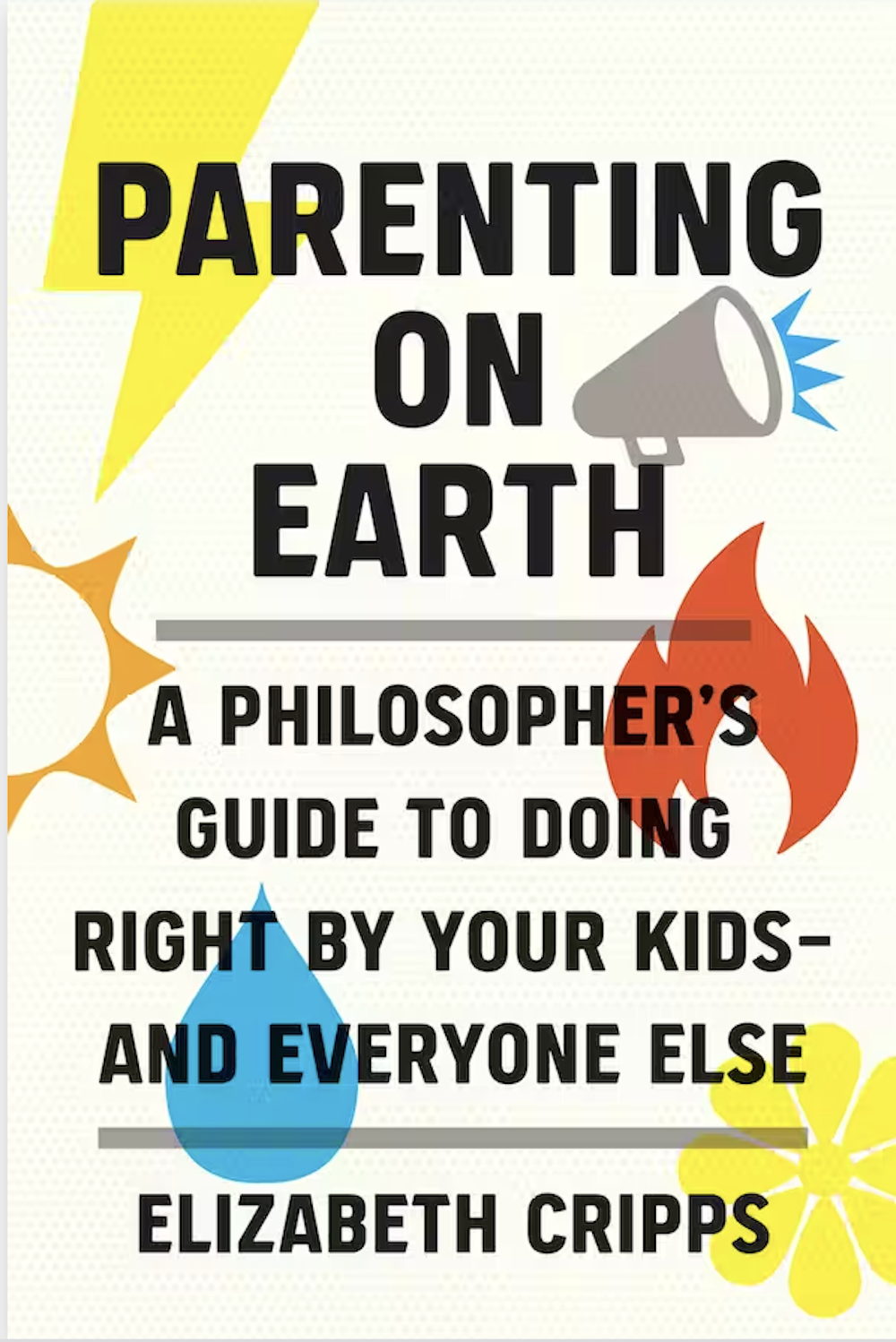
Review: Parenting on Earth: A Philosopher’s Guide to Doing Right by Your Kids – and Everyone Else – Elizabeth Cripps (The MIT Press)
In her book, Parenting on Earth, philosopher and mother Elizabeth Cripps argues that to do right by their kids, parents must also attempt to do something about the problems caused by climate change.
Many affluent parents, Cripps says, make two assumptions. The first is that their children will grow up (and grow old) avoiding environmental disasters. They will not experience starvation, famines, and wars over natural resources. Their future will be safe. The air they breathe will be clear, and the water they drink will be clean.
The second assumption is that broader institutions – such as governments and the World Health Organisation – will take care of these issues. Both assumptions, she argues, are wrong.
Read more: Thinking of having a baby as the planet collapses? First, ask yourself 5 big ethical questions
Regarding the first assumption, consider the Paris Climate Agreement, which aims to avoid catastrophic climate change by preventing the world from warming by 2℃ from pre-industrial levels. Unfortunately, we are not on track to do this.
Failing to achieve this aim, will cause tens of millions of deaths in the 21st century and an unquantifiable amount of suffering that does not result in death. Heat extremes that used only to happen every 50 years will occur every three. The number of people living in poverty will significantly increase as fundamental human rights to food, water, shelter and security are compromised. Every child on Earth will suffer at least one climate-related hazard, in their lifetime.

Put simply, Cripps points out, future generations – the very people that parents bring into the world – may not have the same opportunities to flourish as many of us have had.
Regarding the second assumption, the broader institutions we rely on are not doing enough to mitigate climate change. In a better-organised and just world, governments and international bodies would prevent climate-related problems on our behalf. The fact they are not, though, has ramifications for parents. Indeed, Cripps explains that the world’s collective failure to adequately address climate change alters “the rules of the parenting game”.
 Imagine, for instance, your child scooting down a road with a giant hole in the pavement. Even though it’s the council’s job to fill in this hole or fence it off, you would not sit back and let your child crash into it while claiming it was someone else’s job to fix it. You are obligated to step in and attempt to keep your child safe.
The same, argues Cripps, goes for climate change. Even though it should be someone else’s responsibility to address it, protecting one’s child ultimately falls to the parent. To do right by their kids, therefore, parents must also attempt to do something about climate change.
Being a good parent means being a good ancestor who fights for the Earth their descendants will inherit. It may become impossible to help your kids flourish without doing so. Climate change threatens their health, livelihoods and human rights.
Cripps even goes so far as to say that not trying to protect their future via addressing climate change makes a mockery of all the other things parents do to keep their children safe. It is equivalent to reading them a bedtime story while the house burns down.
Imagine, for instance, your child scooting down a road with a giant hole in the pavement. Even though it’s the council’s job to fill in this hole or fence it off, you would not sit back and let your child crash into it while claiming it was someone else’s job to fix it. You are obligated to step in and attempt to keep your child safe.
The same, argues Cripps, goes for climate change. Even though it should be someone else’s responsibility to address it, protecting one’s child ultimately falls to the parent. To do right by their kids, therefore, parents must also attempt to do something about climate change.
Being a good parent means being a good ancestor who fights for the Earth their descendants will inherit. It may become impossible to help your kids flourish without doing so. Climate change threatens their health, livelihoods and human rights.
Cripps even goes so far as to say that not trying to protect their future via addressing climate change makes a mockery of all the other things parents do to keep their children safe. It is equivalent to reading them a bedtime story while the house burns down.
 Being a good parent, argues Cripps, means trying to do something about climate change.
Picsea/unsplash
Three climate change duties for parents
According to Cripps, joining the fight against climate change involves at least three things.
First, parents must make lifestyle changes that minimise their family’s contribution to climate change: doing things like eating less meat, driving less, flying less, and being more mindful of how much stuff we buy.
These small-scale actions might feel fruitless, but, as Cripps explains, how we live mustn’t feed into the global climate change crisis. Otherwise, we would be fanning the flames of the burning house. Lifestyle changes can also get corporations, governments, and our peers to pay attention.
Secondly, Cripps says parents have a duty to raise their children as good ecological citizens aware of global climate injustices. This duty is particularly pertinent for families in affluent countries who have benefited from centuries of environmental exploitation. When parents in famine-plagued The Gambia cannot feed their kids, and many of us in the UK (where Cripps is writing from) or Australia (where I am writing from) have plenty of food to spare, there is a climate injustice at play.
We are rich on the back of colonisation that has stripped people of the wealth that could (and should) have been theirs. We use a disproportionate amount of natural resources that others have to pay the price for. This is deeply unjust and children should grow up to be better global and ecological citizens than we have been. Climate action should involve climate justice.
Read more:
Climate change is white colonisation of the atmosphere. It's time to tackle this entrenched racism
Being a good parent, argues Cripps, means trying to do something about climate change.
Picsea/unsplash
Three climate change duties for parents
According to Cripps, joining the fight against climate change involves at least three things.
First, parents must make lifestyle changes that minimise their family’s contribution to climate change: doing things like eating less meat, driving less, flying less, and being more mindful of how much stuff we buy.
These small-scale actions might feel fruitless, but, as Cripps explains, how we live mustn’t feed into the global climate change crisis. Otherwise, we would be fanning the flames of the burning house. Lifestyle changes can also get corporations, governments, and our peers to pay attention.
Secondly, Cripps says parents have a duty to raise their children as good ecological citizens aware of global climate injustices. This duty is particularly pertinent for families in affluent countries who have benefited from centuries of environmental exploitation. When parents in famine-plagued The Gambia cannot feed their kids, and many of us in the UK (where Cripps is writing from) or Australia (where I am writing from) have plenty of food to spare, there is a climate injustice at play.
We are rich on the back of colonisation that has stripped people of the wealth that could (and should) have been theirs. We use a disproportionate amount of natural resources that others have to pay the price for. This is deeply unjust and children should grow up to be better global and ecological citizens than we have been. Climate action should involve climate justice.
Read more:
Climate change is white colonisation of the atmosphere. It's time to tackle this entrenched racism
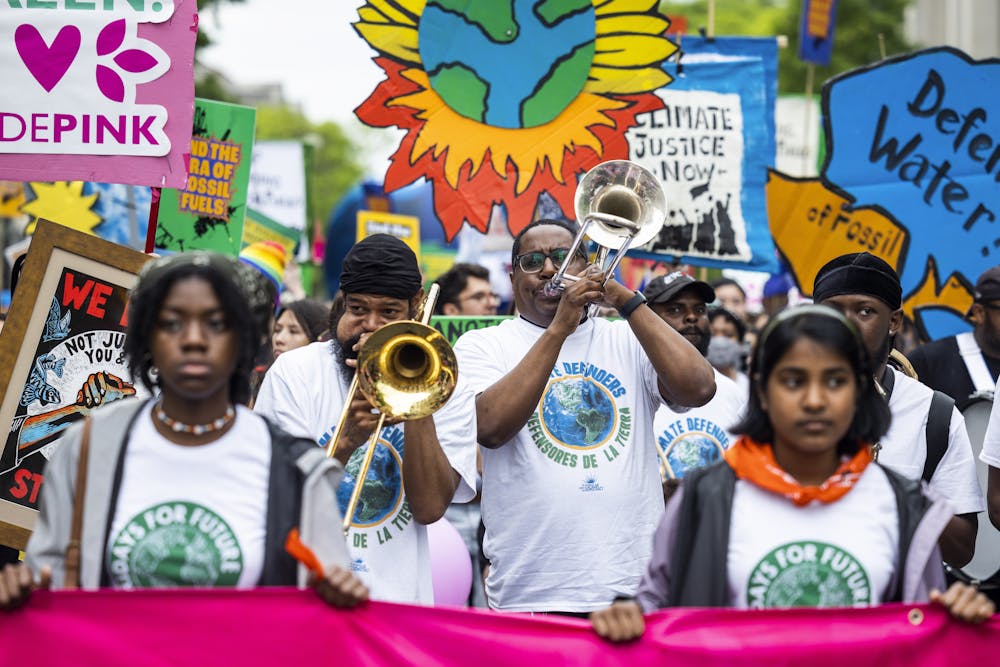 Climate action means climate justice.
Jim Lo Scalzo/AAP
Thirdly, and most importantly for Cripps, parents should become climate activists. When governments and corporations fail us in climate action, parents should campaign for and demand better collective action from the institutions and structures in society that can make significant differences.
Doing so could involve anything from advocating for legislation that switches away from fossil fuels, changing to banks and superannuation that invest in renewable energy, attending protests, or signing petitions.
It could also include joining collective movements campaigning to make it easier for people to live “greener” – for instance, movements to improve public transport so it’s easier to live car-free or to reduce plastic packaging.
Parents cannot make large-scale differences on their own. But by joining groups trying to promote change and campaigning for more action by governments and other institutions, she argues they can do right by their kids.
Cripps does not claim that it will be possible to do this all the time. (Climate action needs to be balanced against other duties involved in raising a child.) It may seem futile at times. But, if parents do nothing, they fail their children.
The ‘hardest question’
This book is an important read for any parent. It’s challenging and deeply confronting. Yet it’s also full of hope for a future that could occur if enough work is done to make it happen. Cripps is not judging parents, talking down to them, or making them feel guilty.
Instead, as an ethicist and a mother of two girls, she brings her professional expertise into a topic of deep personal concern. She is worried about her (and other) children’s future in a vulnerable world that also includes pandemics, extreme poverty, unjust and racist institutions. She is essentially saying to other parents:
I see you; this is a very stressful situation; here’s some help on how we can best raise our children under the circumstances.
In her Note to Readers, she says this book is also for those who are considering having kids. There is an interesting chapter on what she calls “the hardest question” – that is, should we become parents at all, at least biological parents? As Cripps acknowledges, this is an essential question that precedes any others about how to parent. She says that we should be able to have kids – it can be a uniquely valuable life experience – and try to build a better future for them, but there are good moral reasons to think carefully about the issue.
Climate action means climate justice.
Jim Lo Scalzo/AAP
Thirdly, and most importantly for Cripps, parents should become climate activists. When governments and corporations fail us in climate action, parents should campaign for and demand better collective action from the institutions and structures in society that can make significant differences.
Doing so could involve anything from advocating for legislation that switches away from fossil fuels, changing to banks and superannuation that invest in renewable energy, attending protests, or signing petitions.
It could also include joining collective movements campaigning to make it easier for people to live “greener” – for instance, movements to improve public transport so it’s easier to live car-free or to reduce plastic packaging.
Parents cannot make large-scale differences on their own. But by joining groups trying to promote change and campaigning for more action by governments and other institutions, she argues they can do right by their kids.
Cripps does not claim that it will be possible to do this all the time. (Climate action needs to be balanced against other duties involved in raising a child.) It may seem futile at times. But, if parents do nothing, they fail their children.
The ‘hardest question’
This book is an important read for any parent. It’s challenging and deeply confronting. Yet it’s also full of hope for a future that could occur if enough work is done to make it happen. Cripps is not judging parents, talking down to them, or making them feel guilty.
Instead, as an ethicist and a mother of two girls, she brings her professional expertise into a topic of deep personal concern. She is worried about her (and other) children’s future in a vulnerable world that also includes pandemics, extreme poverty, unjust and racist institutions. She is essentially saying to other parents:
I see you; this is a very stressful situation; here’s some help on how we can best raise our children under the circumstances.
In her Note to Readers, she says this book is also for those who are considering having kids. There is an interesting chapter on what she calls “the hardest question” – that is, should we become parents at all, at least biological parents? As Cripps acknowledges, this is an essential question that precedes any others about how to parent. She says that we should be able to have kids – it can be a uniquely valuable life experience – and try to build a better future for them, but there are good moral reasons to think carefully about the issue.
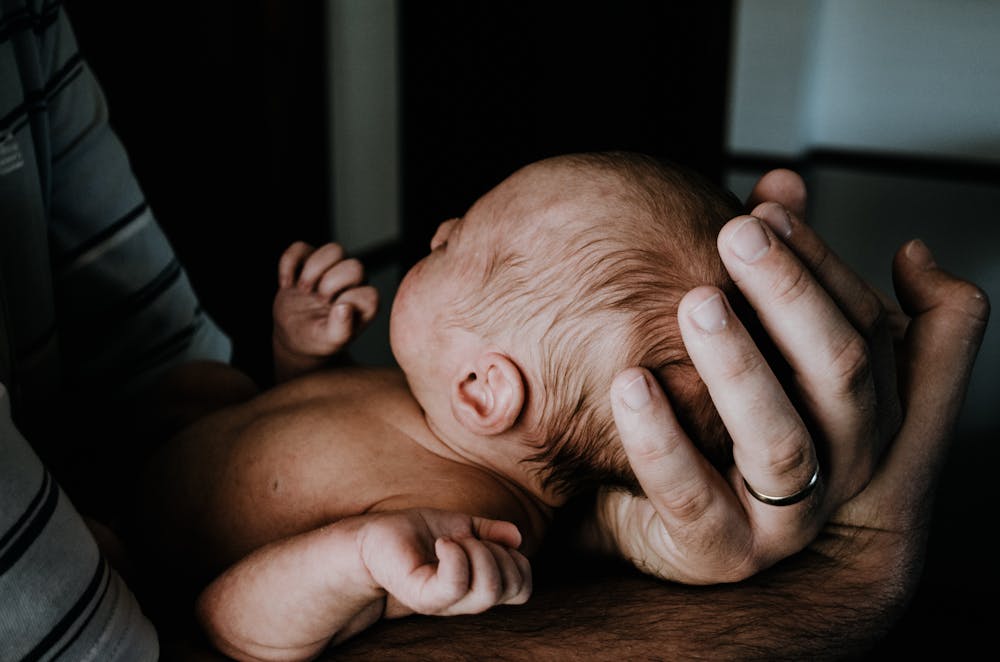 Is it ethical to even have a baby in a time of climate change?
Photo by Kelly Sikkema on Unsplash
For instance, she explains that bringing a new person into the world in a heavily polluting country creates another person with a high carbon footprint. There are also children already alive today without parents who will suffer from the harms of climate change. Therefore, people without a strong desire to be a biological parent could perhaps seek to adopt instead.
Nevertheless, there could have been more space dedicated to this decision. Indeed, as someone who does not have children and is considering whether it is ethical to become a parent in a time of climate change, it is a live question I’d have liked to read more on.
Parenting on Earth reads as much more relevant to those who have already become parents. To that end, while everyone can gain valuable insights and become better ecological citizens by reading it, parents concerned with climate change should put it at the top of their must-read list.
Authors: Craig Stanbury, PhD Candidate, Monash University
Is it ethical to even have a baby in a time of climate change?
Photo by Kelly Sikkema on Unsplash
For instance, she explains that bringing a new person into the world in a heavily polluting country creates another person with a high carbon footprint. There are also children already alive today without parents who will suffer from the harms of climate change. Therefore, people without a strong desire to be a biological parent could perhaps seek to adopt instead.
Nevertheless, there could have been more space dedicated to this decision. Indeed, as someone who does not have children and is considering whether it is ethical to become a parent in a time of climate change, it is a live question I’d have liked to read more on.
Parenting on Earth reads as much more relevant to those who have already become parents. To that end, while everyone can gain valuable insights and become better ecological citizens by reading it, parents concerned with climate change should put it at the top of their must-read list.
Authors: Craig Stanbury, PhD Candidate, Monash University 

















