

People with disability face barriers to sexual and reproductive health care. New recommendations are only the start
- Written by: Elizabeth Kendall, Professor, Director, Griffith Inclusive Futures, Griffith University, Griffith University
The recently released findings of the senate inquiry into reproductive health care sets the stage for potential transformative change.
Its recommendations are aimed at dismantling the barriers that have long hindered the sexual, maternal, and reproductive health care of women, non-binary, trans, and gender-diverse people, including people with disability.
Its recommendations are strong, welcome and important. For too long, people with disability have been stripped of their autonomy, self-determination and dignity when it comes to accessing sexual and reproductive health care.
But the latest recommendations are not enough to dismantle entrenched biases and stereotypes. Here’s what needs to happen next.
Read more: Australian women's access to abortion is a postcode lottery. Here's what needs to change
Why this is so badly needed
The report outlined two key recommendations focused on people with disability, including:
improved training for health practitioners on the ways to engage and communicate with people with disability
developing accessible, inclusive and empowering sexual and reproductive health education programs and resources for people with disability, and their family and carers.
These recommendations came after the senate inquiry received a number of submissions that highlighted the struggle women with disability face in engaging with sexual and reproductive health care.
The most obvious and well-known barriers are inaccessible health care settings and services, lack of relevant and complete information about options available to them, and inadequately educated and trained health workers. The recommendations only partially deal with these barriers.
However, the covert, ableist barriers women with disability face are much more pervasive and harmful.
Women with disability are often stereotyped as being incapable of controlling their sexual impulses, or being non-sexual and child-like with no desire or capacity for intimate relationships. Other stereotypes include lacking capacity to care for their children, manage menstruation or control their sexuality and fertility.
These disabilist views have endured, largely unchallenged and with pervasive influence. As a result, sexual and reproductive education for people with disability and health professionals tends to adopt a narrow perspective. It disregards the diverse identities and concerns of the disabled community, driven instead by cis-heteronormative, ableist, and Eurocentric values.
Current practice often centres on disease and pregnancy prevention, with an emphasis on paternalistic safeguarding of “vulnerable” women.
The impact of these stereotypes means people with disability of diverse genders continue to experience menstrual suppression using pharmaceuticals, forced contraception, sterilisation, and forced abortion, particularly those in guardianship arrangements.
Women with disability are also disproportionately affected by sexual violence and abuse. A total of 90% of women with intellectual disability have endured sexual abuse at some time in their lives. Women with disability are nearly twice as likely as non-disabled women to experience sexual violence.
Read more: We count what matters, and violence against people with disability matters
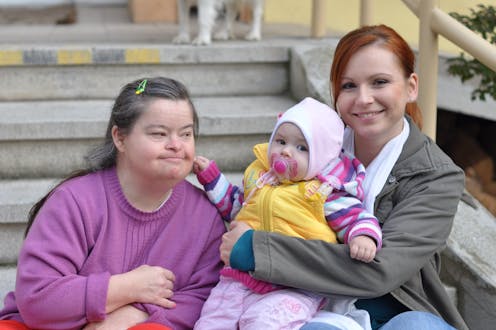
When it comes to expectant and new mothers with disability, appropriate and accessible health care is also hard to find. Many receive no tailored pre- and post-natal care and people with disability and are often prevented from receiving a full complement of care that non-disabled women receive.
The question remains whether the senate inquiry’s recommendations will be enough to tackle the deeply ingrained stigma and discrimination women with disability face when it comes to accessing sexual health care, unbiased fertility and reproductive information, affordable contraception, and support for sexual choices.
It’s unlikely the barriers created by inherent ableism will be easily dismantled through education alone. So, what else is needed?
Read more: Autistic people often feel they’re ‘doing love wrong’ – but there’s another side of the story
1. Human rights legislation
Sexual and reproductive rights are inherent entitlements of every being, regardless of gender or disability. However, the right to parenthood is particularly precarious for people with disability in Australia.
Article 23 of the UN Convention on the Rights of Persons with Disabilities unequivocally upholds the right to a family, including the right to marry and have children.
Those who do have children, face additional pressures. About 15% of Australian children have at least one parent who has a disability but three out of every five of these children face the possibility of being removed from their parents.
People with disability want their right as a decision-maker over their own health, life and bodily integrity to be validated. So we need to move beyond educating people with disability, their families and health professionals. We need a courageous examination of systemic deeply rooted stereotypes and biases in how sexual and reproductive health care is understood and delivered. And health systems need to be accountable.
We can do this partly with human rights legislation that specifically affirms and acknowledges the rights of people with disability and their health care. Establishing a legal mechanism for rights would, at a minimum, provide disabled Australians with some protection.
Little change will occur in Australia until we align with the global shift to support people with disability to make their own decisions about their health care. Australia is starting to do this, but we still lag behind many other countries.
Read more: How a charter of rights could protect Australians' fundamental freedoms
2. Accessible information
Accessibility – physical, sensory, cognitive – remains a major challenge to sexual and reproductive health care. Without it, we limit access to essential services. Education alone will not shift these barriers.
The success of the senate inquiry’s recommendations will also hinge on the provision of accessible and inclusive health information in various formats, such as Braille, large print Easy English, audio, with sign language interpretation.
Accessible communication and personally relevant, transparent, and complete information are critical for people with disability to feel their rights are protected, their treatment is dignified and they are supported to make informed choices and decisions.
Read more: Sex, technology and disability – it's complicated
3. Collaboration and commitment
Close collaboration between the government and the disability sector is needed if we are to successfully implement the senate inquiry’s recommendations. This means active involvement of disabled people’s organisations, advocates, and people with disability. Sufficient funding for genuine co-design and authentic engagement will also be essential.
4. Change attitudes
To effectively implement these recommendations and make any meaningful and lasting change, we must also invest heavily in influencing public perceptions.
That includes challenging the ableist view that sexuality is “taboo” for people with disability, and eliminating stigma, misconceptions and misunderstandings about parenting by people with disability.
This article was co-authored by Karin Swift. Karin is an Adjunct Citizen Scientist at Griffith University, President of Women with Disabilities Australia and a private consultant on disability, human rights, gender advocacy and social policy. She was Senior Engagement and Policy Consultant at Queenslanders with Disability Network.
Authors: Elizabeth Kendall, Professor, Director, Griffith Inclusive Futures, Griffith University, Griffith University


















