

Can we learn from the past in tackling witchcraft-related violence today?
- Written by: Charlotte-Rose Millar, UQ Research Fellow, The University of Queensland
Between 1450 and 1750, some 45,000 men, women and children were executed in Western Europe as accused witches. Today, emerging new research shows that, during the past 20 years, upwards of 600 people were reported killed in witchcraft related attacks in Papua New Guinea, while current estimates are that thousands are killed in witchcraft-related violence around the world each year.
Today, it is popularly believed that violence against those accused of “witchcraft” and “sorcery” in the Global South mirrors European witchcraft-persecutions in the past. For example, international media outlets have responded to current accusations of sorcery related violence in Melanesia with headlines such as “Papua New Guinea ‘Witch’ Murder is a Reminder of our Gruesome Past”.
Various reports similarly state that, unlike in Melanesia today, “Witch-hunts went out of style in Europe some time in the 1700s” and that “We Europeans also killed lots of witches in the Middle Ages”.
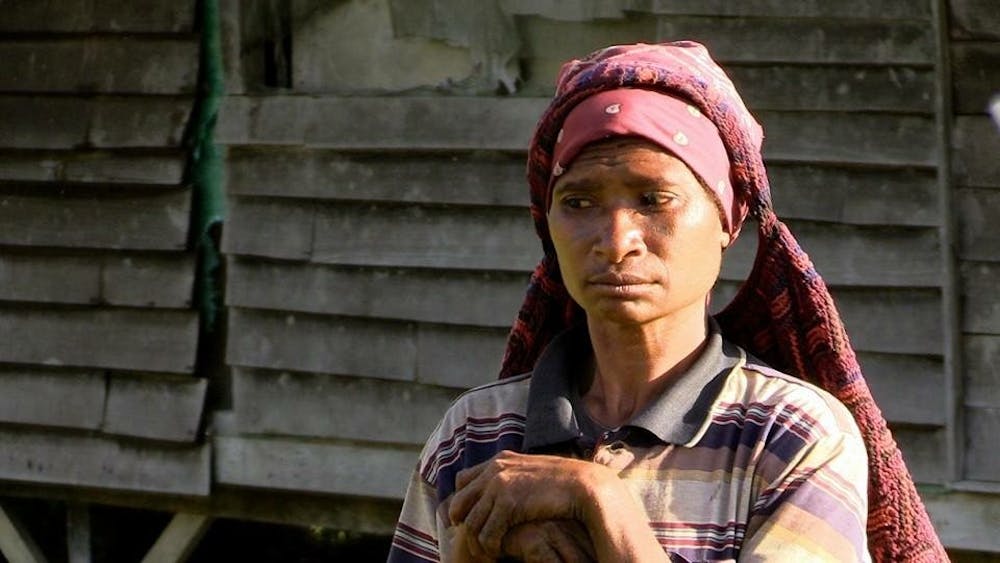 Supplied image obtained in 2015 of Mifila, a Papua New Guinea woman reported axed to death after being accused of sorcery in the country’s highlands.
Anton Lutz/AAP
Supplied image obtained in 2015 of Mifila, a Papua New Guinea woman reported axed to death after being accused of sorcery in the country’s highlands.
Anton Lutz/AAP
But what exactly are the connections and similarities between these two different contexts? Historians and anthropologists are understandably wary of the colonial overtones of any argument that places present-day Melanesian beliefs and practices in an evolutionary schema – equating them with those of pre-modern Europeans. But does this mean such comparisons should never be made?
Historians today largely attribute the decline in European witchcraft trials to increased scepticism by judges and magistrates about the possibility of proving witchcraft in a state court (even if they continued to believe in the existence of witchcraft).
This scepticism included concern about the veracity of confessions obtained under torture, which was the main source of evidence in many trials (a notable exception here is England in which suspects were not tortured). As torture is widely used in vigilante “trials” of those accused of sorcery in PNG today, we wonder if efforts to end torture might have far-reaching consequences in ending sorcery-related violence.
Although state-sanctioned witchcraft trials did die out in Europe (almost entirely by the 18th century) we now know that belief in witchcraft and associated violence lasted much longer. Indeed, historians are increasingly demonstrating that belief in witchcraft survived in Western Europe well into the 18th, 19th and even 20th centuries (see, for example, Owen Davies’ work on witchcraft in America or his new book on supernatural belief in the First World War).
Read more: Witches both mad and bad: a loaded word with an ugly history
For contemporary policymakers, this suggests that overcoming sorcery accusations and related violence may not require first changing entire belief systems, or introducing so-called “rational” ways of thinking into a population.
Instead, it directs attention to considering far more specific questions about what motivates people to accuse and harm those they suspect of witchcraft or sorcery.
The role of law
The role of law in addressing contemporary violence related to accusations of sorcery is a contentious one. There are debates for and against creating specific forms of crime to deal with the problem, such as crimes of accusing someone of practising sorcery, or specific types of violence addressed at those accused of witchcraft. For example, in India last month a specific anti-witch hunting Bill was enacted.
Read more: What witch-hunters can teach us about today's world
In early modern Europe, the legislation criminalising witchcraft was eventually repealed and replaced in some countries with legislation criminalising those who tried to “trick” or deceive others through pretending to use witchcraft. The historical record indicates that one impact of this legislative change was that it made it much easier for people to talk openly about their scepticism towards witchcraft, and made the public defence of witch beliefs increasingly socially unacceptable in educated circles.
While law alone cannot change belief systems, the early modern experience suggests a potentially valuable role for legislation in facilitating certain types of public discourse about witchcraft, and officially condemning violence as a response towards fears of it.
Contagious narratives
History is also replete with examples of stories with a catalysing effect on communities, provoking sporadic “outbreaks” of violence. This suggests that all populations can potentially be susceptible to contagion of new and terrifying narratives, particularly where they resonate with existing prejudices or ways of thinking.
In PNG, and indeed many places across the world today, new or revised narratives of sorcery and witchcraft are infecting populations and leading to what some describe as “epidemics” of violence. These are spread by word of mouth, social media, and in Africa at least, through popular local films.
In tackling their impact on populations, it is important to recognise these as being new or recently modified stories in many places, rather than entrenched cultural traditions. Framing them as foreign can potentially help to undermine arguments that such violence is justified by culture, and can prompt attention to countering their transmission.
There are of course some limitations with taking a comparative approach. Violence against witches in the South Pacific tends to be incited by individuals or communities acting outside the law; whereas early modern Europe executed and tortured witches fully in accordance with legal statutes against witchcraft.
It is crucial to acknowledge these differences and to be very careful not to suggest that witchcraft is the same everywhere, across time and place.
But, at the same time, if it is possible to learn anything at all from the past about how to stop the torture and murder of hundreds of innocent men and women in the world today then these conversations can have a very real impact.
Authors: Charlotte-Rose Millar, UQ Research Fellow, The University of Queensland


















