

what are the impacts of shifting to all-electric homes?
- Written by: Trivess Moore, Senior Lecturer, School of Property, Construction and Project Management, RMIT University
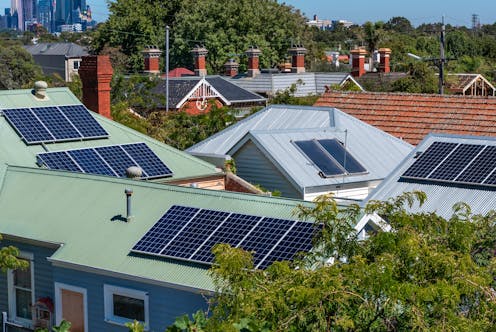
Gas connections for all new housing and sub-divisions will be banned in Victoria from January 1 next year. The long-term result of the state government’s significant change to planning approvals will be all-electric housing. The ACT made similar changes early this year, in line with a shift away from gas across Europe and other locations, although the NSW Premier Chris Minns has baulked at doing the same.
Around 80% of homes in Victoria are connected to gas. This high uptake was driven by gas being seen as more affordable and sustainable than electricity over past decades. The situation has changed dramatically as renewable electricity generation increases and costs fall.
Research has suggested for more than a decade that the benefits of all-electric homes stack up in many locations. New homes built under mandatory building energy performance standards (increasing from 6 to 7 stars in Victoria in May 2024) need smaller, cheaper heating and cooling systems. Installing reverse-cycle air conditioning for cooling provides a cost-effective heater as a bonus.
Savings from not requiring gas pipes, appliances and gas supply infrastructure help to offset the costs of highly efficient electric appliances. Mandating fully electric homes means economies of scale will further reduce costs.
How does this ban help?
To achieve environmentally sustainable development, reforms of planning policy and regulation are essential to convert innovation and best practice to mainstream practice. Planning policy is particularly important for apartment buildings and other housing that may be rented or have an owners’ corporation. Retrofits to improve energy efficiency can be difficult in these situations.
Banning gas in new and renovated housing will cut greenhouse gas emissions. It’s also healthier for households and reduces healthcare costs as well as energy bills and infrastructure costs. The Victorian government suggests the change will save all-electric households about $1,000 a year. Houses with solar will be even better off.
The government appears to be offering wide support to ensure these changes happen, but this will need to be monitored closely.
Some households will face extra costs for electric appliances and solar panels. The government’s announcement of $10 million for Residential Electrification Grants should help with some of these costs while the industry adjusts.
There will be impacts and benefits for the local economy. Some jobs may be lost, particularly in the gas appliance and plumbing industry. The government has announced financial support to retrain people and they will still have essential roles in the existing housing sector.
Many gas appliances are imported, including ovens, cooktops and instantaneous gas water heaters. Some components of efficient electric products, such as hot water storage tanks, are made locally. Local activities, including distribution, sales, design, installation and maintenance, comprise much of the overall cost.
Read more: Keen to get off gas in your home, but struggling to make the switch? Research shows you're not alone
Challenges of change must be managed
Sustainability benefits will depend on what happens with the energy network. We need more renewable energy, energy storage and smarter management of electricity demand.
The shift to all-electric homes may mean winter peak demand for heating increases. Energy market operators and governments will have to monitor demand changes carefully to avoid the reliability issues we already see in summer. However, improving energy efficiency, energy storage and demand management will help reduce this load (and household costs).
While the benefits are clear for new homes, the changes may increase gas costs and energy poverty for residents of existing housing who don’t shift to efficient electric solutions. The government has reconfirmed financial rebates to help households switch from gas.
Read more: Solar power can cut living costs, but it's not an option for many people – they need better support
In addition, existing housing may face building quality and performance issues. Some may require electrical wiring upgrades as part of the transition.
Social acceptance of some electric appliances may also be an issue. For example, our research has found some households dislike the way heating from reverse cycle air conditioners feels. Others do not like cooking on induction cooktops.
Consumer education and modifications to appliances and buildings may be needed to increase acceptance and avoid backlash.
Some electric appliances are available overseas but not in Australia. Higher demand may increase the range of imports. For example, floor-mounted heat pumps can make heating feel similar to gas heating while still providing effective cooling.
We should not assume electric appliances are all equal. To improve consumer protection, action is needed on weak standards and limited and inconsistent public information. For example, information on noise levels and efficiency under a range of weather conditions must be standardised.
Moving housing away from gas is an important step in the transition to a zero-carbon economy and energy system. Careful management is needed to ensure this transition is effective, accepted and fair.
Continued planning reforms are also essential to ensure environmentally sustainable development of housing and communities. Other urgent priorities include urban cooling and greening, and circular economy approaches to reduce the material and waste impacts of housing and thus the carbon that goes into building and running homes.
Read more: Turning the housing crisis around: how a circular economy can give us affordable, sustainable homes
Authors: Trivess Moore, Senior Lecturer, School of Property, Construction and Project Management, RMIT University


















