

How bees can monitor pollution for us – everything from toxic metals to antimicrobial resistance
- Written by Mark Patrick Taylor, Chief Environmental Scientist, EPA Victoria; Honorary Professor, School of Natural Sciences, Macquarie University
Our cities are complex places of work, industry and residential activities. This often makes it hard to pin down the spread of different contaminants throughout them.
This can be a concern, especially given mounting evidence there is no “safe” limit of exposure for many of the chemicals we use in our daily lives. The connections between contamination, food, water and human health add to these concerns.
Measuring contamination in soil or dust is a good start. But this can only tell us the level of a contaminant at the place it was sampled. Our two new studies have used backyard bees to better monitor contamination in urban environments.
Read more: Bees can do so much more than you think – from dancing to being little art critics
The buzz behind biomonitoring
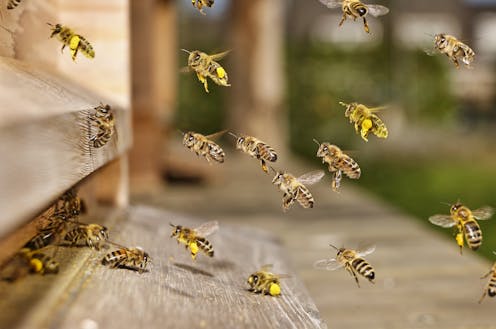
When it comes to understanding contamination, honey bees can do the hard work for us. While foraging for nectar, pollen and water, bees are constantly picking up contaminants from their environment. Because we know their lifespan and approximate foraging range, chemical analysis can provide a snapshot of the levels of contaminants in their foraging area at that time.
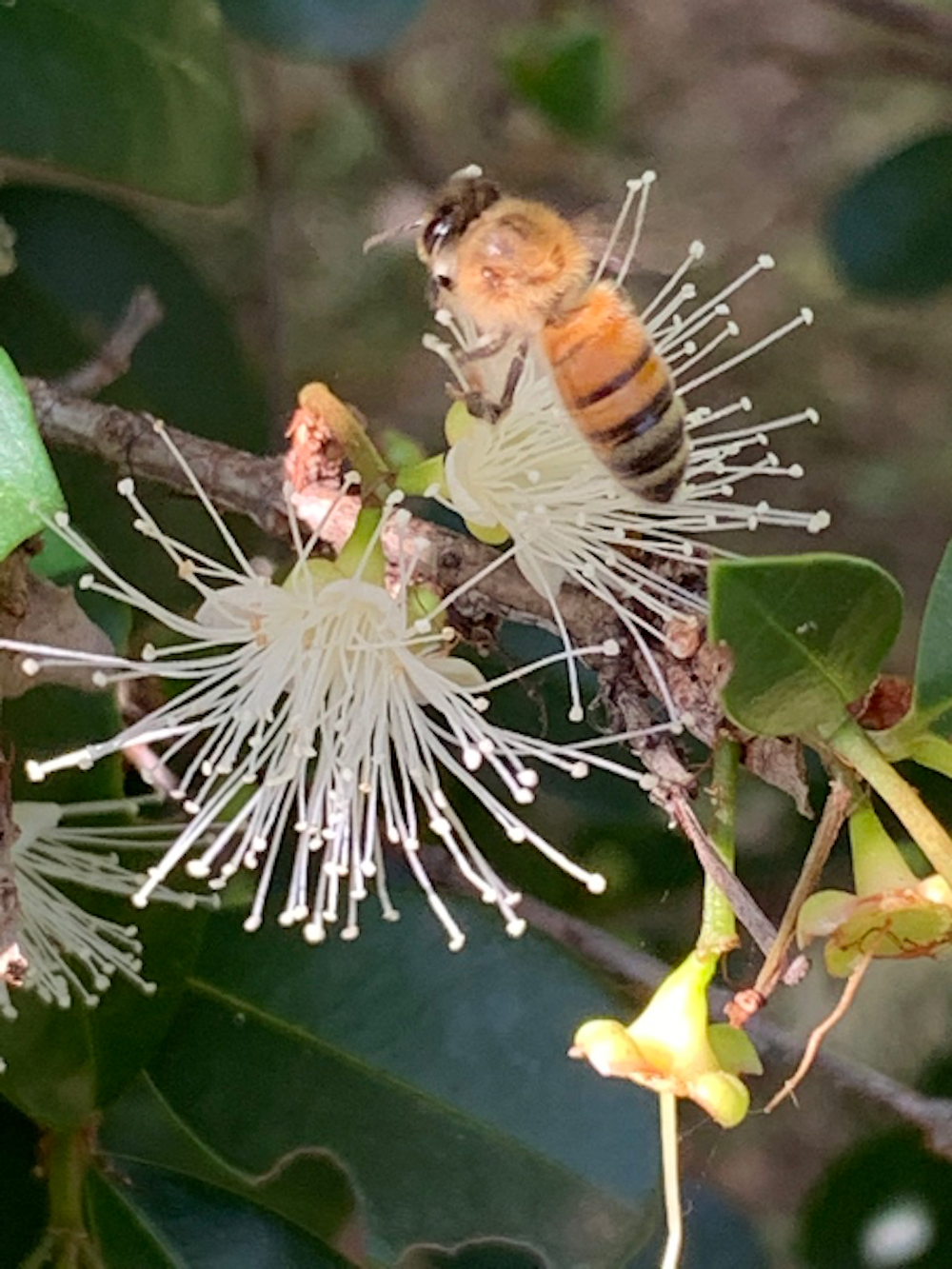
With the help of backyard beekeepers, our two studies traced toxic metals and antimicrobial resistance genes across two urban centres: Sydney, Australia, and Nouméa, New Caledonia.
European honey bees have long been used as sentinel species to monitor for pests and diseases, including Varroa mites and chemicals at airports. Bees can also be used as biomonitors to understand contaminants across our urban environments.
As the popularity of urban beekeeping has grown, there has been more research on honey bee biomonitoring of a range of contaminants, including metals, pesticides and so-called “forever chemicals”, known as PFAS, in honey.
How bees help us map pollution
Honey bees can reveal patterns of contamination that might otherwise go unnoticed.
In Nouméa, we used honey bees to map impacts from the local nickel smelter. We found levels of metals associated with the smelter – nickel, chromium and cobalt – were elevated next to the smelter and decreased farther away.
This might not sound surprising given the smelter is a major source of pollution. However, comparing the data from bees to soil and dust samples revealed bees were the most sensitive and effective marker of smelter contamination.
By mapping trace metals in honey bees in Sydney we could look at the specific factors contributing to metal pollution within their foraging range. For the neurotoxic metal lead, we found residential and industrial activity were key influences, especially in heavily populated inner-city areas.
In contrast, less populated locations and larger areas of parks or farms had higher levels of manganese. This likely came from natural soil sources and pesticide use.
We also examined how bees can help us understand emerging concerns such as the spread of antimicrobial resistance (AMR) genes. It’s a key concern in urban areas, driven by the misuse and overuse of antibiotics.
We found these AMR genes were common across Sydney – 83% of bees examined had ingested one or more of the genes we looked for. The source was not strongly linked to industrial activity, but rather the area of water bodies available for the bees to drink from. This may be because these genes can enter the environment through human wastewater and runoff and then be absorbed by foraging bees.
Read more: Gutter to gut: How antimicrobial-resistant microbes journey from environment to humans
How do contaminants affect bees?
We also wanted to know if bees that contained contaminants were actually ingesting them. Our analyses showed contaminants build up within the bee over time and were not present on their exterior. We compared metal concentrations in matched samples of washed and unwashed bees and they were no different, indicating contaminants were inside the bee. Further, metal concentrations were higher in older, dead bees at the end of their lives than in the younger bees.
Using high-resolution imaging, we found only organic non-metal particles on the outside of bees. This may be because bees have very good self-cleaning habits. These behaviours also keep hives free from parasites and fungi brought in by foraging bees.
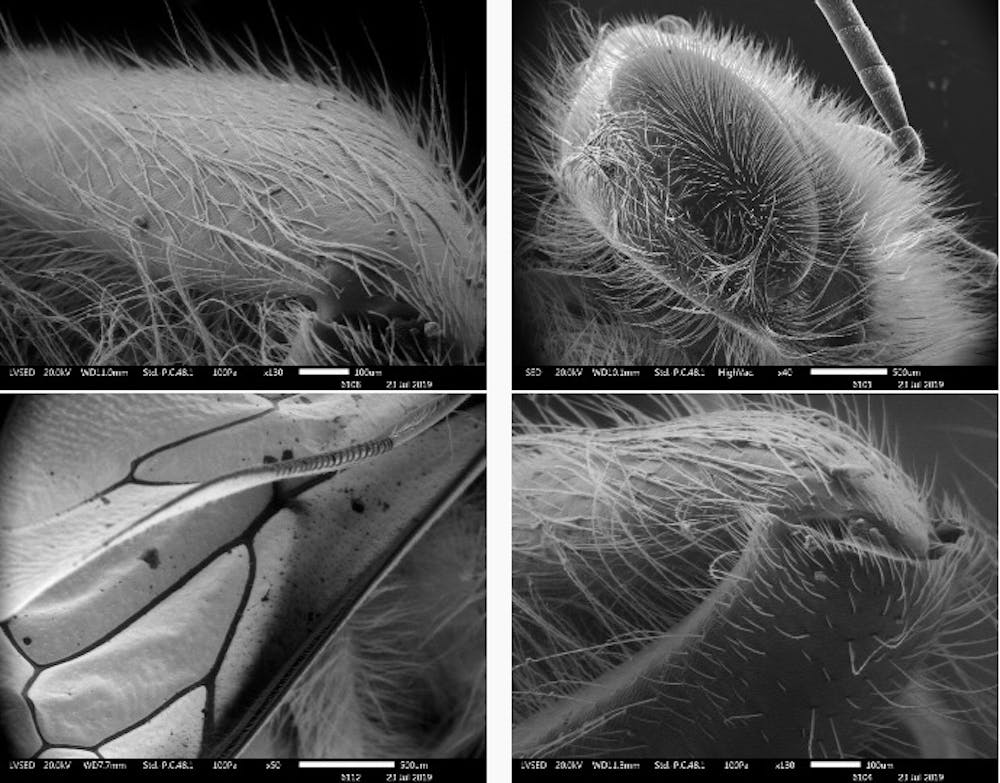 Scanning electron microscope images of Nouméa bees. Where particles could be identified they were found to be not metallic.
Authors
Scanning electron microscope images of Nouméa bees. Where particles could be identified they were found to be not metallic.
Authors
Research has shown exposure to contaminants including metals and neonicotinoid insecticides can impair honey bee development, foraging ability and survival.
Read more: How clean is your city? Just ask the bees
And what’s in their honey?
Both honey producers and consumers want to know if their honey is safe to eat. While we previously identified some commercial honeys are adulterated with sugar syrups, this new work focused on potentially toxic trace metals in the honey.
The good news is we found trace metals in honey at very low levels that do not pose a concern. In Nouméa, the main smelter element, nickel, was more than 30 times lower in honey than in the bees.
We found similar outcomes in the mining town of Broken Hill, Australia where lead levels in honey were ten times lower than in the bees themselves.
Read more: 'Honeygate' deepens as new tests reveal 27% of brands are adulterated
Bees aren’t the only biomonitors
The lessons from this work have led the Environment Protection Authority (EPA) Victoria, with which we are all affiliated, to explore the use of biomonitors (honey bees, house sparrows and birds of prey) in its ongoing environmental contaminant research. As a science-based regulator, the EPA uses these types of studies to better understand the presence, uptake and dispersal of contaminants and protect environmental and human health.
Earth is facing a multitude of interlacing environmental challenges including biodiversity loss, climate change, population growth and pervasive chemical pollution. More comprehensive monitoring, including surveillance using bees, will allow us to respond more quickly and effectively to environmental health challenges.
Authors: Mark Patrick Taylor, Chief Environmental Scientist, EPA Victoria; Honorary Professor, School of Natural Sciences, Macquarie University

















