

Rat poison is killing our beloved native owls and tawny frogmouths – and that's the tip of the iceberg
- Written by John White, Associate Professor in Wildlife and Conservation Biology, Deakin University
There’s nothing quite like having a rodent problem in your home. Most people will do anything to get rid of them.
Australians usually reach for rat poison, without a second thought. Most of these poisons – sold at supermarkets and hardware stores – are “second-generation anticoagulant rodenticides” (SGARs) also known as single-dose anticoagulants. These extremely powerful poisons stay in the body for many months. It takes only a single feed to kill a rodent, usually within a week.
With the rodent problem solved, our house is once again our castle, and all is well. Right?
Unfortunately, use of rat poison is leading to the wide-scale poisoning of Australia’s nocturnal predatory birds, including the crowd favourite tawny frogmouth and Australia’s largest owl, the majestic powerful owl. Our new research reveals the alarming extent of the problem.
Help save owls from rodenticide poisoning (BirdLife Australia)Read more: How to control invasive rats and mice at home without harming native wildlife
Poisoning in tawny frogmouths and owls
Anticoagulant rat poisons are effective at killing rodents, but they also accumulate in the liver and muscle tissues of predators that eat the poisoned animals.
The SGARs do not kill immediately, it can take many days. During that time, the rodent – or any other animal that eats the poison – can keep eating more. The poison does not leave the body but continues to accumulate in tissues while attacking the body’s capacity to clot blood. Eventually the poisoned animal dies from internal bleeding.
While still alive, the poisoned animal makes easy prey because it becomes lethargic and doesn’t behave in a normal, cautious manner.
Eating a single poisoned rodent probably won’t kill a predator, but what happens when predators are exposed to poisoned prey all the time? This is probably what is happening in our cities, suburbs and farms, every day of the year.
Here’s what we found
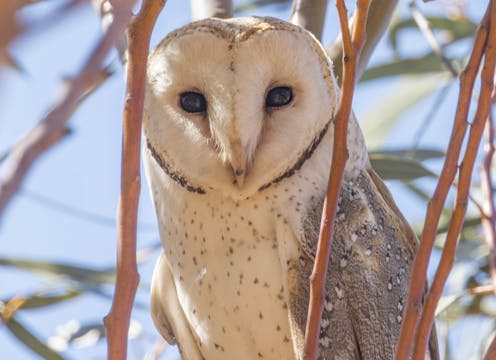
Our new research reveals alarming levels of rat poisons in our nocturnal predatory birds. Across four species, we found a staggering 92% of the 60 dead birds we tested had been exposed to these poisons. The concentration of SGARs in the liver was such that toxic or lethal impacts were likely to have occurred in 33% of powerful owls we tested, 68% of tawny frogmouths, 42% of southern boobooks and 80% of barn owls.
Testing for rat poison is not a pretty job. The only accurate way is to test the animal’s liver. Over the last two years, our team had the gruesome job of collecting and dissecting the livers of 60 dead owls and tawny frogmouths (24 powerful owls, 19 tawny frogmouths, 12 southern boobooks, and five eastern barn owls). Most birds were from Victoria. We were aided by concerned citizens who found and reported these dead birds to us, often collecting the bodies themselves and keeping them in their fridges.
Of the 55 birds found to have rodenticides in them, every one contained brodifacoum. Brodifacoum is the most widely available SGAR in Australia. It is highly potent and can stay in the body for more than 100 days. That means animals can accumulate more in their bodies as they continue to eat poisoned prey.
Read more: Mouse plague: bromadiolone will obliterate mice, but it'll poison eagles, snakes and owls, too
Are we also poisoning other native animals?
Our research shows poisoning rodents is poisoning our predators, in large numbers. This is widespread across urban areas, agricultural areas and forests on the edge of suburbia.
Given the high rate of exposure to rat poisons, it is likely predator populations will decline. Losing our predators to poisoning will have widespread consequences, for natural systems and urban environments. Birds of prey help to keep rodents (and other species prone to reaching high numbers) in check.
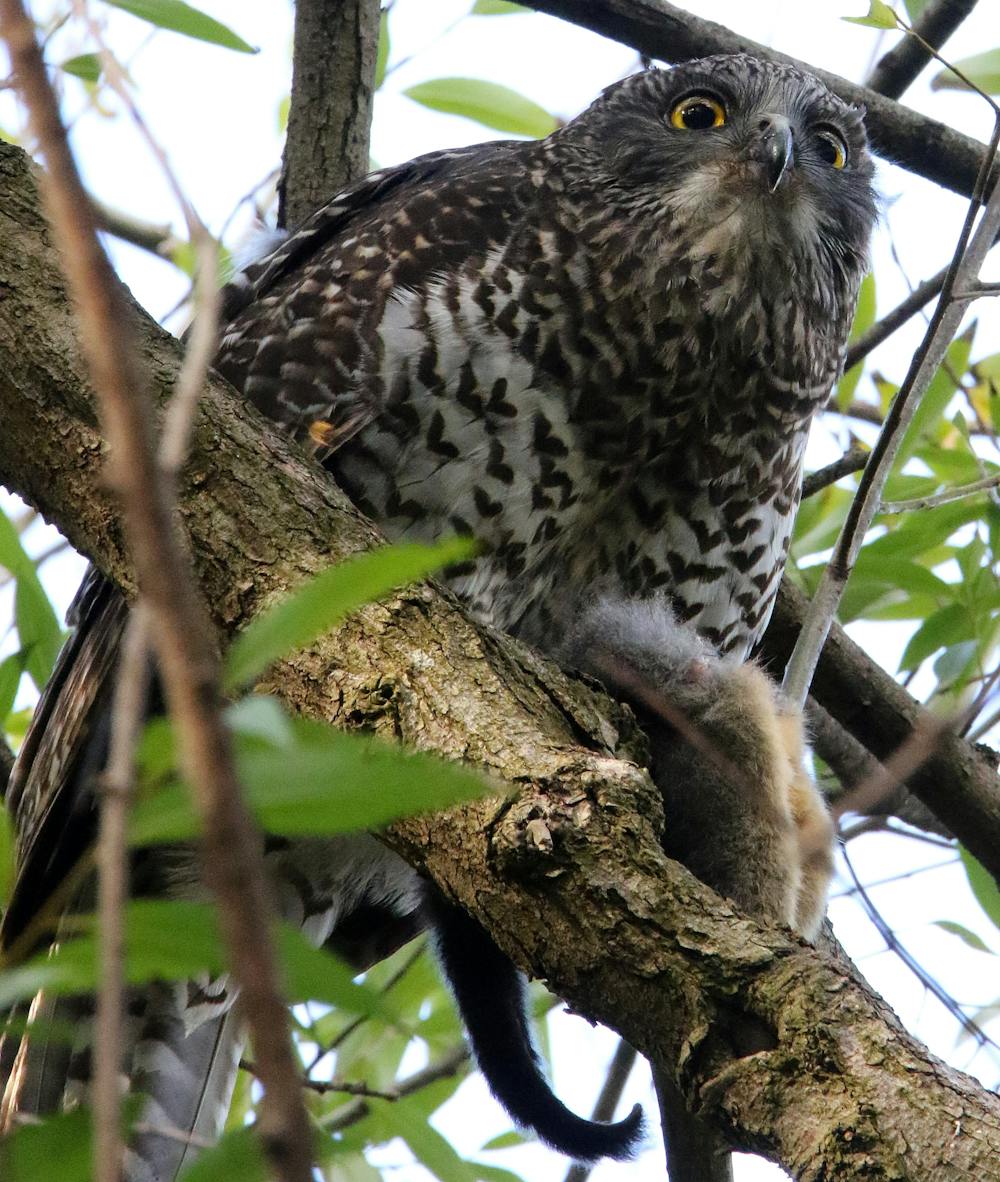
We are probably inadvertently poisoning other native animals. Powerful owls do not eat many rats, they prefer to dine on native possums and gliders. The common brushtail possum, with its broad diet and penchant for living in roof cavities, is no doubt directly feasting on rat poison.
So the high level of rat poison we found in nocturnal predators is likely the tip of a poisoned iceberg.
Is this a new ‘Silent Spring’ moment?
In 1962, biologist Rachel Carson’s book Silent Spring introduced the world to the impacts of pesticides on humans and non-target species. This catalysed investigations into pesticides such as DDT, which were being passed up the foodchain and “bio-accumulating” in raptors, decimating populations. Now, the devastating impacts of SGARs are becoming more widely recognised.
Our research, along with a growing body of international evidence, highlights the need to introduce restrictions on the availability of SGARs in Australia.
As with DDT in the 1980s, many countries such as the United States, Canada and the United Kingdom are moving to ban public access to SGARs or substantially restrict how they can be used.
But Australia is lagging on the effective regulation on the use of SGARs. Currently, SGARs are approved for use “in and around domestic, commercial, industrial and agricultural buildings”. They are not approved for use in crops, in the open, or in other areas accessible to non-target animals or children. But these restrictions are not sufficient. It is also likely many people do not follow instructions when they use rat poisons.
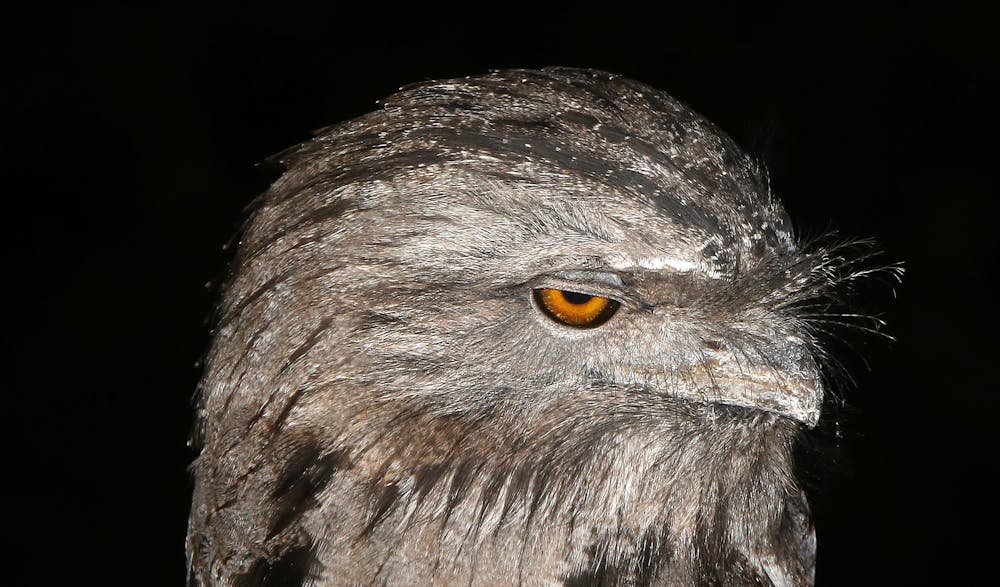 One of Australia’s favourite birds, the tawny frogmouth.
John White, CC BY-ND
One of Australia’s favourite birds, the tawny frogmouth.
John White, CC BY-ND
Read more: Spooky, stealthy night hunters: revealing the wonderful otherworld of owls
What are the alternatives to rat poison?
Next time you reach for the rat poison, consider the consequences. There is a very strong likelihood you will poison more than rodents – you could be poisoning a tawny frogmouth or owl.
Try to approach the problem without using poisons. In particular, avoid any SGAR-based products (those containing brodifacoum, bromadiolone, difenacoum, difethialone and flucoumafen as the active ingredients).
There are ways to control rats and mice without harming native wildlife. Trapping technology has come a long way and the latest methods are far more effective, humane and efficient than the old-fashioned spring-loaded mouse trap.
We can also make our homes less attractive to vermin, by clearing vegetation close to the house, reducing the availability of food sources such as pet food and compost, and blocking access to the building. And of course, we can support our natural predators to do what they do best, without putting themselves in harm’s way.
Authors: John White, Associate Professor in Wildlife and Conservation Biology, Deakin University

















