

Roald Dahl was a bigot and beloved children’s author. Wes Anderson shows both sides of this complicated persona
- Written by Stephen Gaunson, Senior Lecturer, RMIT University
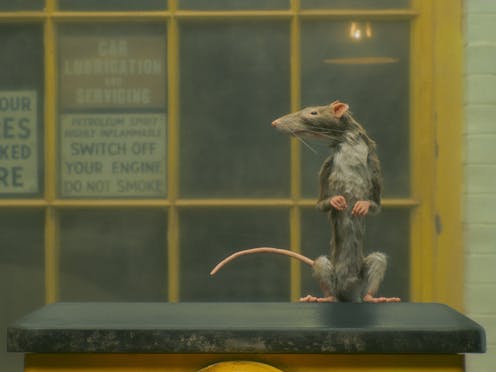
Wes Anderson’s latest work involves four short films based on Roald Dahl stories: The Wonderful Story of Henry Sugar, The Swan, The Rat Catcher and Poison.
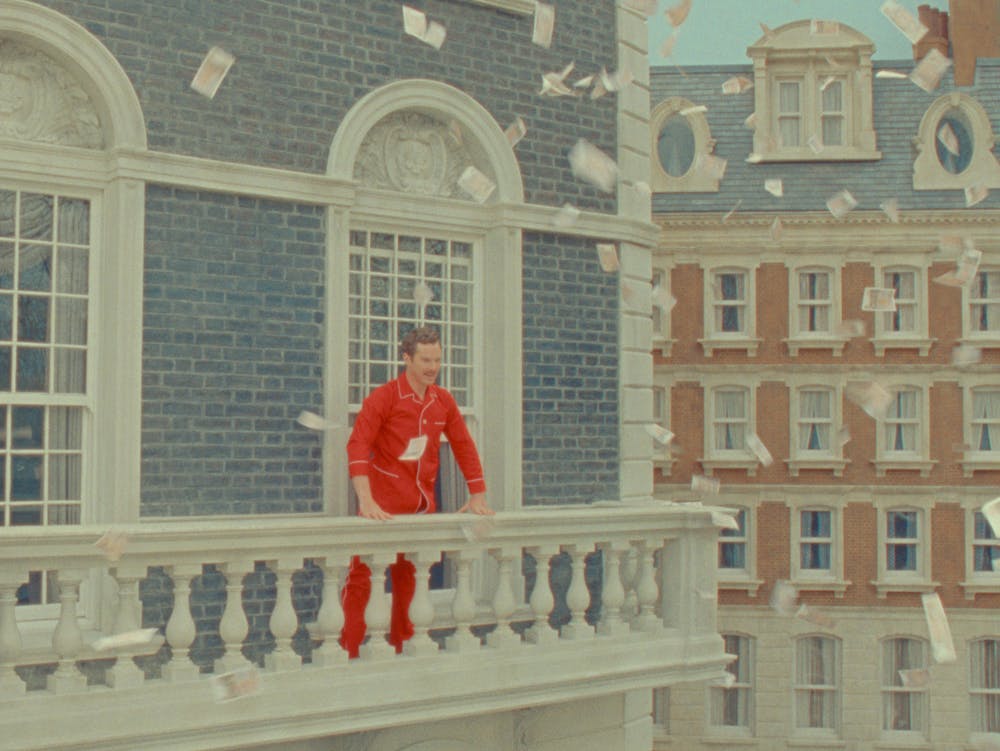
The Wonderful Story of Henry Sugar is the longest, with a runtime of 39 minutes (from an 82-page story), following the altruistic journey of the eponymous character, played by Benedict Cumberbatch. A wealthy dandy transforms into a benevolent figure, giving away his gambling fortune to children’s hospitals and orphanages.
While the others may seem like lesser works, shorter in length (from shorter stories) and less ambitious in set design and locations, Anderson begins to survey more complicated aspects of Dahl rarely explored in the abundant screen adaptations.
A complicated figure
Netflix acquired the rights to Dahl’s entire catalogue in 2021 for £370 million. The first production was Matthew Marchus’s Matilda the Musical (2022) – more accurately a screen version of Tim Minchin and Dennis Kelly’s award-winning stage musical adaptation.
Several more Netflix productions are slated. The Twits, an animation film written and directed by Phil Johnston, is set for a 2025 release. This will be followed by Taika Waititi writing and directing two live-action features: Charlie and the Chocolate Factory, and its literary sequel Charlie and the Great Glass Elevator.
Dahl remains a difficult figure in history. There is Dahl the beloved author of some of the most influential and popular works ever written for children. Meanwhile, there is the complicated persona who repeatedly made unwavering racist remarks and further reduced his characters to discriminatory and sexist stereotypes.
Despite Dahl insisting to his publishers to “not so much as change a single comma in one of my books”, in February this year Puffin Books announced it would be creatively editing portions of many of his children’s novels to “ensure that it can continue to be enjoyed by all today”.
This included removing or replacing words describing the appearance of characters (“old hags” become “old crows” in The Witches) and adding gender-neutral language (“Cloud-men” have become “Cloud-People” in James and the Giant Peach). Contemporary writers, such as Salman Rushdie, decried such liberties as a form of literary vandalism and blatant censorship.
Nastiness, weirdness and racism
Anderson’s Dahl shorts explore some grittier works from the author’s oeuvre without any creative rewriting. These are some of the most literal and faithful Dahl adaptations ever put on screen.
First and foremost, Dahl (played by Ralph Fiennes) becomes an onscreen character and narrator. The sight of Dahl talking directly to camera in his famous writing chair is somewhat uneasy. Which Dahl will we see? The bigot? Beloved children’s author?
In truth, we see neither in the character – but rather manifestations of both in the films themselves.
Anderson doesn’t suppress aspects of nastiness, weirdness and racism from the adapted stories underlined by darker themes and a darker tone.
 Anderson doesn’t suppress aspects of nastiness, weirdness and racism.
Netflix
Anderson doesn’t suppress aspects of nastiness, weirdness and racism.
Netflix
The Wonderful Story of Henry Sugar is the most joyous in both style and story, and a natural follow-on from Anderson’s earlier stop-motion Dahl feature adaptation, The Fantastic Mr Fox (2009).
From the altruistic Henry Sugar, things significantly go darker both tonally and thematically. The Swan is about a boy victimised to merciless bullying; The Rat Catcher involves a man (played also by Fiennes) with disgustingly filthy nails resembling claws who kills a rat with his teeth.
These characters are not punished, exposed and exiled. They are revealed for their true selves – as ugly and uncomfortable as that may be to watch.
Read more: The man behind Matilda – what Roald Dahl was really like
Dahl and his cultural legacy
A point of interest is the order these shorts are curated on Netflix. Each was dropped on the platform within a few days of each other, and this order remains when the films are grouped together as the Dahl adaptation package.
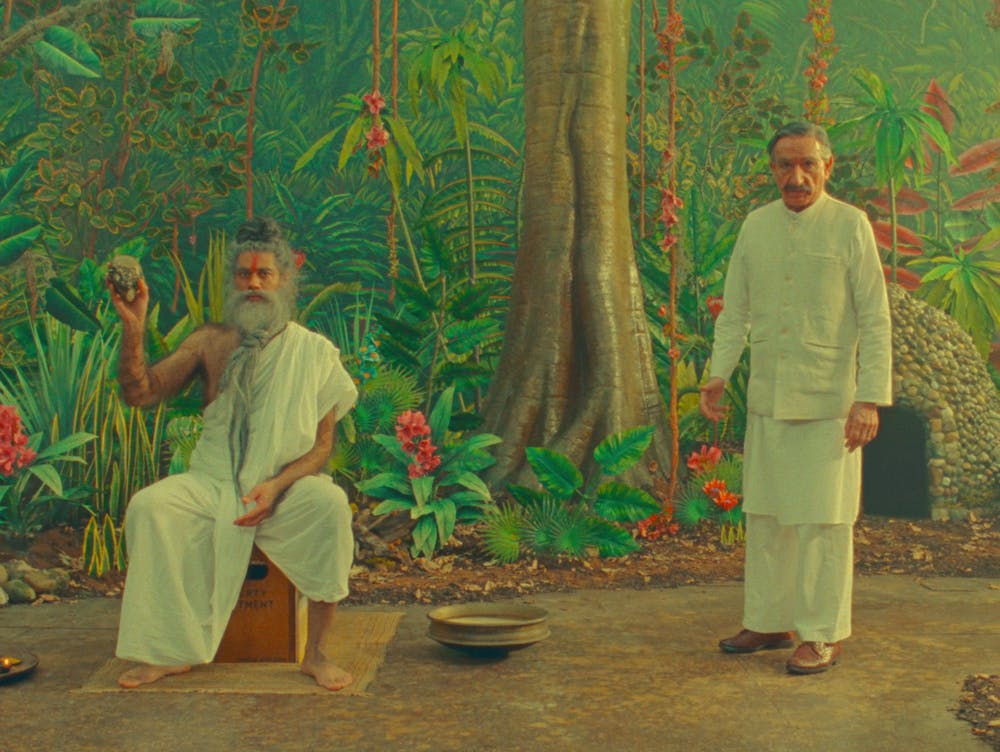
The final, and most confronting, of these shorts is Poison. The story is of Englishman Harry Pope (Benedict Cumberbatch) in British-ruled India, who believes he has a poisonous krait snake asleep with him in his bed. When this is proven incorrect, Dr Ganderbai (Ben Kingsley) is subjected to Harry’s racial slurs.
It is an ugly and unexpected moment that provokes the doctor to leave in stunned silence.
This adaptation has been previously adapted several times on television: in 1958 into an episode of Alfred Hitchcock Presents; in 1980 it was adapted as the fifth episode of the second series of Tales of the Unexpected.
These TV adaptations turn Harry into an alcoholic whose mind cannot be trusted. Here, Anderson is more faithful to Dahl’s story, presenting Harry as a lucid and ungrateful bigot to the doctor’s attempts to rescue him.
It is with this reprehensible and unapologetic racist attack that Anderson’s shorts conclude.
From the first film, with its vivid colours and altruistic themes, to the bleak finale of Poison, it feels as if Anderson is making a statement about the difficulties in which to regard Dahl and his cultural legacy.
In the process, he has produced some of his most challenging, complex and intriguing films to date.
Authors: Stephen Gaunson, Senior Lecturer, RMIT University

















