

3 reasons why removing grazing animals from Australia's arid lands for carbon credits is a bad idea
- Written by David John Eldridge, Professor of Dryland Ecology, UNSW Sydney
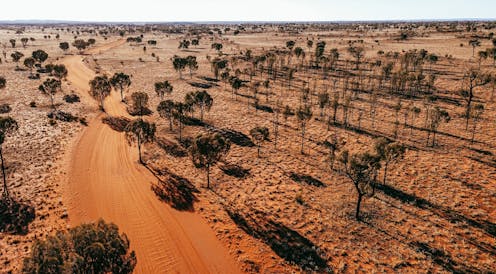
If you run a large polluting facility and can’t work out how to actually cut emissions, you might buy carbon credits to offset your emissions from the Australian Carbon Credit Unit Scheme. These credits are meant to represent carbon taken back out of the atmosphere and stored in growing trees or in the soil.
The problem is, these credit schemes can be rubbery in the extreme. One area we must scrutinise forensically are human-induced regeneration projects. These are the backbone of the offset scheme, accounting for 30% of credits issued to-date. Over the coming years, they could be responsible for almost 50% of annual issuances. These projects claim to regenerate native forests across vast areas – not by replanting trees in cleared areas, as you might think, but by reducing grazing pressure from livestock and feral animals.
This is fundamentally flawed. Almost all projects are in arid or semi-arid rangeland grazed by livestock and kangaroos and only partly cleared. But cattle and sheep mostly eat grasses and herbs, not woody material. So how can we possibly claim reducing grazing pressure leads to more trees and shrubs?
3 reasons for scrutiny
Human induced regeneration projects have ballooned. They now cover about 34 million hectares of Australia’s rangelands, about 1.5 times the size of Victoria.
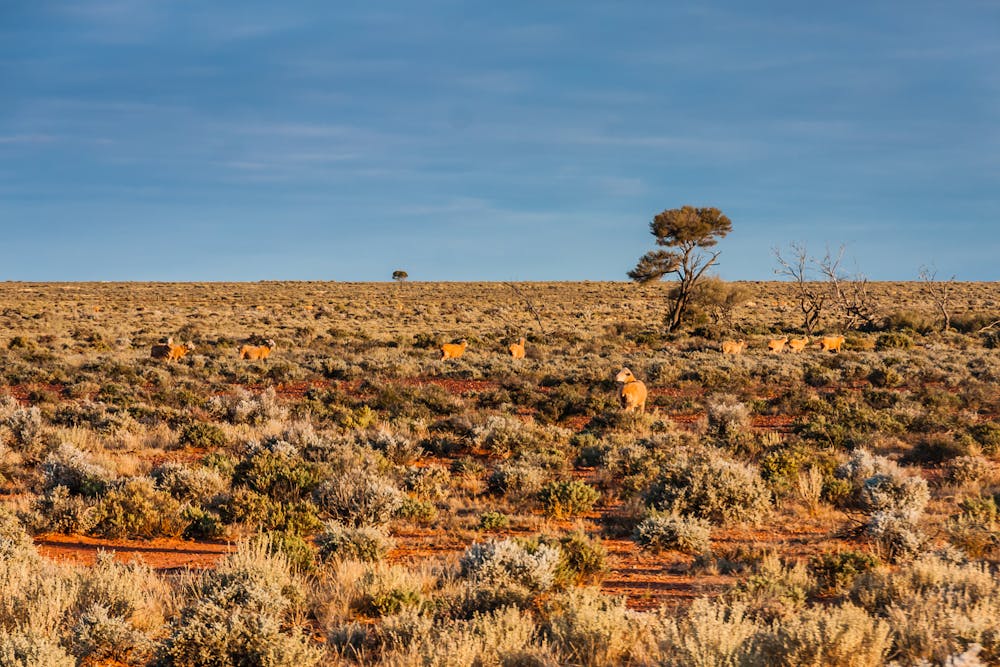
Projects have sprung up in absurd areas such as Alice Springs, Coober Pedy, and the Nullarbor Plain where few trees grow naturally, and where those that do grow are rarely eaten by livestock. These projects are currently producing over 6 million carbon credit units each year for tree growth that either can’t happen, or where growth would have happened anyway. That’s about A$235 million in today’s prices.
Under the rules, the projects are supposed to regenerate these forests and then maintain them for either 25 or 100 years.
Here’s why they should not be earning carbon credits.
1. Location
These projects are largely in the uncleared rangelands covering most of Australia’s interior. These areas have little chance of promoting woody growth and storing more carbon, not because of grazing pressure, but because rainfall is too low, the soil too infertile, and the vegetation already close to its maximum. Forests will not regrow in these areas, particularly under hotter and drier climates.
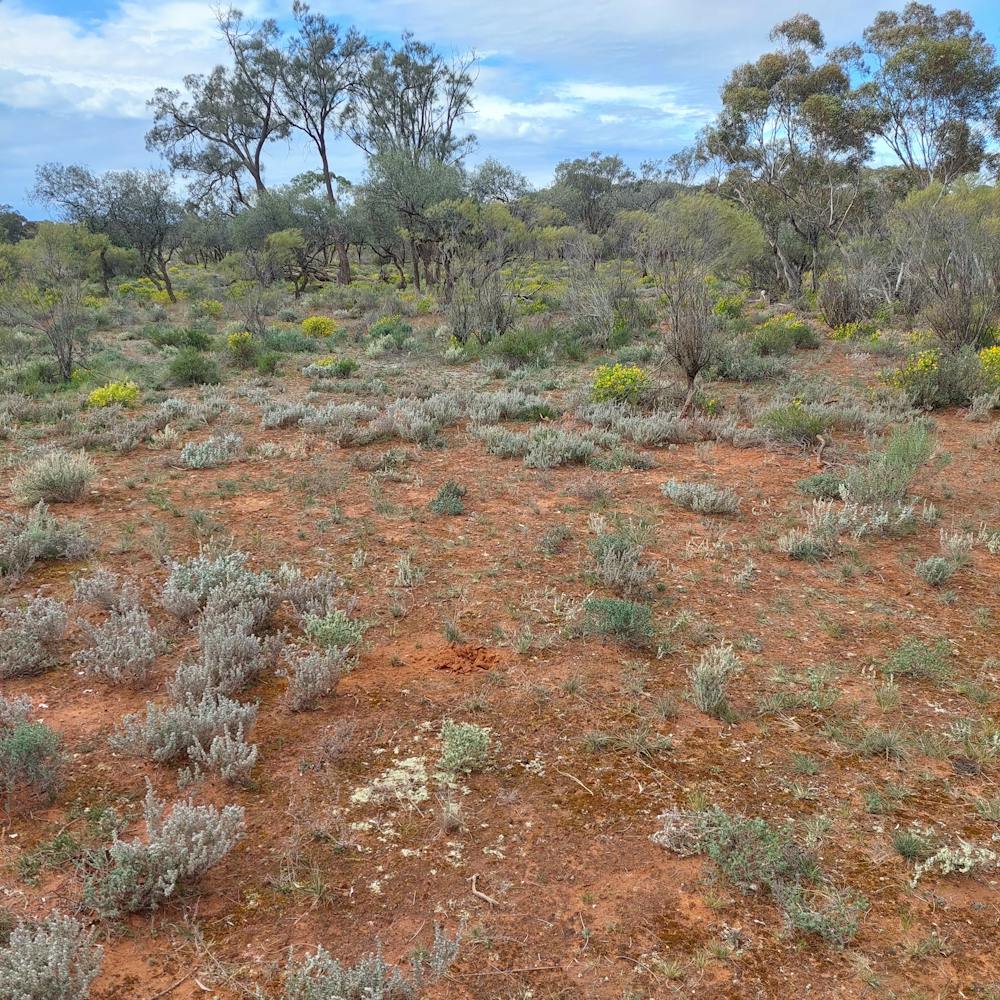 Forests are highly unlikely to grow on semi-arid terrain like this, even if grazing animals are removed.
TBC, CC BY-ND
Forests are highly unlikely to grow on semi-arid terrain like this, even if grazing animals are removed.
TBC, CC BY-ND
2. Tree growth can have many causes
Grazing is just one driver of woody plant change. Where we do see tree growth, it’s most likely to be due to other factors such as sustained rain, greater concentrations of atmospheric carbon dioxide, falls in the intensity and frequency of bushfire, or removal of top predators like the dingo.
For these reasons, projects may well be credited for tree growth stemming from natural fluctuations – not grazing control.
3. Grazing on rangeland doesn’t destroy trees and shrubs
Removing grazing to regenerate forests in these uncleared areas would actually be a great idea – if we still had diprotodons, the largest marsupials ever to live. These 4 metre, 3.5 tonne browsers ate their way through trees and shrubs, much as elephants still do elsewhere, and played a key role in maintaining the balance between forests and grasslands.
If you took diprotodons off the land, you really would notice the difference – trees and shrubs would spring up without their intense grazing pressure. But the problem is, they’re extinct and have been for 25,000 years.
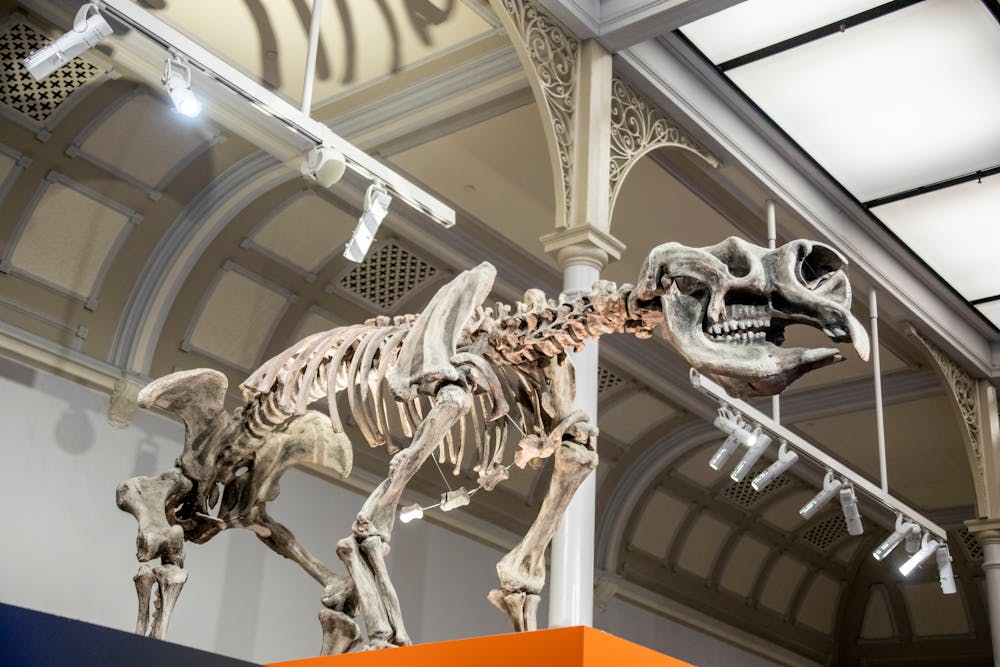 If Australia still had megaherbivores like the diprotodon, this approach might make more sense.
Danny Ye/Shutterstock
If Australia still had megaherbivores like the diprotodon, this approach might make more sense.
Danny Ye/Shutterstock
Their replacements on our rangelands – mostly sheep, cattle, feral goats and kangaroos – have nothing like the same effect.
In fact, where overgrazing does occur in Australia, it’s likely to actually increase tree and shrub cover rather than reduce it. Known as woody thickening, this happens when grazing animals eat so many grasses and herbs that they skew the balance in favour of trees and taller shrubs. Livestock might eat some woody plants, but most plants are out of their reach.
How did this happen?
By law, projects under the human-induced regeneration scheme are supposed to be restricted to land that is already cleared, with few mature trees and shrubs, and where native forest can regenerate naturally.
Under these conditions, the simple forest carbon model used by the Clean Energy Regulator to estimate how carbon is being stored works reasonably well.
The problem is, projects are no longer restricted to cleared land. Just 17 months after the Carbon Credits Scheme began, the regulator permitted projects to proceed in uncleared rangelands. Worse, these projects are credited using the same simple forest carbon model designed for cleared areas, which can’t account for the large numbers of pre-existing trees and shrubs in uncleared vegetation.
Read more: Chubb review of Australia's carbon credit scheme falls short – and problems will continue to fester
In short, there is little evidence the carbon storage credited to these projects matches the real carbon on the ground.
For Australia’s Carbon Credits Scheme to work effectively we need better administration, more transparency, and compliance testing. If we do not use the best available science, we will get the wrong outcomes. Emissions will be higher than they would otherwise be.
Using nature to store carbon can work. In fact it’s the only cost-effective way to pull carbon dioxide from the air at present. But the credit system is easily gamed – not only here, but in many other countries.
We must make absolutely certain credits represent real, additional and permanent abatement. That is, based on real increases in carbon stored in vegetation, that would not have occurred without carbon credits as incentive, and in ways which will hold the extra carbon for a century or more.
If we don’t, Australian businesses and organisations relying on carbon credits to meet their climate goals will lose faith in the program.
Read more: 'Worthless' forest carbon offsets risk exacerbating climate change
Authors: David John Eldridge, Professor of Dryland Ecology, UNSW Sydney

















