

Chinese migrants follow and add to Australian city dwellers' giant ecological footprints
- Written by: Peter Newton, Research Professor in Sustainable Urbanism, Centre for Urban Transitions, Swinburne University of Technology
This is the third article in our series, Australian Cities in the Asian Century. These articles draw on research, just published in a special issue of Geographical Research, into how Australian cities are being influenced by the rise of China and associated flows of people, ideas and capital between China and Australia.
Political debate about a “big Australia” has re-emerged in response to high levels of immigration, increasing congestion and high property prices in Sydney and Melbourne, where 90% of migrants settle. In 2010, China overtook the United Kingdom as Australia’s largest source of permanent migrants (a position now held by India). Since then, China-born migrants have averaged around 15% of the annual intake. That’s a significant contributor to the “Asianisation” of Sydney and Melbourne that Peter McDonald pointed to a decade ago.
In this context, our research focused on the much-neglected dimension of the environmental impact on cities of population and immigration. Australian cities are world-leading – in the worst sense – in terms of the size of their ecological footprints, a measure of their resource use and greenhouse gas emissions. And we found China-born residents more than triple their average levels of consumption compared to when they lived in China, even surpassing Australia-born residents’ consumption.
Read more: No sustainable population without sustainable consumption
What did the study find?
We were interested in understanding the urban consumption behaviour of China-born 21st-century migrants (as measured by their ecological footprint) when they settled in Box Hill. This is a middle-class middle-ring suburb of Melbourne with the greatest concentration of China-born residents. We compared their consumption to their pre-migration footprint (when living in China) and to that of Australia-born residents in the same suburb.
Our findings are based on an extensive face-to-face survey of 61 China-born and 72 Australia-born residents. The main findings were as follows.
Within a decade of arrival in Melbourne, China-born urban consumption patterns were more than three times their consumption before their migration. They even surpassed the consumption levels of other residents of the suburb. Their housing consumption was 5.4 times higher than when in China, food consumption 4.7 times higher and carbon footprint 2.7 times bigger.
In part this is due to higher incomes, settling in a city with housing sizes and costs among the highest in the world and where the private car is the dominant form of transport. But cultural influences are also in play.
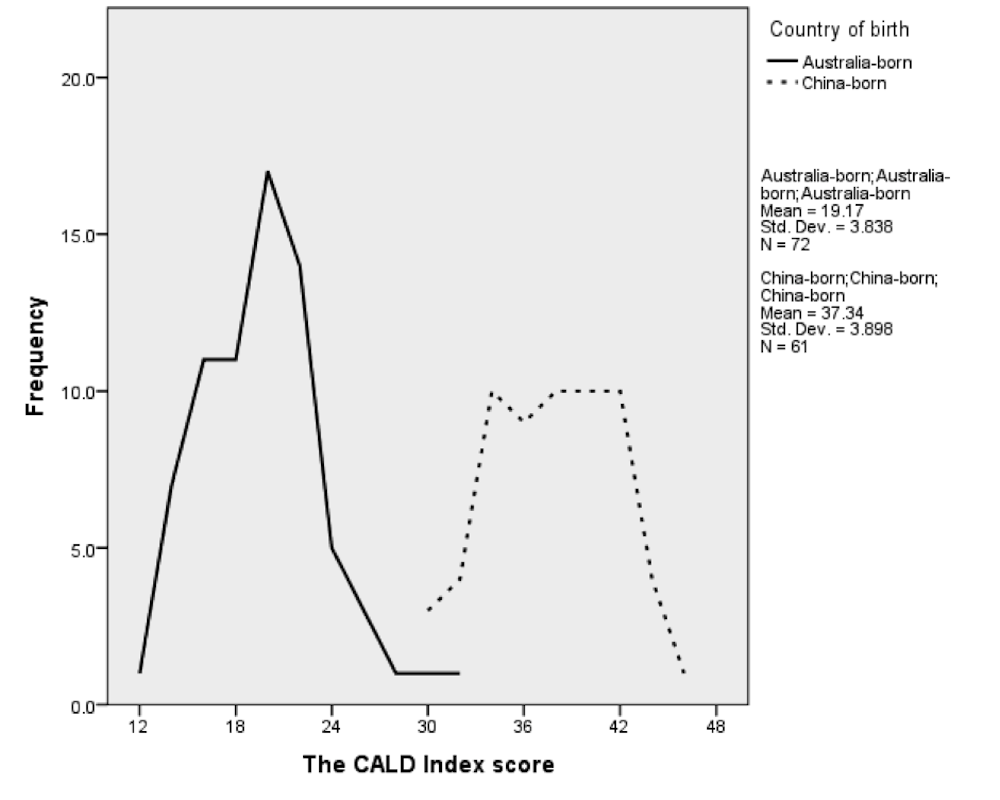 Figure 1. The gap in the CALD Index between residents born in China and in Australia suggests a strong cultural influence on consumption behaviours. (Click to enlarge.)
Ting, Newton & Stone (2018), Author provided
Figure 1. The gap in the CALD Index between residents born in China and in Australia suggests a strong cultural influence on consumption behaviours. (Click to enlarge.)
Ting, Newton & Stone (2018), Author provided
It is apparent that consumer acculturation is the major process by which Chinese migrants have come to mirror the host society in Australia. Cultural integration is less evident – it lags consumer acculturation. This was clear from a comparison of scores on a Cultural and Linguistic Difference (CALD) Index.
The index incorporated measures of birthplace, English proficiency, religion, food preferences, participation in entertainment and festivals, avenues of social interaction and engagement with neighbourhood communities. The gap between the China-born and Australia-born groups’ scores on the CALD Index was significant (see Figure 1). This suggests a strong cultural influence on the China-born group’s urban consumption behaviours is likely.
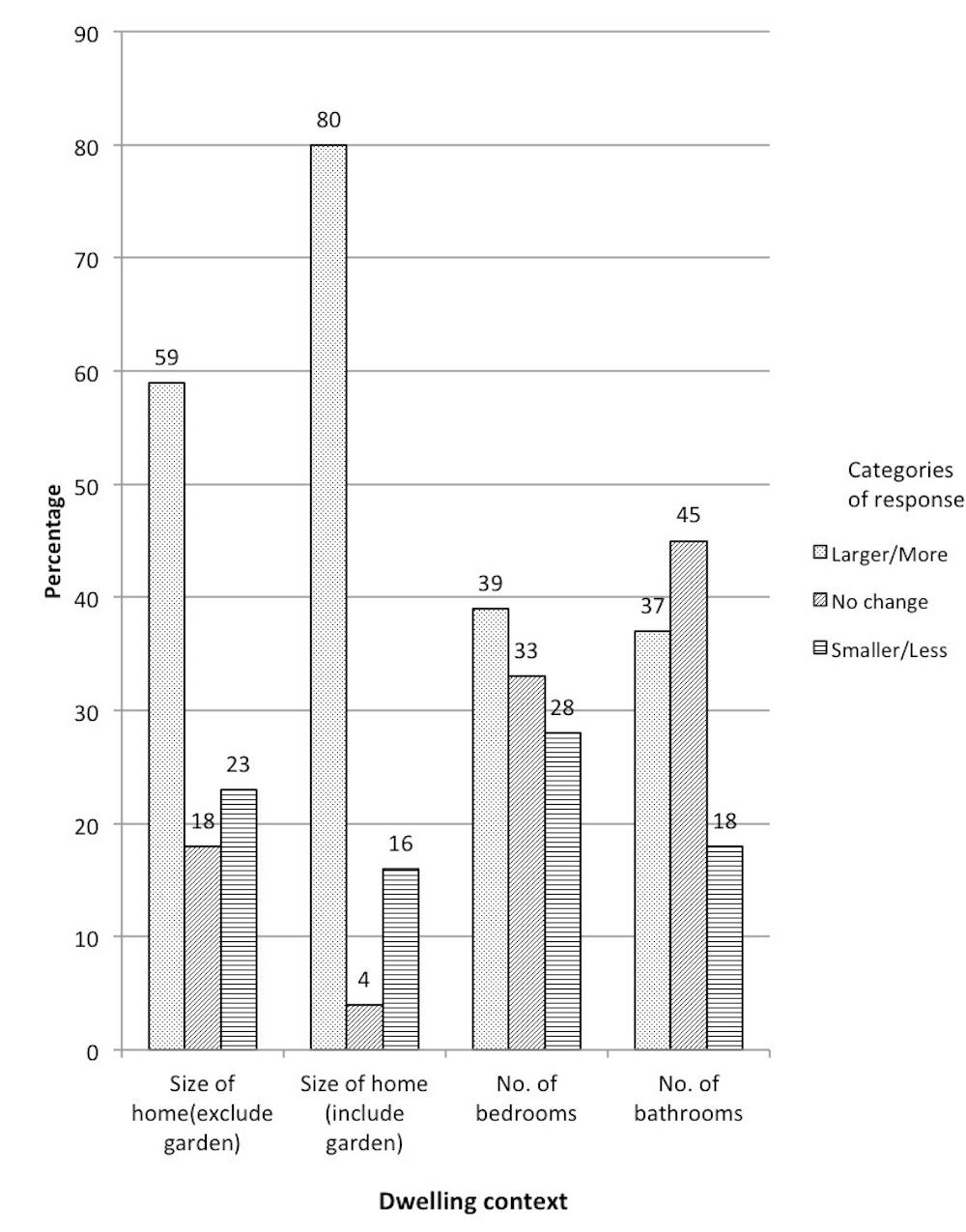 Figure 2. China-born residents in Melbourne tend to have much larger housing in all categories than they had in China. (Click to enlarge.)
Ting, Newton & Stone (2018), Author provided
Figure 2. China-born residents in Melbourne tend to have much larger housing in all categories than they had in China. (Click to enlarge.)
Ting, Newton & Stone (2018), Author provided
A comparison of the different components of the ecological footprints of China-born and Australia-born residents was also revealing. Housing footprints measuring the size and type of dwelling occupied by the China-born residents were 18% larger overall.
This may be due to the role housing plays in reflecting an attained status (mien-tzu, or “to save face”) within the host society. Consumption levels that outstrip those of Australia-born residents indicate the potential danger of housing consumption being used to indicate “successful” settlement in Australia.
Food footprints of the China-born were 16% larger than the Australia-born. This reflected higher consumption of meat and dairy products and lower consumption of home-grown vegetables.
Carbon footprints of the China-born were 37% bigger, mainly as a result of more frequent overseas travel.
A rising burden on the planet
The global implications of these findings are potentially huge. The rise of incomes among China’s population into the range of those in developed countries can be expected to unleash new levels of urban consumption as this population aspires to the urban liveability enjoyed by people in Australia and North America. In these countries, however, city liveability ratings are closely related to ecological footprints that are almost triple those of China.
Based on the rate of growth of the mainland Chinese middle class and the increase in consumption by the China-born middle class now living in Australia, the ecological footprint of China’s population of 1.4 billion can be expected to more than double over the next 10 to 20 years. This has significant consequences for planetary ecosystems and geopolitics.
Authors: Peter Newton, Research Professor in Sustainable Urbanism, Centre for Urban Transitions, Swinburne University of Technology


















