

In Knife, his memoir of surviving attack, Salman Rushdie confronts a world where liberal principles like free speech are old-fashioned
- Written by: Paul Giles, Professor of English, Institute for Humanities and Social Sciences, ACU, Australian Catholic University
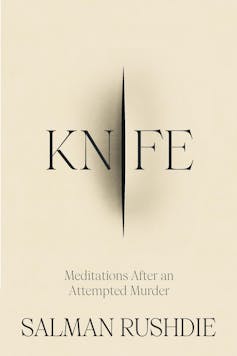
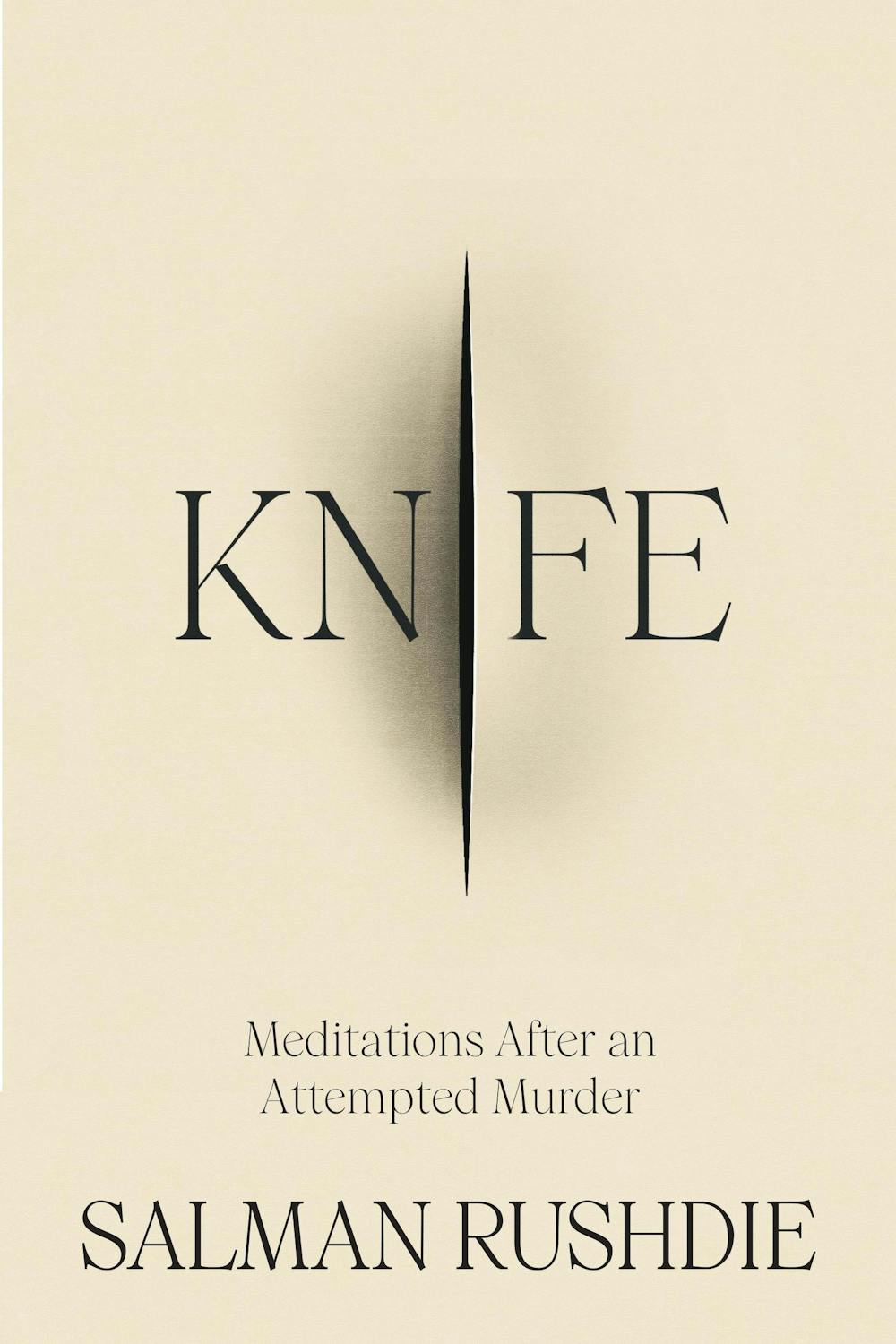
Knife is Salman Rushdie’s account of how he narrowly survived an attempt on his life in August 2022, in which he lost his right eye and partial use of his left hand. The attack ironically came when Rushdie was delivering a lecture on “the creation in America of safe spaces for writers from elsewhere”, at Chautauqua, in upstate New York.
A man named Hadi Matar has been charged with second-degree attempted murder. He is an American-born resident of New Jersey in his early twenties, whose parents emigrated from Lebanon. Prosecutors allege the assault was a belated response to the fatwa, a legal ruling under Sharia law, issued in 1989 by Ayatollah Ruhollah Khomeini.
The Iranian leader called for Rushdie’s assassination after the publication of the author’s novel The Satanic Verses, which allegedly contained a blasphemous representation of the prophet Muhammad. Matar has pleaded not guilty to the charge, and his trial is still pending.
Review: Knife: Meditations After an Attempted Murder – Salman Rushdie (Jonathan Cape)
Knife is very good at recalling Rushdie’s grim memories of the attack. (His assailant appears in this book merely under the sobriquet of “the A”.) It also articulates with typically dry, self-deprecating humour the dismal prognoses of his various doctors. These are balanced against his own incorrigible sense of “optimism” and ardent will to live, along with the staunch love and support of his new wife, the writer and artist Rachel Eliza Griffiths.
 The second part of Knife is focused around Rushdie’s unwavering commitment to the principles of free speech in his work for PEN and other literary organisations. Indeed, a speech he gave at PEN America in 2022 is reprinted in the book verbatim.
“Art challenges orthodoxy,” declares Rushdie. He associates himself with a legacy of Enlightenment thinkers going back to Thomas Paine, whose work influenced both the American and French Revolutions. For these intellectuals, principles of secular reason and personal liberty should always supersede blind conformity to social or religious authority.
Old-fashioned liberal principles
In Knife, though, Rushdie the protagonist confronts a world where such liberal principles now appear old-fashioned. He claims “the groupthink of radical Islam” has been shaped by “the groupthink-manufacturing giants, YouTube, Facebook, Twitter”.
But for many non-religious younger people, any notion of free choice also appears illusory, the anachronistic residue of an earlier age. Millennials and Generation Z are concerned primarily with issues of environmental catastrophe and social justice, and they tend to regard liberal individualism as both ineffective and self-indulgent.
As a perceptive social historian, Rushdie notes how “new definitions of the social good” have arisen, in which “protecting the rights and sensibilities of groups perceived as vulnerable […] take precedence over freedom of speech.”
Knife itself is understandably reductive, even dismissive, in its treatment of the assailant. The author contemplates the prospect of a meeting with him, but decides that is “impossible” and so tries to “imagine my way into his head” by inventing an “imagined conversation”. But this is not entirely convincing.
Rushdie’s point about how the Quran itself is immersed in the worlds of “interpretation” and “translation” might work well in a seminar on world literature, but it is hardly the kind of argument likely to persuade a jihadist who, on his own admission, has read only two pages of The Satanic Verses.
The second part of Knife is focused around Rushdie’s unwavering commitment to the principles of free speech in his work for PEN and other literary organisations. Indeed, a speech he gave at PEN America in 2022 is reprinted in the book verbatim.
“Art challenges orthodoxy,” declares Rushdie. He associates himself with a legacy of Enlightenment thinkers going back to Thomas Paine, whose work influenced both the American and French Revolutions. For these intellectuals, principles of secular reason and personal liberty should always supersede blind conformity to social or religious authority.
Old-fashioned liberal principles
In Knife, though, Rushdie the protagonist confronts a world where such liberal principles now appear old-fashioned. He claims “the groupthink of radical Islam” has been shaped by “the groupthink-manufacturing giants, YouTube, Facebook, Twitter”.
But for many non-religious younger people, any notion of free choice also appears illusory, the anachronistic residue of an earlier age. Millennials and Generation Z are concerned primarily with issues of environmental catastrophe and social justice, and they tend to regard liberal individualism as both ineffective and self-indulgent.
As a perceptive social historian, Rushdie notes how “new definitions of the social good” have arisen, in which “protecting the rights and sensibilities of groups perceived as vulnerable […] take precedence over freedom of speech.”
Knife itself is understandably reductive, even dismissive, in its treatment of the assailant. The author contemplates the prospect of a meeting with him, but decides that is “impossible” and so tries to “imagine my way into his head” by inventing an “imagined conversation”. But this is not entirely convincing.
Rushdie’s point about how the Quran itself is immersed in the worlds of “interpretation” and “translation” might work well in a seminar on world literature, but it is hardly the kind of argument likely to persuade a jihadist who, on his own admission, has read only two pages of The Satanic Verses.
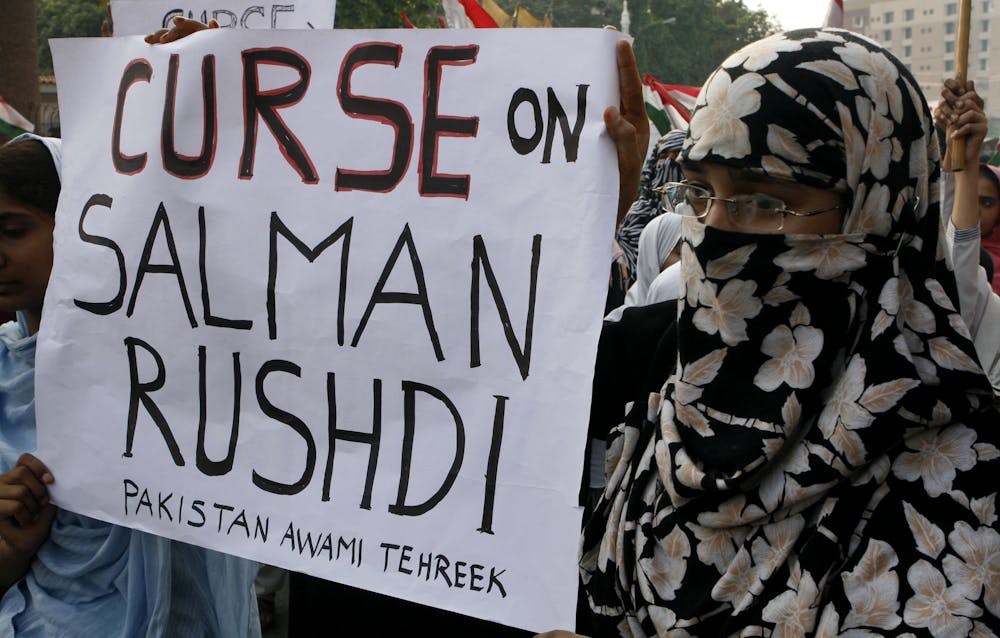 Pakistani protesters in 2007, rallying against the British government for awarding a knighthood to Rushdie.
K.M. Chaudary/AAP
Rushdie’s stylistic tendency to dehumanise his characters is characteristically humorous and perhaps therapeutic. He renames his ear, nose and throat doctor “Dr. ENT, as if he were an ancient tree-creature from The Lord of the Rings”. But it also carries the risk of diminishing his characters to puppets being manipulated by the author.
This is the kind of power relation interrogated self-consciously in Fury (2001) and other fictional works that explore the limitations of authority. Rushdie is a great novelist because of his openness to questions about the scope of authority and authorship, but he is a less effective polemicist. The structural ambiguities and inconsistencies that enhance the multidimensional reach of his fiction tend to be lost when he takes on the mantle of a political controversialist.
Knife hovers generically in between these two positions. One of the book’s most interesting aspects is its probing of the weird and supernatural. Two nights before his attack, the author dreams of being assaulted by a man with a spear in a Roman amphitheatre. Citing Walt Whitman on the uses of self-contradiction, he records: “It felt like a premonition (even though premonitions are things in which I don’t believe).”
Similarly, he describes his survival, with the knife landing only a millimetre from his brain, as “the irruption of the miraculous into the life of someone who didn’t believe that the miraculous existed”. Later, he observes: “No, I don’t believe in miracles, but, yes, my books do.”
This speaks to a paradoxical disjunction between the relative narrowness of authorial vision and the much wider scope of imagined worlds that Rushdie’s best fiction evokes.
Read more:
Liberalism is in crisis. A new book traces how we got here, but lets neoliberal ideologues off the hook
Suffused in the culture of Islam
The Satanic Verses itself is suffused in the culture of Islam as much as James Joyce’s Ulysses is suffused in the culture of Catholicism. In both cases, the question of specific religious “belief” becomes a secondary consideration.
In their hypothetical conversation, the author of Knife tries to convince his assailant of the value of such ambivalence. He protests how his notorious novel revolves around “an East London Indian family running a café-restaurant, portrayed with real love”.
But of course such subtleties are hopelessly wasted on an activist who has no interest in literary nuances and who desires only to execute the instructions of a religious leader. Given the prevalence of what Rushdie calls the contemporary “offence industry,” it is sobering to think that Ulysses, if published today, could be more liable to censorship for blasphemy rather than, as in 1922, obscenity.
Pakistani protesters in 2007, rallying against the British government for awarding a knighthood to Rushdie.
K.M. Chaudary/AAP
Rushdie’s stylistic tendency to dehumanise his characters is characteristically humorous and perhaps therapeutic. He renames his ear, nose and throat doctor “Dr. ENT, as if he were an ancient tree-creature from The Lord of the Rings”. But it also carries the risk of diminishing his characters to puppets being manipulated by the author.
This is the kind of power relation interrogated self-consciously in Fury (2001) and other fictional works that explore the limitations of authority. Rushdie is a great novelist because of his openness to questions about the scope of authority and authorship, but he is a less effective polemicist. The structural ambiguities and inconsistencies that enhance the multidimensional reach of his fiction tend to be lost when he takes on the mantle of a political controversialist.
Knife hovers generically in between these two positions. One of the book’s most interesting aspects is its probing of the weird and supernatural. Two nights before his attack, the author dreams of being assaulted by a man with a spear in a Roman amphitheatre. Citing Walt Whitman on the uses of self-contradiction, he records: “It felt like a premonition (even though premonitions are things in which I don’t believe).”
Similarly, he describes his survival, with the knife landing only a millimetre from his brain, as “the irruption of the miraculous into the life of someone who didn’t believe that the miraculous existed”. Later, he observes: “No, I don’t believe in miracles, but, yes, my books do.”
This speaks to a paradoxical disjunction between the relative narrowness of authorial vision and the much wider scope of imagined worlds that Rushdie’s best fiction evokes.
Read more:
Liberalism is in crisis. A new book traces how we got here, but lets neoliberal ideologues off the hook
Suffused in the culture of Islam
The Satanic Verses itself is suffused in the culture of Islam as much as James Joyce’s Ulysses is suffused in the culture of Catholicism. In both cases, the question of specific religious “belief” becomes a secondary consideration.
In their hypothetical conversation, the author of Knife tries to convince his assailant of the value of such ambivalence. He protests how his notorious novel revolves around “an East London Indian family running a café-restaurant, portrayed with real love”.
But of course such subtleties are hopelessly wasted on an activist who has no interest in literary nuances and who desires only to execute the instructions of a religious leader. Given the prevalence of what Rushdie calls the contemporary “offence industry,” it is sobering to think that Ulysses, if published today, could be more liable to censorship for blasphemy rather than, as in 1922, obscenity.
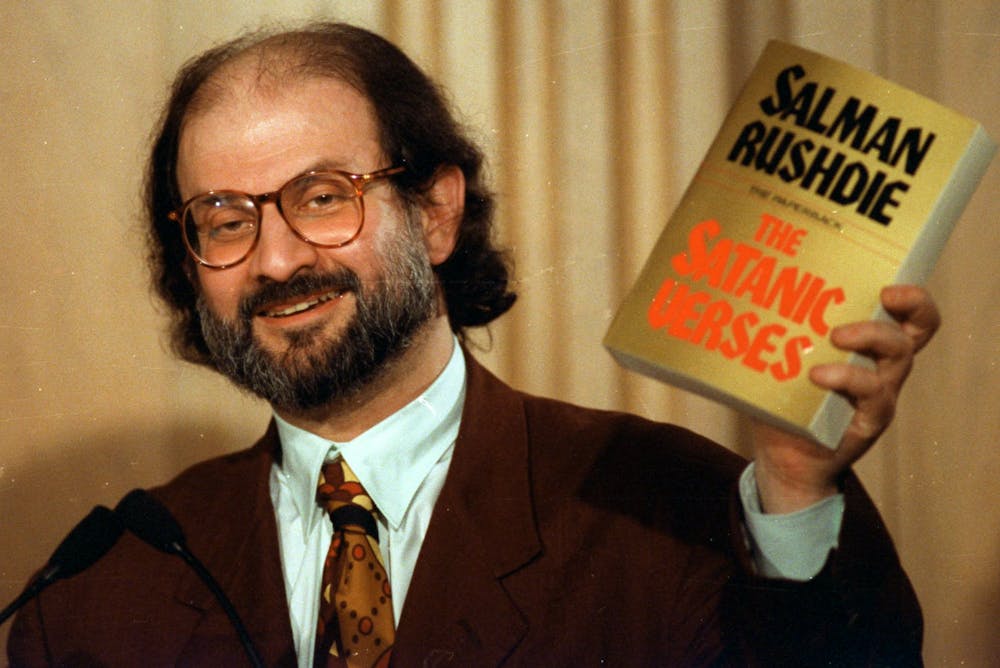 The Satanic Verses is ‘suffused in the culture of Islam’.
Rod Edmonds/AAP
In many ways, then, Knife is a book about cultural cross-purposes. Though Rushdie is understandably vituperative on a personal level, his work’s conceptual undercurrents turn on the fate of the liberal imagination in an increasingly post-liberal world.
There are moving tributes here to the writers Martin Amis and Milan Kundera, friends who died recently. There are also melancholy acknowledgements of illnesses suffered by Paul Auster and by Hanif Kureishi, whom Rushdie regards as his “younger-brother-in literature”.
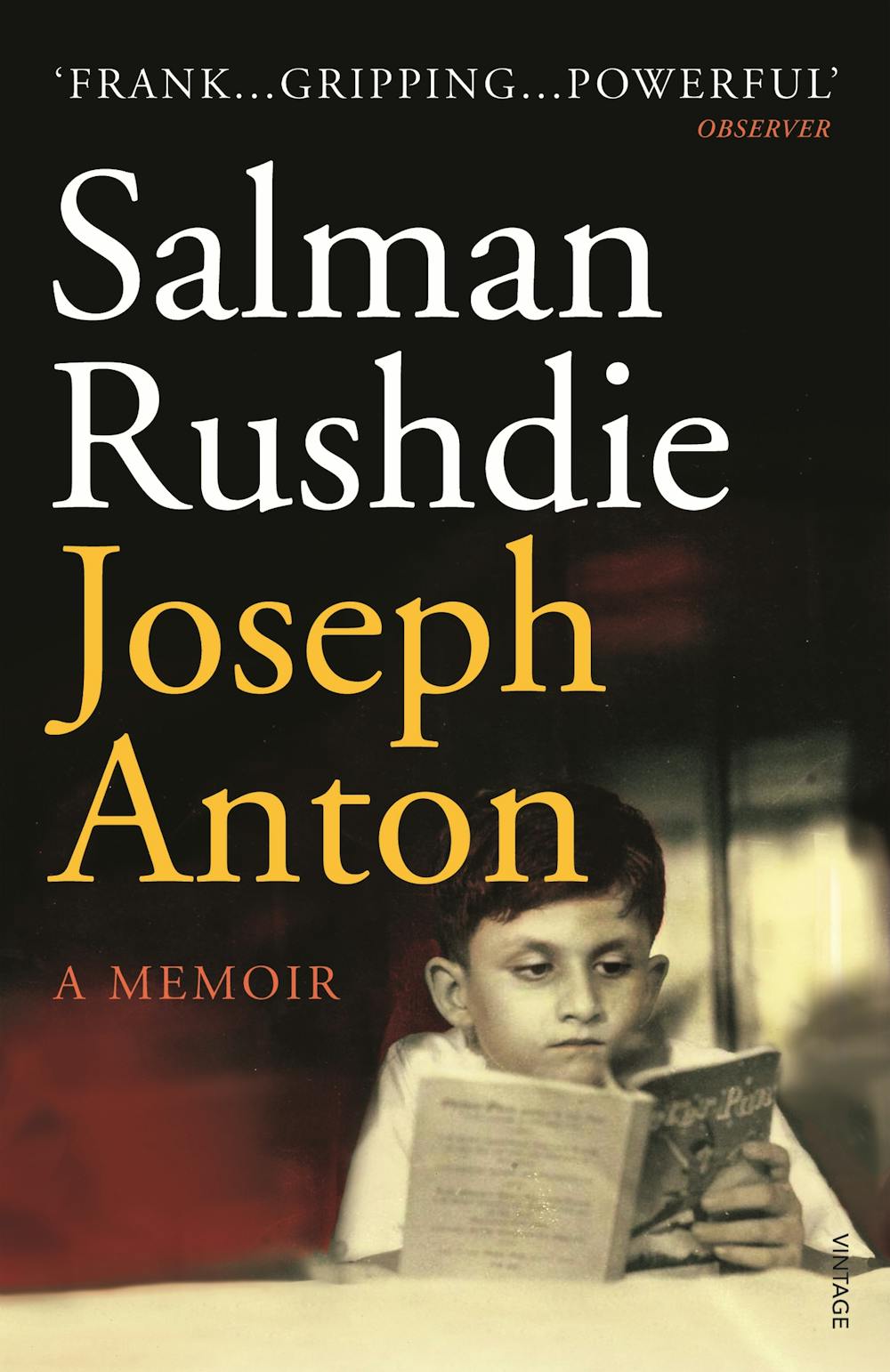
This generation of writers saw the multifaceted nature of fiction, with its inclinations towards magical realism, as a way to resist what Joseph Anton calls the potentially “flattening effect” of political slogans. Amis believed one of the reasons for the general decline of interest in reading literature was a new preference for the security of ready-made solutions rather than experiential challenges.
Read more:
Milan Kundera's 'remarkable' work explored oppression, inhumanity – and the absurdity of being human
Attachment to past traditions
But in the era of Facebook and Twitter, brevity and simplicity have become more compelling than complexity. This categorical shift has been shaped not only by the explosion of information technology, but also the de-centring of Europe and North America as undisputed leaders of intellectual and political culture.
Rushdie discusses in Knife how, besides the Hindu legends of his youth, he has also been “more influenced by the Christian world than I realized”. He cites the music of Handel and the art of Michelangelo as particular influences. Yet this again highlights Rushdie’s attachments to traditions firmly rooted in the past.
Whereas the dark comedy of Michel Houellebecq depicts an environment in which advances in biogenetics, information technology and political authoritarianism have rendered individual choice of little or no consequence, Rushdie gallantly flies the flag for privacy and personal freedom.
But he is also describing a world where such forms of liberty seem to be passing away. In that sense, Knife feels like an elegy for the passing of an historical era.
The memoir recalls how Rushdie’s “first thought” when his assailant approached was the likely imminence of death. He cites the reported last words of Henry James: “So it has come at last, the distinguished thing.”
James, like Rushdie, was a writer who lived through profound historical changes, from the Victorian manners represented in his early stories to new worlds of mass immigration and skyscrapers portrayed in The American Scene (1907).
Part of James’s greatness lay in the way he was able to accommodate these radical shifts within his writing. Rushdie is equally brave and brilliant as a novelist, and he may well ultimately succeed in capturing such seismic shifts, but Knife is not a work in which his artistic antennae appear to their best advantage.
Though Rushdie specifically says he “doesn’t like to think of writing as therapy”, he admits sessions with his own therapist “helped me more than I am able to put into words”. The writing of this book clearly operates in part as a form of catharsis, with Rushdie admitting his fear that “until I dealt with the attack I wouldn’t be able to write anything else”.
Read more:
Reading French literature in a time of terror
‘A curiously one-eyed book’
There are many valuable things in Knife. Particularly striking are the immediacy with which he recalls the shocking assault, the black humour with which he relates medical procedures and the sense of “exhilaration” at finally returning home with his wife to Manhattan.
Yet there are also many loose ends, and the book’s conclusion, that the assailant has in the end become “simply irrelevant” to him, is implausible. Rushdie presents his survival as an “act of will” and is adamant he does not wish henceforth to retreat into the security cocoon that protected him during the 1990s. He insists he does not want to write “frightened” or “revenge” books. In truth, however, Knife contains elements of both these traits.
As a congenital optimist, Rushdie says he takes “inspiration” from the Nawab of Pataudi (given name Mansoor Ali Khan Pataudi), an Indian cricketer whose illustrious career began after he had been “involved in a car accident and had lost the sight of one eye”.
The Satanic Verses is ‘suffused in the culture of Islam’.
Rod Edmonds/AAP
In many ways, then, Knife is a book about cultural cross-purposes. Though Rushdie is understandably vituperative on a personal level, his work’s conceptual undercurrents turn on the fate of the liberal imagination in an increasingly post-liberal world.
There are moving tributes here to the writers Martin Amis and Milan Kundera, friends who died recently. There are also melancholy acknowledgements of illnesses suffered by Paul Auster and by Hanif Kureishi, whom Rushdie regards as his “younger-brother-in literature”.
This generation of writers saw the multifaceted nature of fiction, with its inclinations towards magical realism, as a way to resist what Joseph Anton calls the potentially “flattening effect” of political slogans. Amis believed one of the reasons for the general decline of interest in reading literature was a new preference for the security of ready-made solutions rather than experiential challenges.
Read more:
Milan Kundera's 'remarkable' work explored oppression, inhumanity – and the absurdity of being human
Attachment to past traditions
But in the era of Facebook and Twitter, brevity and simplicity have become more compelling than complexity. This categorical shift has been shaped not only by the explosion of information technology, but also the de-centring of Europe and North America as undisputed leaders of intellectual and political culture.
Rushdie discusses in Knife how, besides the Hindu legends of his youth, he has also been “more influenced by the Christian world than I realized”. He cites the music of Handel and the art of Michelangelo as particular influences. Yet this again highlights Rushdie’s attachments to traditions firmly rooted in the past.
Whereas the dark comedy of Michel Houellebecq depicts an environment in which advances in biogenetics, information technology and political authoritarianism have rendered individual choice of little or no consequence, Rushdie gallantly flies the flag for privacy and personal freedom.
But he is also describing a world where such forms of liberty seem to be passing away. In that sense, Knife feels like an elegy for the passing of an historical era.
The memoir recalls how Rushdie’s “first thought” when his assailant approached was the likely imminence of death. He cites the reported last words of Henry James: “So it has come at last, the distinguished thing.”
James, like Rushdie, was a writer who lived through profound historical changes, from the Victorian manners represented in his early stories to new worlds of mass immigration and skyscrapers portrayed in The American Scene (1907).
Part of James’s greatness lay in the way he was able to accommodate these radical shifts within his writing. Rushdie is equally brave and brilliant as a novelist, and he may well ultimately succeed in capturing such seismic shifts, but Knife is not a work in which his artistic antennae appear to their best advantage.
Though Rushdie specifically says he “doesn’t like to think of writing as therapy”, he admits sessions with his own therapist “helped me more than I am able to put into words”. The writing of this book clearly operates in part as a form of catharsis, with Rushdie admitting his fear that “until I dealt with the attack I wouldn’t be able to write anything else”.
Read more:
Reading French literature in a time of terror
‘A curiously one-eyed book’
There are many valuable things in Knife. Particularly striking are the immediacy with which he recalls the shocking assault, the black humour with which he relates medical procedures and the sense of “exhilaration” at finally returning home with his wife to Manhattan.
Yet there are also many loose ends, and the book’s conclusion, that the assailant has in the end become “simply irrelevant” to him, is implausible. Rushdie presents his survival as an “act of will” and is adamant he does not wish henceforth to retreat into the security cocoon that protected him during the 1990s. He insists he does not want to write “frightened” or “revenge” books. In truth, however, Knife contains elements of both these traits.
As a congenital optimist, Rushdie says he takes “inspiration” from the Nawab of Pataudi (given name Mansoor Ali Khan Pataudi), an Indian cricketer whose illustrious career began after he had been “involved in a car accident and had lost the sight of one eye”.
 But Rushdie does not mention the similar fate suffered by Colin Milburn, an England international cricketer who lost an eye in a car accident in 1969 and who was never able to recover his sporting career. This was despite several brave comeback attempts by Milburn that likewise cited Pataudi as an example.
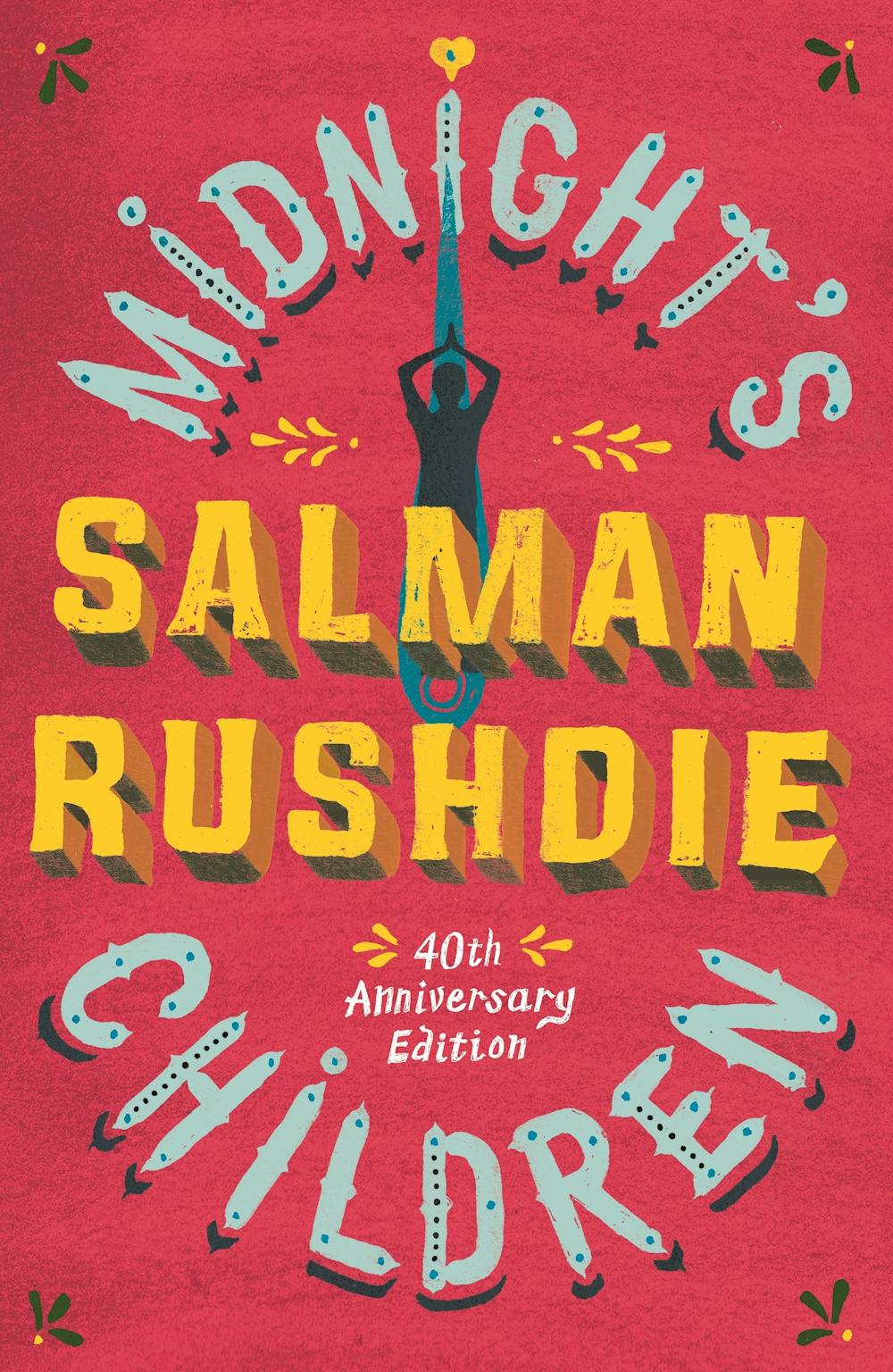
Rushdie is a remarkable novelist, whose epic work Midnight’s Children (1981) has twice (in 1993 and 2008) been voted the best-ever winner of the Booker Prize. Knife, by contrast, is a curiously one-eyed book, in a metaphorical, as well as a literal sense.
The author declares his intention to use his own artistic language as “a knife” to “cut open the world and reveal its meaning”. But the challenge for the rest of his writing career will surely involve deploying his extraordinary talents to assimilate these experiences in a more expansive fashion.
This should enable Rushdie to address, like Henry James in his ambitious late phase, the intricate entanglements of a changing world.
Authors: Paul Giles, Professor of English, Institute for Humanities and Social Sciences, ACU, Australian Catholic University
But Rushdie does not mention the similar fate suffered by Colin Milburn, an England international cricketer who lost an eye in a car accident in 1969 and who was never able to recover his sporting career. This was despite several brave comeback attempts by Milburn that likewise cited Pataudi as an example.
Rushdie is a remarkable novelist, whose epic work Midnight’s Children (1981) has twice (in 1993 and 2008) been voted the best-ever winner of the Booker Prize. Knife, by contrast, is a curiously one-eyed book, in a metaphorical, as well as a literal sense.
The author declares his intention to use his own artistic language as “a knife” to “cut open the world and reveal its meaning”. But the challenge for the rest of his writing career will surely involve deploying his extraordinary talents to assimilate these experiences in a more expansive fashion.
This should enable Rushdie to address, like Henry James in his ambitious late phase, the intricate entanglements of a changing world.
Authors: Paul Giles, Professor of English, Institute for Humanities and Social Sciences, ACU, Australian Catholic University 

















