

the unseen casualties of record-breaking heat on the Great Barrier Reef
- Written by: John Turnbull, Postdoctoral Research Associate, University of Sydney
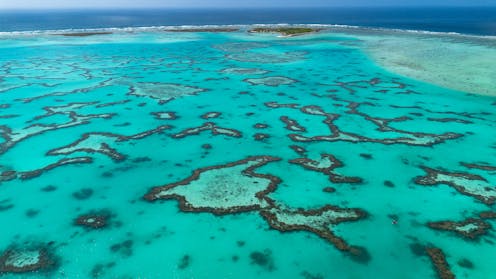
In past bleaching events on the Great Barrier Reef, the southern region has sometimes been spared worst of the bleaching. Not this time. This year’s intense underwater heat has triggered the most severe heat stress ever seen on record. Only 3% of surveyed southern reefs have not bleached at all. It’s shaping up to be the most severe and widespread bleaching of the southern reef, while mass bleaching has hit other areas of the reef in the fifth mass bleaching event in eight years.
We’re shocked and saddened by images of stark white coral skeletons. But the damage done by heat underwater goes much further. A living coral reef is a complex ecosystem teeming with vastly more species than the corals. Not only that, but 95% of the habitat on the reef is not coral, but sediment and sand, hotspots of hidden biodiversity. So, what happens to this cornucopia of life when subjected to extreme temperature stress?
We are currently on One Tree Island on the southern reef. It’s home to a research station and has one of the highest levels of protection within the whole reef.
What have we found? So far, the signs are not good. When we dive underwater, we can taste the change as stressed and dying corals release chemicals into water. When we bring back samples, the smell is distinctly sulphurous and sour. We see not just bleached hard corals, but also bleached anemones and soft corals. There are few starfish or sea urchins, yet algae growing on dead coral is attracting more herbivorous fish.
A reef is made up of interlocking parts
Coral reefs are complex, interlocking systems built on relationships. Living organisms need other living organisms to survive, whether as food, homes, symbiotic partners, or as substrate to grow on.
Think of the famous relationship between anemonefish and their anemones. These fish chase away predators of their anemone hosts, and their poo gives the anemone nutrients. In turn, the anemone’s stinging cells keep the fish safe from predators.
We are working to uncover relationships between different parts of a reef ecosystem, such as corals, fishes, sea stars, worms and microbes. We want to know the effect of higher water temperatures on these relationships.
To unpick this complexity, we need a lot of data. We do real-time underwater surveys, photogrammetry to turn photos into 3D models of reefs and sediment collection and sorting. We also record temperatures, deploy underwater coral incubation chambers to study respiration, and analyse the environmental DNA and nutrients held in sediments.
The taste of a sick reef
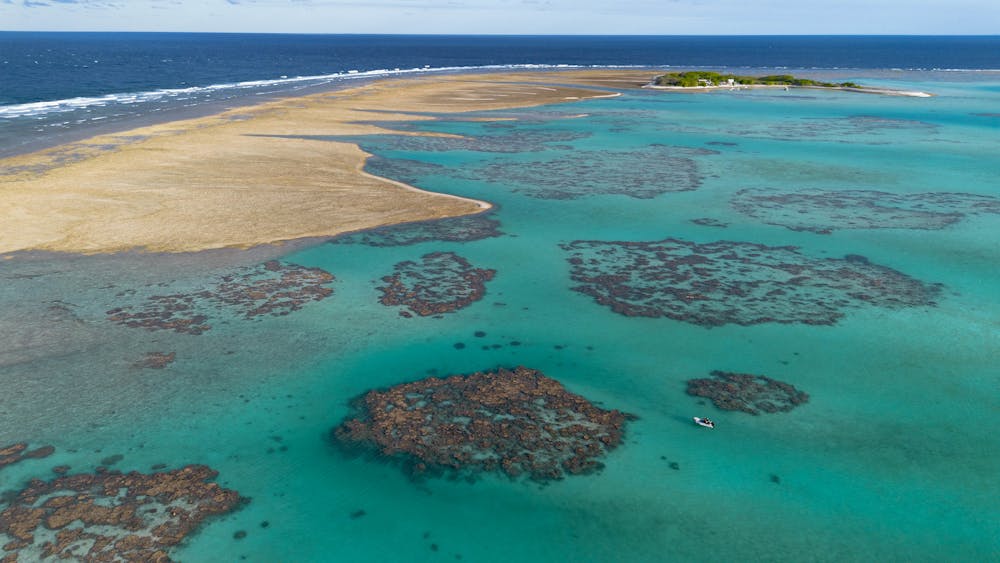
From our first day at One Tree, we could see what the heat had done. Bleached, fluorescing and dead corals were on every reef we surveyed in the lagoon. Newly dead corals were beginning to be colonised by wavy, dense algae, known as filamentous turfing algae.
Near each reef, we could see more biofilm than usual on top of the sediment sections, which appear like brownish sand seen from above. Touching the sediments gave a sticky feeling, indicating mucus sloughing off bleaching corals settles here.
So far, the fish communities seem relatively unaffected. The flow-on effects are likely to be delayed, however, with changes expected in coming months and years.
All the large anemones we saw had expelled their own symbiotic algae and bleached, which suggests some anemonefish may soon be losing their homes.
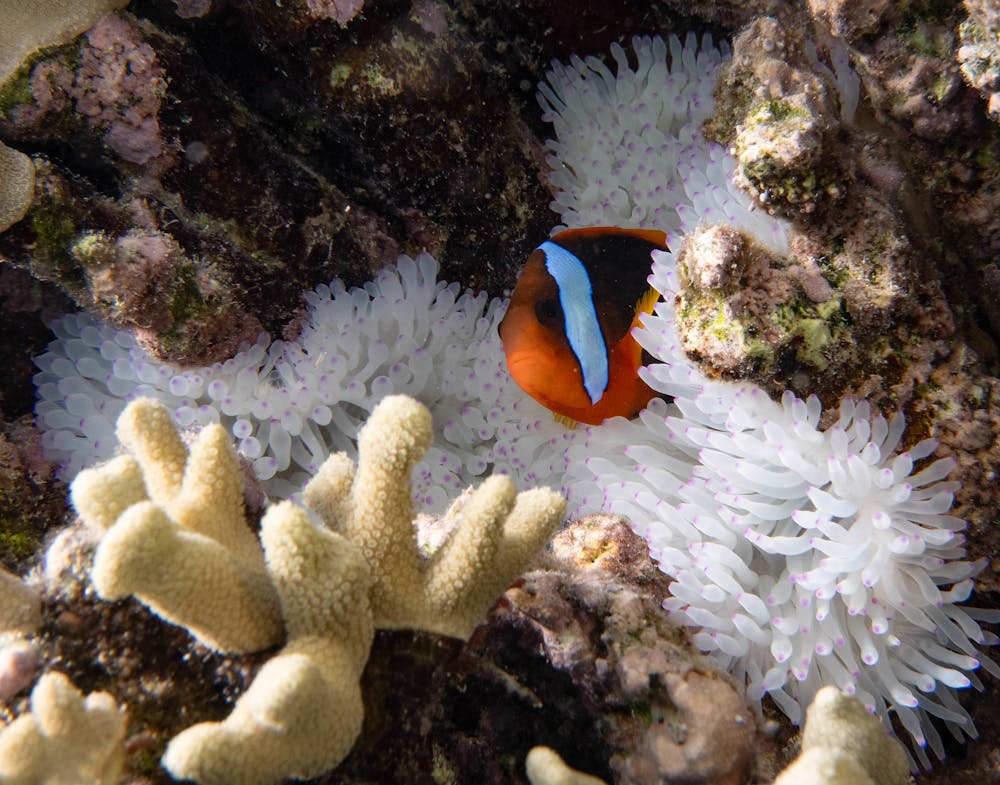 A black back anenomefish on a bleached anemone.
John Turnbull, CC BY-NC-ND
A black back anenomefish on a bleached anemone.
John Turnbull, CC BY-NC-ND
Damselfish and gobies, which usually hide in live coral heads, were now having to hide in dead, algae encrusted coral. Common parrotfish species were there in substantial numbers, suggesting they are benefiting from eating algae on the dead coral.
Sea stars, shell animals and sea urchins were scarce. This was as we feared, as these mobile macroinvertebrates are in widespread decline. If they go, the reef will lose the ecological services which these animals provide, as these organisms recycle nutrients and eat detritus, while some also hunt prey.
From the sky, the Barrier Reef presents as patches and lines of reef, interspersed with a great deal of sand. These sediment and sand communities are not barren. They’re hotspots for crustaceans and worms, feeding grounds for many fish, and the sites where a great deal of nutrient cycling takes place. They are very likely to be hit hard by the heat.
What future can the reef have?
When coral bleaches, it’s easy to tell. It looks very different. But when broader reef ecosystems dwindle, it’s harder. Much of the damage done this summer will take months or even years to manifest.
What will it look like? Research on other reefs is a guide. First, we would expect to see falling numbers of coral-eaters such as butterflyfish. We would then expect to see a drop in coral-dwellers such as the damselfish and gobies living in coral heads.
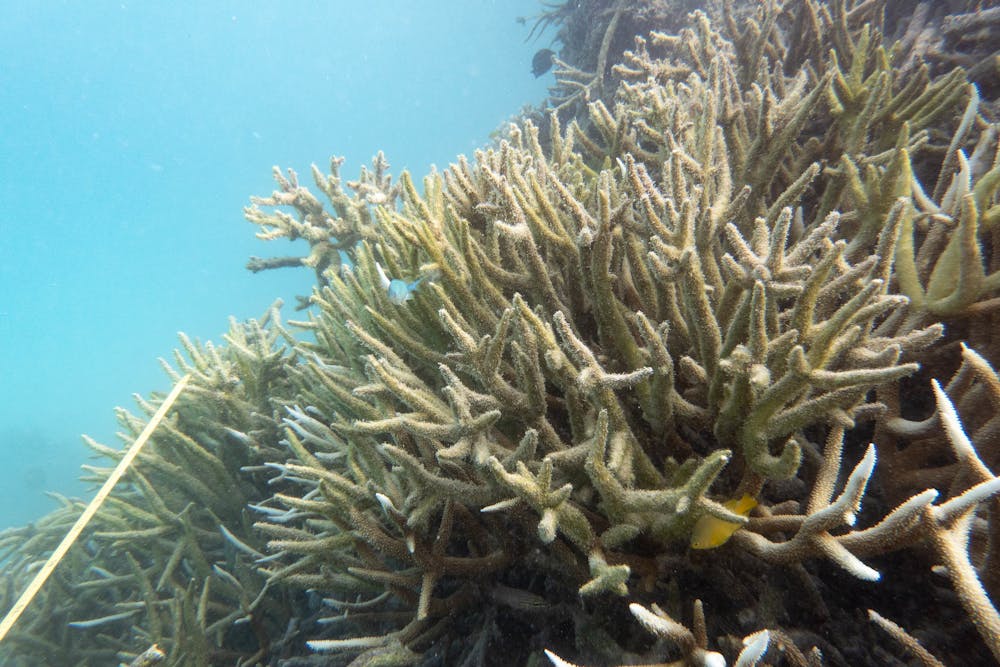 In 2023, these Acropora corals were alive. This year, they’ve died, and algae has covered them.
John Turnbull, CC BY-NC-ND
In 2023, these Acropora corals were alive. This year, they’ve died, and algae has covered them.
John Turnbull, CC BY-NC-ND
For herbivores, such as algae-eating fish, we would expect to see first a rise in numbers, as their populations expand to eat algae, and then the potential for a substantial fall as the overall health, diversity and structure of the reef declines.
The rippling damage done by bleaching isn’t always one-way. Some immediate damage can be reversed and even lead to recovery, but we won’t know this for some time.
Extreme underwater heatwaves are predicted to increase in frequency and intensity as we continue heating the planet. We are entering unknown territory for these incredibly diverse and highly valued ecosystems, with flow-on effects we are only starting to understand.
Read more: Global coral bleaching caused by global warming demands a global response
Acknowledgement: We could not have done this work without the support of One Tree Island Research Station managers Ruby Holmes and Heinrich Breuer
Authors: John Turnbull, Postdoctoral Research Associate, University of Sydney


















