

84 million hectares of northern Australia burned in 2023
- Written by: Rohan Fisher, Information Technology for Development Researcher, Charles Darwin University
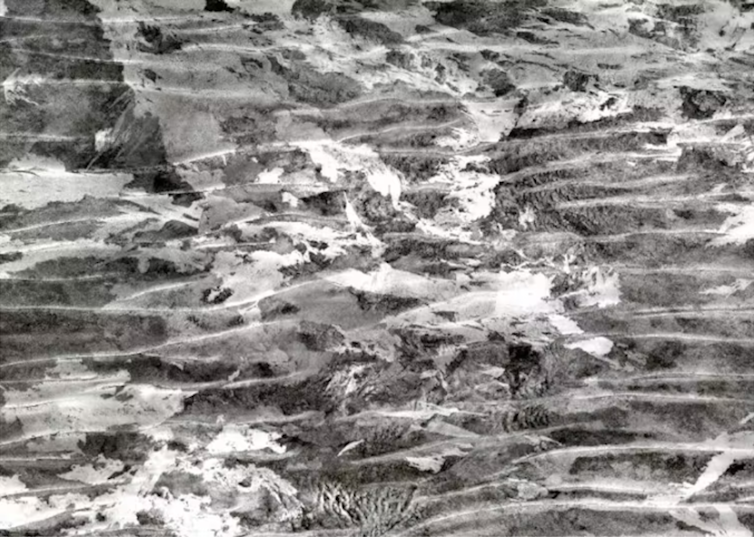
It may come as a surprise to hear 2023 was Australia’s biggest bushfire season in more than a decade. Fires burned across an area eight times as big as the 2019–20 Black Summer bushfires that tore through 10 million hectares in southeast Australia.
My research shows the 2023 fires burned more than 84 million hectares of desert and savannah in northern Australia. This is larger than the whole of New South Wales, or more than three times the size of the United Kingdom. The scale of these fires is hard to comprehend.
The speed at which these fires spread was also incredible. In just a few weeks of September and October, more than 18 million hectares burned across the Barkly, Tanami and Great Sandy Deserts of the Northern Territory and Western Australia.
I presented this research into the 2023 fires at the International Fire Behaviour and Fuels Conference this month in Canberra. I described the scale of these fires, why they occurred, and how fires could be better managed to help protect remote but ecologically and culturally important regions of Australia.
2023 fire spread in North Australia animation, drawing on North Australia Fire Information from firenorth.org.au (Rohan Fisher)Why did this happen?
Fire and rain are closely connected. Rain triggers grass growth. When it dries out, grass becomes fuel for fires.
For example, you can see the pattern of more fire following wet years repeating at periodic intervals over the past 20 years of fire in the Northern Territory.
In this way, La Niña is the major driver of these massive fires in the desert.
Although 2023 was a massive fire year, 2011 was even bigger. In the NT alone, more than 55 million hectares burned in 2011, compared with 43 million in 2023.
When fuel is dry and weather conditions are extreme, lightning strikes tend to start more fires across savannah and desert rangelands.
Lightning across Australia in late 2023 using data from Andrew Miskelly at Weather Zone (Rohan Fisher)It has been variously suggested in the media and on social media that these fires are part of a “normal” cycle, a consequence of climate change, or largely the result of arson. Such simplifications fail to grasp the complexity and history of fire management in desert Country.
The main driver of these fires was the very large fuel loads. These wet growing seasons are part of the natural cycle. While climate change can make fire conditions more extreme, in this case it’s not the main cause. However, the scale of these fires was not “normal”.
Read more: Fire is a chemical reaction. Here's why Australia is supremely suited to it
How can fires be managed?
For many thousands of years, Indigenous people managed fuel loads across these vast landscapes.
The sophisticated use of fire in Australia’s highly flammable tropical savannas has been recognised as the world’s best wildfire management system.
Traces of this long history of traditional fire practice can be seen in aerial photos of desert Country from the 1940s. Research analysing these photos has shown extensive and complex “fuel mosaics” spread like patchwork quilts over vast parts of the WA deserts.
The term mosaic refers to having many patches of vegetation of different ages, some recently burnt with sparse cover, some long unburnt with old, large and connected spinnifex clumps and small trees.
This provides habitat for a broad range of animals, because different species prefer different amounts of ground cover. It also hinders the spread of fire because areas subject to more recent fire have insufficient fuel to carry new fires for many years.
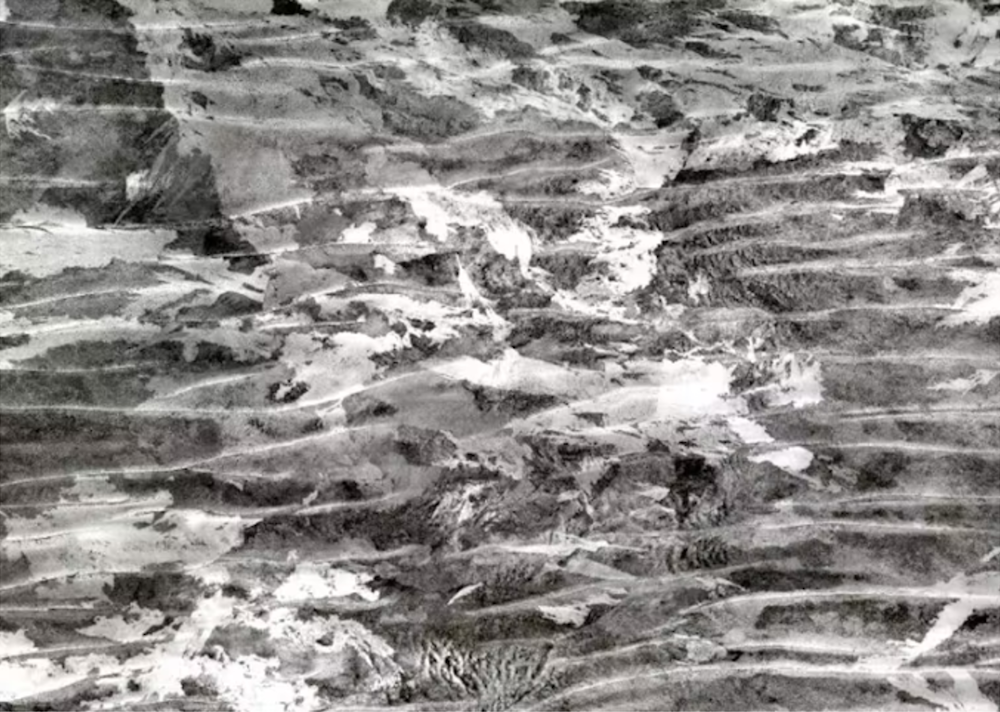
Efforts have only just begun to bring good fire management back into these landscapes in a coordinated and large-scale way.
In 2022–23 Indigenous ranger groups conducted extensive burning operations. They travelled more than 58,000km by air and road, burning from cars, on foot and dropping incendiaries.
These burns were astoundingly effective. Even though large fires still ripped through these deserts in 2023, by mapping the fuel reduction fires and overlaying the spread of subsequent wildfires, we can see the 2023 fires were limited by previous burns.
For example, the fire spread animation below shows fires moving through a complex mosaic comprising fuel of different ages. One fire can be seen moving more than 600km from near the NT border almost to the coast south of Broome. The fire weaves around previous burns and cheekily finds small gaps of older, continuous fuel.
Animation showing fire spreading through the Great Sandy Desert in 2023 (North Australia and Rangelar)So without these earlier smaller controlled burns, the out-of-control fires would have been larger.
In the Great Sandy Desert of WA, the complex mosaic of spinifex of different ages persisted after these fires. The Indigenous Desert Alliance puts this down to more controlled burning in the past couple of years than in the ten years prior.
Read more: Invasive grasses are worsening bushfires across Australia's drylands
The fires of greatest concern to government agencies were the Barkly fires that threatened the town of Tennant Creek. These fires were large and fast-moving, feeding off fuel in a vast area of unmanaged country east of the town.
Here, a lack of land management increased disaster risk. The fire only stopped when it encountered four-year-old burned areas from lightning strikes.
The summer of 2023–24 was very wet across the Barkly and Tanami regions in the NT. Bushfires NT chief fire control officer Tony Fuller has warned of another big fire year to come as we head into the northern dry season of 2024.
Preparing for the future
Desert fire management is still under-resourced and poorly understood.
Ultimately the only effective way to prevent these massive fires in very remote parts of Australia is through a long-term, well-funded strategy of using fire over our vast desert landscapes to control fuel, as was done during previous millennia.
Read more: Our planet is burning in unexpected ways - here’s how we can protect people and nature
Authors: Rohan Fisher, Information Technology for Development Researcher, Charles Darwin University


















