

Half our colleagues suffer pain and discomfort from periods. But they’re still a taboo subject at work
- Written by: Ruth Knight, Researcher, Queensland University of Technology
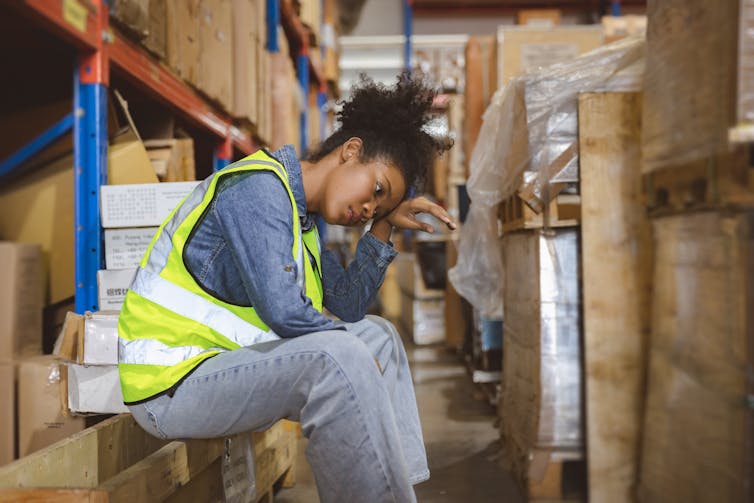
Have you ever felt sick at work? Perhaps you had food poisoning or the flu. Your belly hurt, or you felt tired, making it hard to concentrate and be productive.
How likely would you be to tell your boss you were unwell and had to go home?
While employees would probably tell their boss about a stomach upset, many who menstruate and feel unwell as a consequence every month, are unlikely to talk about their difficult periods.
Especially at work. This was confirmed in our recent study of 247 students and workers who have periods. We found only 6.7% would be honest with their employer about why they had to leave work or stay at home.
Additionally, 87% of those surveyed - 96% identified as women - felt their period often interfered with their work or study.
One respondent told us, “I would sometimes just say I wasn’t well and needed to work from home to be near a bathroom. I would let people assume it was gastro.” Another said, “I do not feel comfortable giving this as a reason to miss work as it feels like an excuse despite living in chronic pain.”
The topic of menstruation is unquestionably still on the taboo list. And it is also clearly affecting the workplace.
The good news is we are starting to see initiatives aimed at making workplaces more inclusive for people who menstruate.
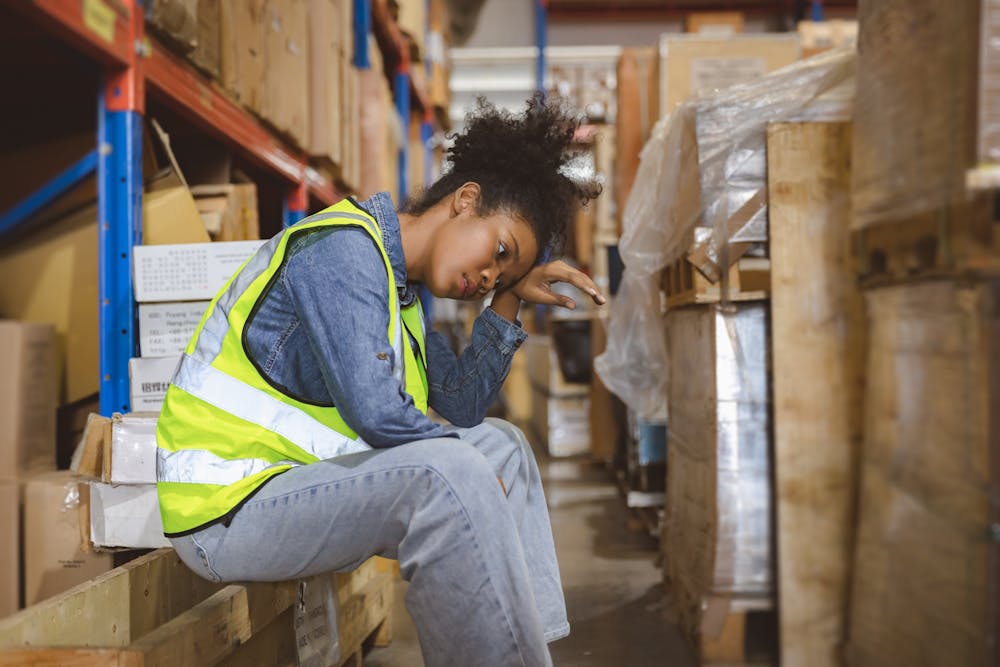
Earlier this month, Victorian government employees dealing with menstrual pain, menopausal symptoms and IVF treatments were given an extra five days sick leave as part of their Enterprise Bargaining Agreement negotiations.
But the Victorian Women’s Trust led the way in Australia being the first company to introduce a Menstrual and Menopause Wellbeing Policy".
Other organisations including the Aintree Group, Fisher and Paykel Healthcare, the Cura Day Hospitals Group and sports business Core Climbing are also getting on board.
Many schools provide free pads and tampons which are also available at Melbourne council facilities, TAFE Queensland, and universities including Griffith and Monash.
The list of employers may grow if campaigns such as the Electrical Trades Union’s ‘Nowhere to Go’ and The Retail and Fast Food Workers Union’s ‘We’re Bloody Essential’ are effective, as they are lobbying for more companies to consider the menstrual needs of their employees.
Having access to free period products seems to be paying off as our research found 84.6% of employees said it makes them feel their workplace cares about them and reduces the likelihood they will leave work due to their period.
One respondent explained, “Periods can be hard. I once bled through my clothes at work and had to leave. It was so stressful and humiliating. Free period products could just change someone’s day.”
This is encouraging, but also suggests accessible products alone won’t lift the taboo and support a menstrual-inclusive workplace. More needs to be done.
1) Recognise the impact of periods
Our study identified people who menstruate regularly experience physical symptoms such as abdominal pain (94%), backache (82%), and headaches (82%) before or during their period. They also describe emotional symptoms such as anxiety, fatigue, depression and irritability.
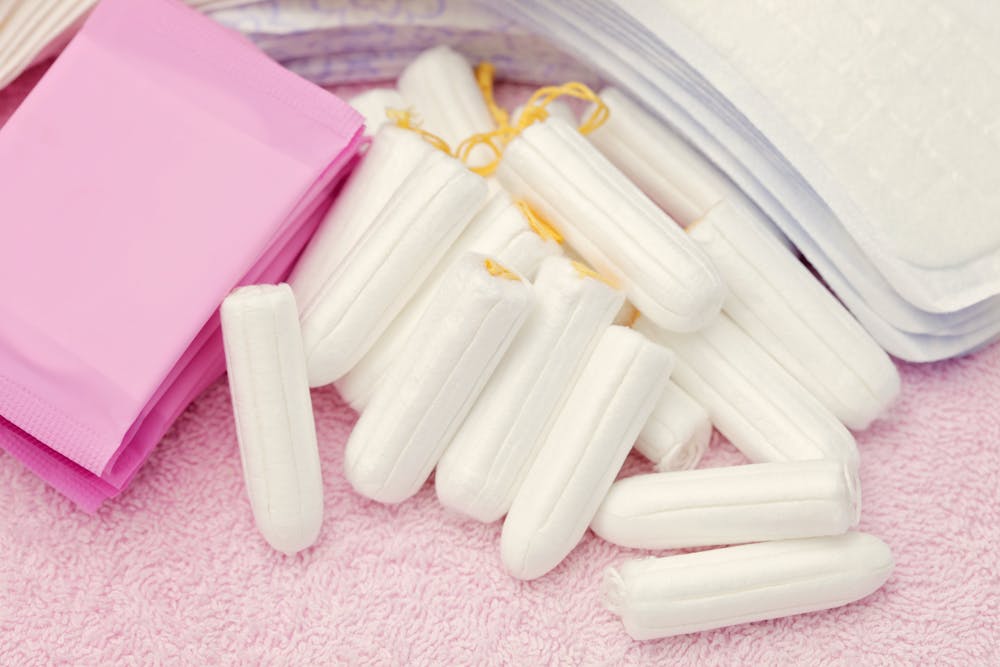 Inclusive leaders normalise talk about menstruation in the workplace.
matka_Wariatka/Shutterstock
Inclusive leaders normalise talk about menstruation in the workplace.
matka_Wariatka/Shutterstock
One respondent said: “My cramps are so painful they make me feel physically sick - as though I will throw up. So I don’t like being out of the house because I can’t stand up straight.”
And another: “My period increases my general level of anxiety in class, at work, and in all other situations. It can cause me to be acutely anxious during my classes and work, and I struggle to concentrate.”
To avoid feelings of humiliation, shame and discrimination, people with their period often mask and hide symptoms. When this happens, employees report being less engaged and productive.
By empathising with menstruators who are impacted in a wide variety of ways, organisations can support and empower them to look after their general and menstrual well-being.
2) Become an inclusive leader
Inclusive leaders treat menstrual health as a justice and human rights issue that is collectively important for individuals and the organisation. These leaders recognise people with their period should be supported, so they talk to them about cultural and practical ways the workplace can make them feel safe and allow them to manage their period with dignity.
Read more: Why menstrual leave could be bad for women
This might mean providing free period products or offering menstruators flexible breaks and work hours when having their periods. Inclusive leaders recognise some people may need paid menstrual leave.
3) Normalise discussions about menstruation
Inclusive leaders go further than practical strategies, they create a period-positive environment by challenging stigma and discrimination. They normalise conversations about menstruation, and ensure people who menstruate feel heard, supported and respected. They offer education and training to dismantle the menstrual taboo in workplaces, and replace it with a culture that embraces menstrual wellbeing.
Ultimately, to make our workplaces equitable and inclusive, we must be willing to talk about menstruation openly and honestly and learn about the impact it has on employees. Only then will workers feel able to talk about what supports their health needs.
Read more: Symptoms of menopause can make it harder to work. Here's what employers should be doing
Authors: Ruth Knight, Researcher, Queensland University of Technology


















