

How Anzac deaths changed the way we mourn to this day
- Written by: Jen Roberts, Senior Lecturer, School of Humanities and Social Inquiry, University of Wollongong
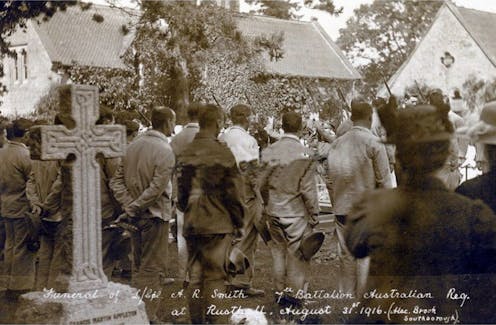
Victor Farr, a private in the 1st Infantry Battalion, was among the first to land at Anzac Cove just before dawn on April 25 1915.
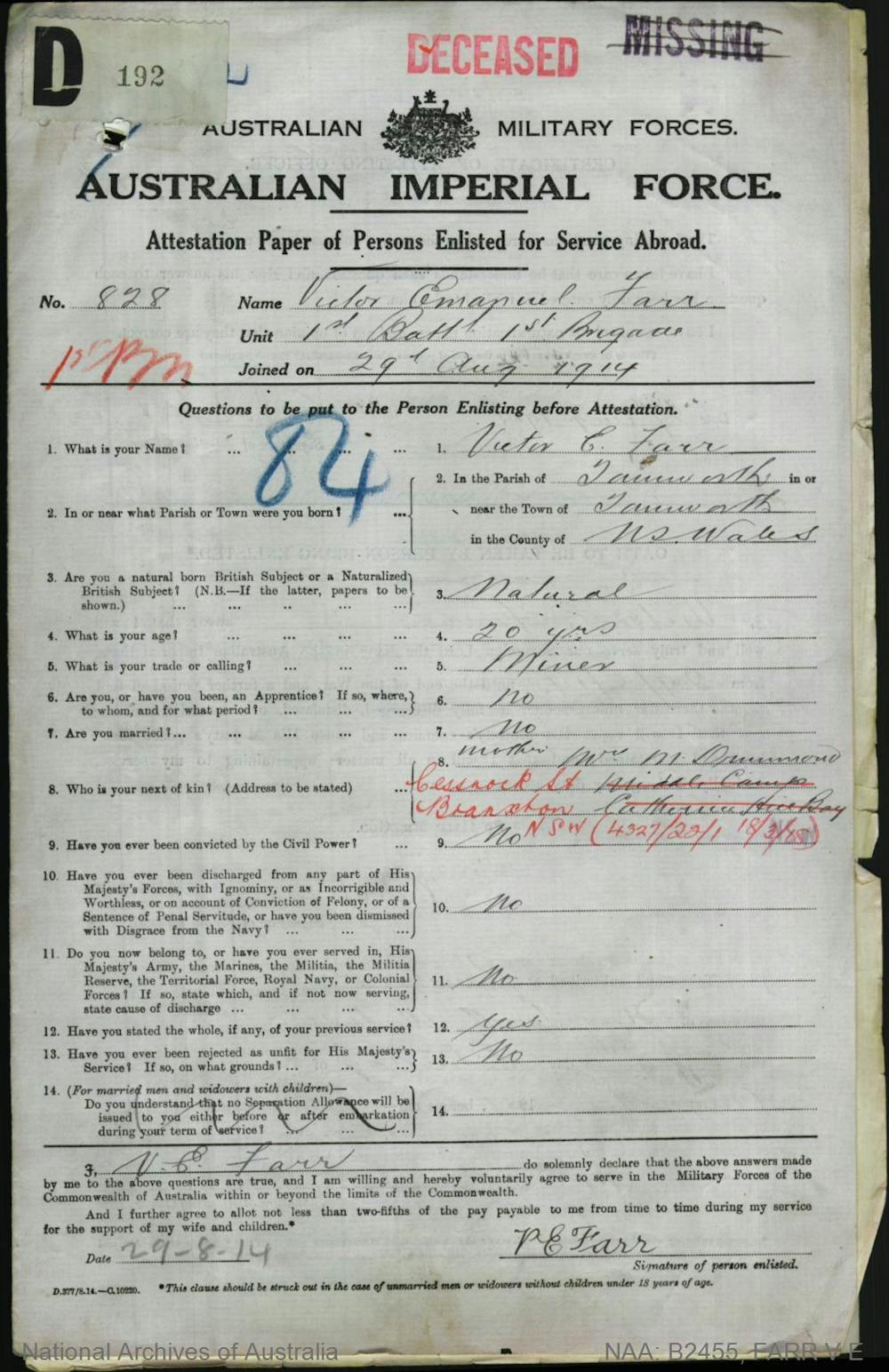
In the chaos, Farr went missing. When the first roll call was conducted on April 29, he was nowhere to be found. His record was amended to read “missing”, something guaranteed to send any parent into a blind panic.
It was not until January 1916 that it was determined Farr had been killed in action in Turkey sometime between April 25 and 29. He was 20 years old when he died.
His mother, Mary Drummond, had spent months in agony waiting for any news of her only child. Her initial deference to authorities gave way to an increasingly desperate and angry correspondence. She wrote:
Now Sir, I think it is your duty […] when a mother gives her son […] when that son is wounded, she ought to have some news.
By October, she tried to enlist the help of her local member of parliament, imploring him to find out if her son was alive.
But it was not until 1921, six years after Farr was last seen alive, that the army conceded exhaustive enquiries had failed to locate his body. She replied:
I only wish you could tell me if you knew he was buried, my sorrow would not be so great.
Farr’s name is etched on a panel at the Lone Pine Memorial to the Missing at Gallipoli, along with more than 4,900 of his Australian comrades who likewise have no known grave.
Read more: How Anzac Day came to occupy a sacred place in Australians' hearts
A heavy price
Almost half of the eligible white, male population of Australia volunteered and enlisted in the First Australian Imperial Force between 1914 and 1918.
Of the 416,000 who joined up, more than 330,000 men served overseas. Of these, more than 60,000 would never return. These are among the highest casualty figures for any combatant nation in the entire war.
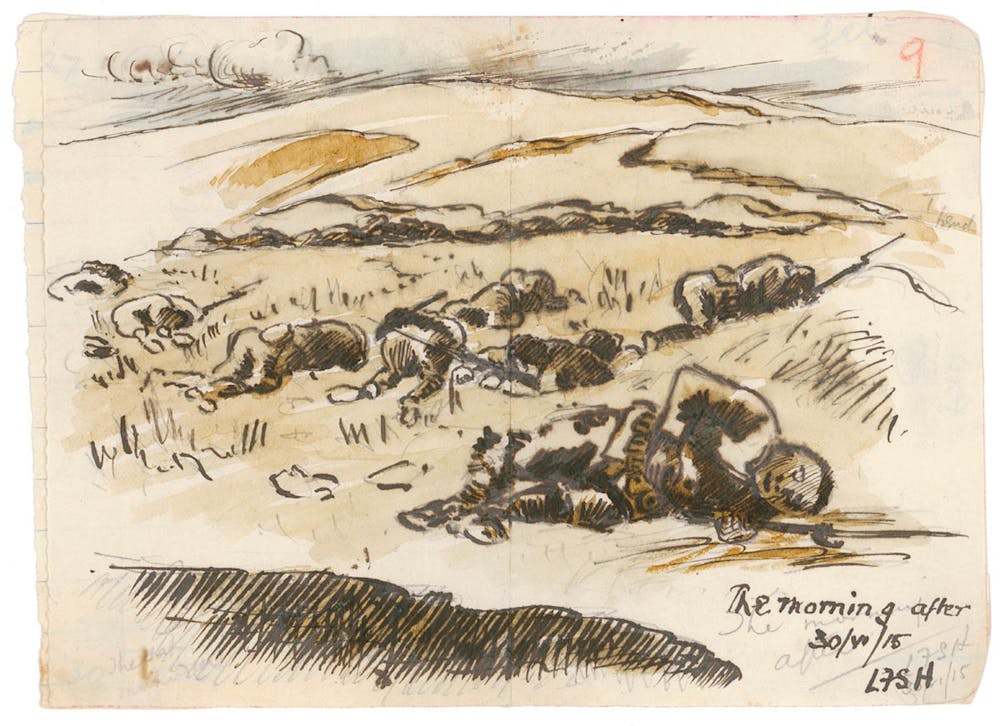 More than 60,000 Australian men would never return.
Leslie Hore/Mitchell Library, State Library of New South Wales
More than 60,000 Australian men would never return.
Leslie Hore/Mitchell Library, State Library of New South Wales
Over 80% of Australia’s soldiers were unmarried, like Farr; in some rural communities, that rate was about 95%. So the burden of bereavement fell on the shoulders of ageing parents.
The impact of wartime bereavement on ageing parents was enormous. For some, grief became the primary motif for the rest of their days. For most, the memory haunted them into the post-war years, and for all, the war became the pivotal event of their lives, after which nothing would ever be the same.
Read more: Women have been neglected by the Anzac tradition, and it's time that changed
Some ended up in mental hospitals
The physical health of many parents declined rapidly when they heard their son had died. One example was Katherine Blair. She died unexpectedly at the age of 54 from heart failure on the first anniversary of her son’s death in France.
There was evidence of mothers and fathers becoming violent, thinking about suicide, causing public disturbances, and turning to alcohol in their distress.
As I outlined in my PhD thesis, many working class mothers and fathers joined the wards of public mental hospitals, such as Callan Park in Sydney. Some stayed there for the rest of their lives.
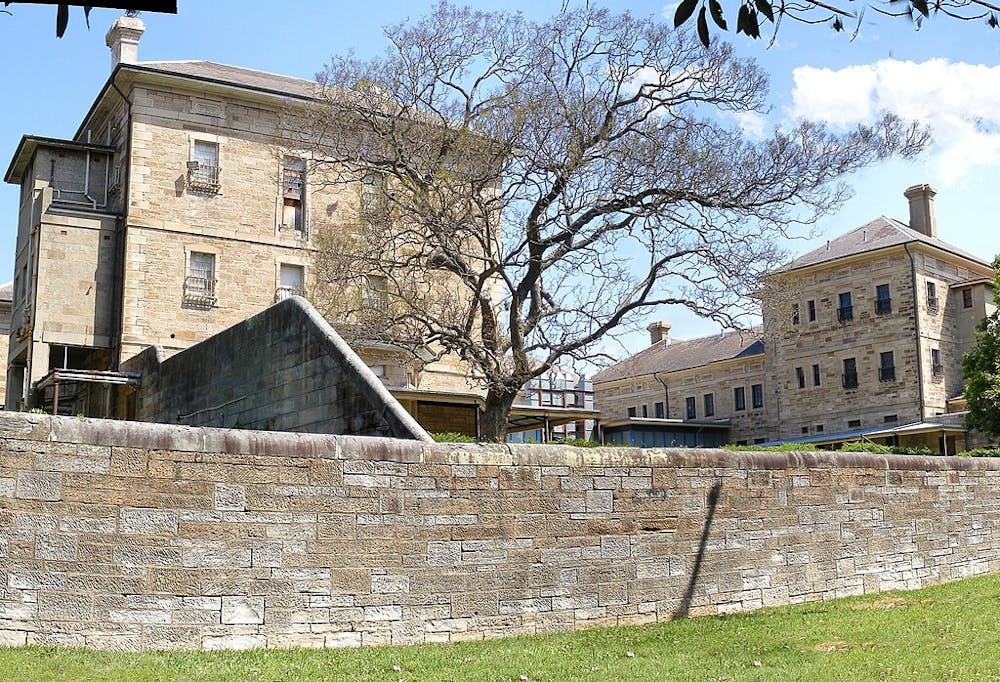 Many grieving parents ended up in public mental hospitals, such as Sydney’s Callan Park.
Adam.J.W.C. / Wikimedia Commons, CC BY
Many grieving parents ended up in public mental hospitals, such as Sydney’s Callan Park.
Adam.J.W.C. / Wikimedia Commons, CC BY
The psychiatric files I examined from several major mental hospitals showed evidence of delusions, fantasies and complete denial about their son’s death. Some had lost more than one son.
Upper class families avoided the stigma of public mental hospitals, as they could afford to see private doctors, and have nursing assistance at home.
Upper class fathers, in particular, appointed themselves as guardians of their son’s memory. They spent an inordinate amount of time, effort and funds on lobbying the Australian government for recognition of their son’s service, and producing elaborate memory books and commemorative artefacts. Perhaps this was a sign of obsessive grief, but one not available to working class families.
Read more: Telling the forgotten stories of Indigenous servicemen in the first world war
How mourning changed
Death and injury during the war touched every part of the country, from cities to hamlets, from towns to stations.
The scale of loss was as shocking as it was unprecedented, and permanently changed the culture of mourning practices in Australia.
Funeral services and overt displays of mourning differed according to class. Overall, however, the Australian experience of death in the 19th century was based on traditions embraced in Victorian England – deathbed attendance, the graveside funeral service, the headstone and its inscription, and the physical act of visiting the grave to place flowers or other mementos on special occasions.
There was also the practice of wearing mourning black and for wealthier families, ornate funeral processions through the streets with plumed horses to demonstrate the social standing and piety of the deceased.
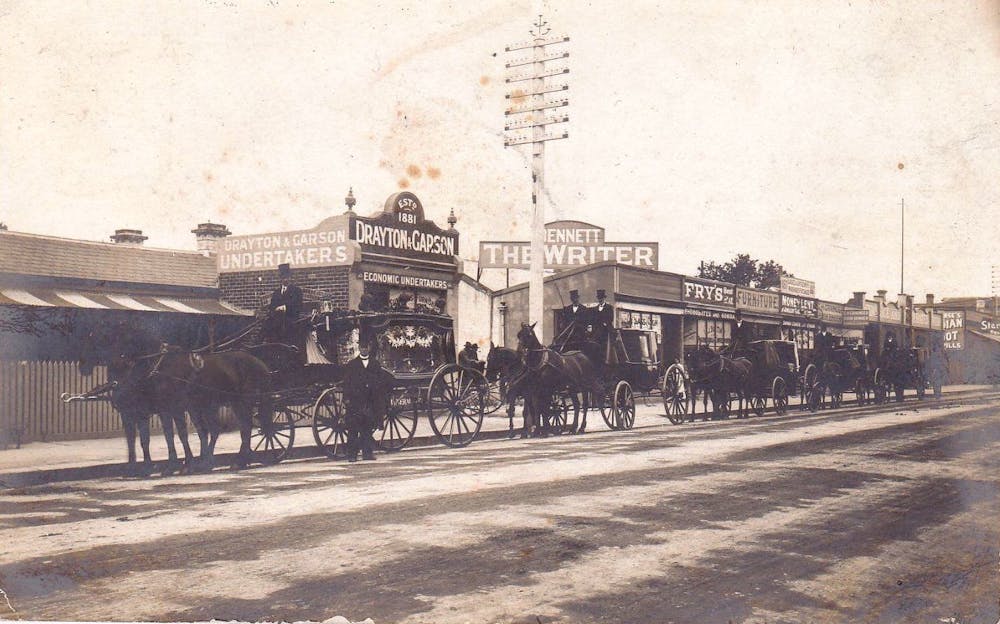 In the early 1900s, funeral processions like this were elaborate affairs. But funerals soon changed.
Aussie~mobs/Flickr
In the early 1900s, funeral processions like this were elaborate affairs. But funerals soon changed.
Aussie~mobs/Flickr
However, two realities were required to mourn within the comfort of these familiar rituals – the knowledge of how and where their loved one had died, and the presence of the body.
Neither was available to the bereaved in Australia during the Great War. These established, reliable patterns had been stripped away.
Read more: Friday essay: images of mourning and the power of acknowledging grief
Instead, and with so many who were bereaved, the notion of claiming loss in public was seen as tasteless and vulgar.
Rather than funerals being ostentatious public displays, they became private affairs for family and close friends.
Grief was endured and expressed within the privacy of the home, with a performance of dignified stoicism in public. The practice of wearing mourning black fell out of style.
An estimated 4,000-5,000 war memorials were built across the country. These became the focal point for communities to honour their dead and remember their sacrifice, a practice we still see on Anzac Day today.
Authors: Jen Roberts, Senior Lecturer, School of Humanities and Social Inquiry, University of Wollongong
Read more https://theconversation.com/how-anzac-deaths-changed-the-way-we-mourn-to-this-day-226746



















