

Ancient nomads you’ve probably never heard of disappeared from Europe 1,000 years ago. Now, DNA analysis reveals how they lived
- Written by: Magdalena M.E. Bunbury, Postdoctoral Researcher, James Cook University
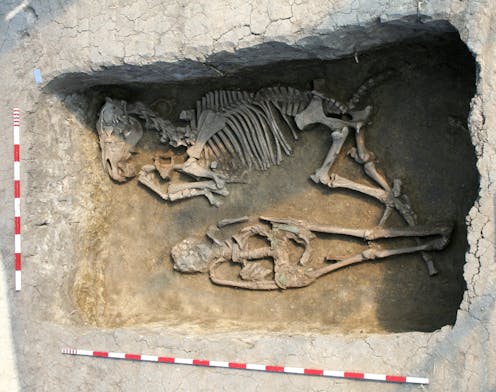
How do we understand past societies? For centuries, our main sources of information have been pottery sherds, burial sites and ancient texts.
But the study of ancient DNA is changing what we know about the human past, and what we can know. In a new study, we analysed the genetics of hundreds of people who lived in the Carpathian Basin in southeastern central Europe more than 1,000 years ago, revealing detailed family trees, pictures of a complex society, and stories of change over centuries.
Who were the Avars?
The Avars were a nomadic people originating from eastern central Asia. From the 6th to the 9th century CE, they wielded power over much of eastern central Europe.
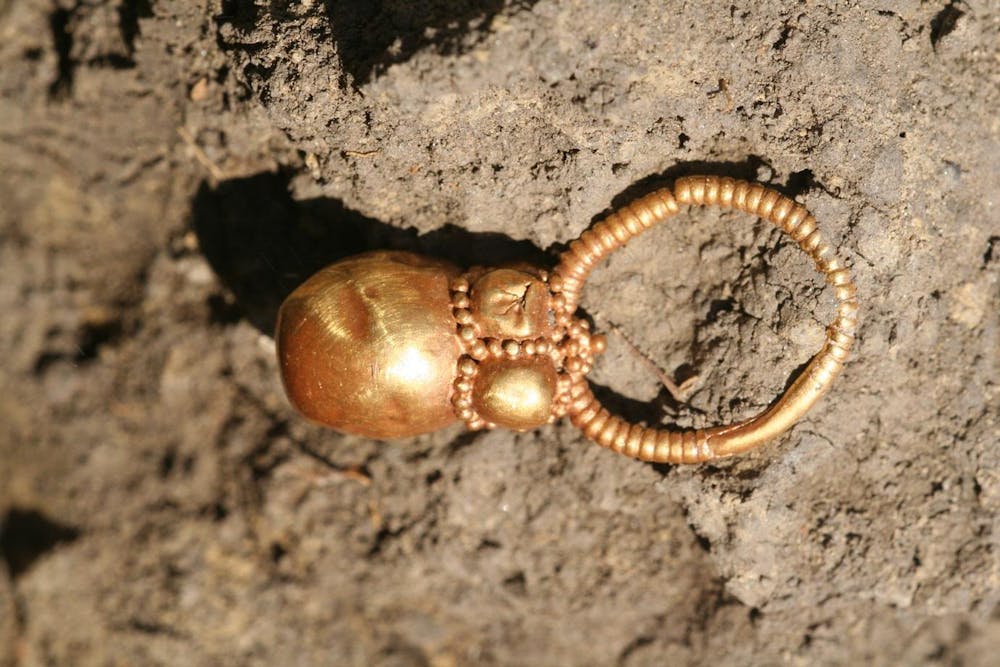
The Avars are renowned among archaeologists for their distinctive belt garnitures, but their broader legacy has been overshadowed by predecessors such as the Huns. Nevertheless, Avar burial sites provide invaluable insights into their customs and way of life. To date, archaeologists have excavated more than 100,000 Avar graves.
Now, through the lens of “archaeogenetics”, we can delve even deeper into the intricate web of relationships among individuals who lived more than a millennium ago.
Kinship patterns, social practices and population dynamics
Much of what we know about Avar society comes from descriptions written by their enemies, such as the Byzantines and the Franks, so this work represents a significant leap forward in our understanding.
We combined ancient DNA data with archaeological, anthropological and historical context. As a result, we have been able to reconstruct extensive pedigrees, shedding light on kinship patterns, social practices and population dynamics of this enigmatic period.
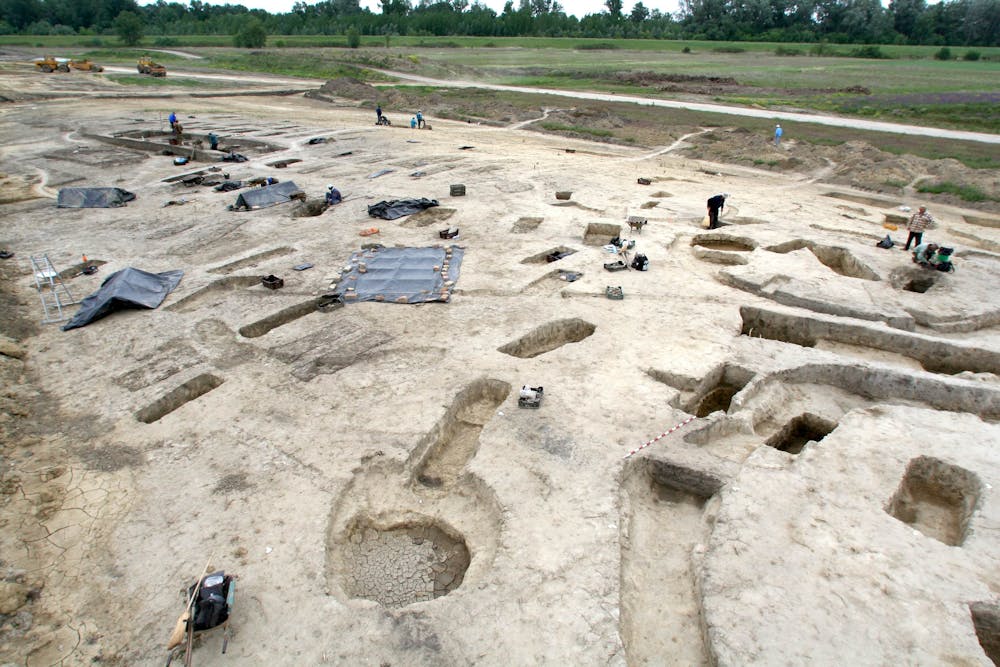 Excavations at the cemetery of Rákóczifalva, Hungary in 2006.
Hungarian National Museum, CC BY
Excavations at the cemetery of Rákóczifalva, Hungary in 2006.
Hungarian National Museum, CC BY
We sampled all available human remains from four fully excavated Avar-era cemeteries, including those at Rákóczifalva and Hajdúnánás in what is now Hungary. This resulted in a meticulous analysis of 424 individuals.
Around 300 of these individuals had close relatives buried in the same cemetery. This allowed us to reconstruct multiple extensive pedigrees spanning up to nine generations and 250 years.
Communities were organised around main fathers’ lines
Our research uncovered a sophisticated social framework. Our results suggest Avar society ran on a strict system of descent through the father’s line (patrilineal descent).
Following marriage, men typically remained within their paternal community, preserving the lineage continuity. In contrast, women played a crucial role in fostering social ties by marrying outside their family’s community. This practice, called female exogamy, underscores the pivotal contribution of women in maintaining social cohesion.
Additionally, our study identified instances where closely related male individuals, such as siblings or a father and son, had offspring with the same female partner. Such couplings are called “levirate unions”.
Despite these practices, we found no evidence of pairings between genetically related people. This suggests Avar societies meticulously preserved an ancestral memory.
These findings align with historical and anthropological evidence from societies of the Eurasian steppe.
Our study also revealed a transition in the main line of descent within Rákóczifalva, when one pedigree took over from another. This occurred together with archaeological and dietary shifts likely linked to political changes in the region.
The transition, though significant, cannot be detected from higher-level genetic studies. Our results show an apparent genetic continuity can mask the replacement of entire communities. This insight may have far-reaching implications for future archaeological and genetic research.
Future direction of research
Our study, carried out with researchers from the Max Planck Institute for Evolutionary Anthropology in Leipzig, Germany and at Eötvös Loránd University in Budapest, Hungary, is part of a larger project called HistoGenes funded by the European Research Council.
This project shows we can use ancient DNA to examine entire communities, rather than just individuals. We think there is a lot more we can learn.
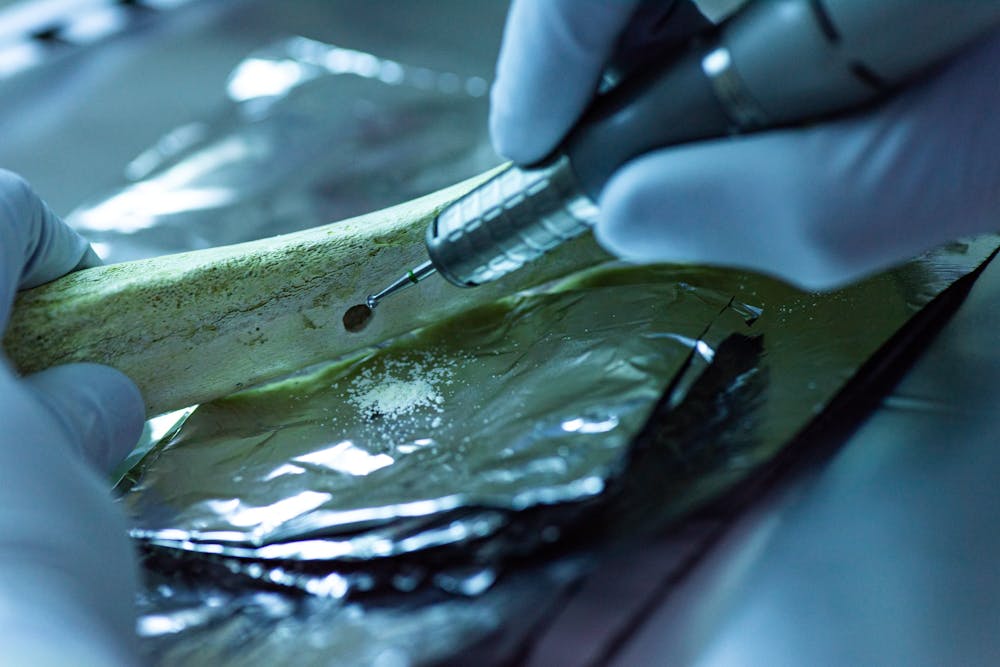 An expert at work harvesting ancient DNA from a human bone.
Max Planck Institute for Evolutionary Anthropology
An expert at work harvesting ancient DNA from a human bone.
Max Planck Institute for Evolutionary Anthropology
Now we aim to deepen our understanding of ancestral Avar society by expanding our research over a wider geographical area within the Avar realm. This broader scope will allow us to investigate the origins of the women who married into the communities we have studied. We hope it will also illuminate the connections between communities in greater detail.
Additionally, we plan to study evidence of pathogens and disease among the individuals in this research, to understand more about their health and lives.
Another avenue of research is improving the dating of Avar sites. We are currently analysing multiple radiocarbon dates from individual burials to reveal a more precise timeline of Avar society. This detailed chronology will help us pinpoint significant cultural changes and interactions with neighbouring societies.
The authors would like to acknowledge the contributions to this work of Zsófia Rácz, Tivadar Vida, Johannes Krause and Zuzana Hofmanová.
Authors: Magdalena M.E. Bunbury, Postdoctoral Researcher, James Cook University


















