

What do we lose when our old suburbs disappear?
- Written by: Felicity Castagna, Lecturer, Creative Writing, Western Sydney University
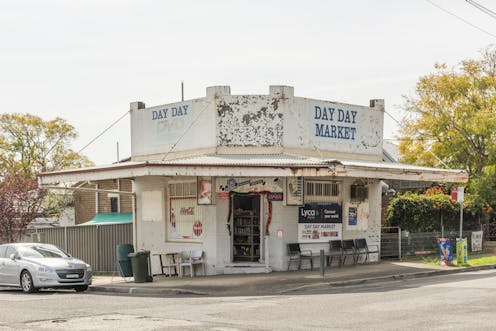
I live on the edge of Parramatta, Australia’s fastest-growing city, on the kind of old-fashioned suburban street that has 1950s fibros constructed in the post-war housing boom, double-storey brick homes with Greek columns that aspirational migrants built in the 1970s and half-crumbling, Federation-era mansions once occupied by people whose names still appear in history textbooks.
Parramatta’s population is predicted to almost double in the next 20 years. My street, like so many others, has recently been rezoned for high-density living. Many of these houses are being sold to developers.
It’s a local story but it’s also a national one: suburbs near our cities are disappearing everywhere along with the crucial histories of Australian life they represent.
Australia is still a suburban nation: 70% of us live in the suburbs and this figure is increasing with the rapid growth of “McMansion” areas in the far outskirts of our cities.
Suburbia looms large in our imagining of ourselves, so what happens when we lose those suburban streets whose houses are too young to be heritage-listed but still old enough to tell an important story of our social and economic history? As urban researcher Larry Bourne argued, we have yet to really write the history of suburban life because we haven’t paid enough attention to recording the private everyday experiences of people and their homes there.
So that’s what I’ve been doing for the past several months, walking the street with suburban photographer Garry Trinh and talking to my neighbours about their relationships with their homes before they are lost.
Read more: Reimagining Parramatta: a place to discover Australia's many stories
‘A different attitude to life’
A few houses down from me, Craig lives in a cottage that he believes “shows a different attitude towards life”. He spends his weekends restoring parts of his home.
It takes a lot of time to maintain. People took longer to do things. They had a different sense of time – they did things one time so they didn’t have to do it again.
He enjoys the idea that living in a house like this “you grow old together”. He shows me the places where the tiles on the floor don’t fit perfectly. The “walls and roofs are never even”, but that’s part of the place’s charm – you can see where others have added a living room or tried to fix a leak.
These homes have layers of history that don’t exist anywhere else.
To Craig, these houses represent why other generations felt more of the kind of safety and security that allowed them to build a greater sense of community.
You used to buy one house and you never changed it, one car […] people stayed in the same place […] people feel so restless now because we are no longer safe. Everything changes. Our houses are rezoned. There’s no certainty.
Read more: A city that forgets about human connections has lost its way
‘Edible things in people’s yards’
Jenny’s parents bought the largest block on the end of the street because the previous owners refused to sell to developers. She recently moved back home to care for her mother.
It’s a sprawling Federation-era home called “Coo-Wong” and it feels like big history must have happened there, despite its absence from any local history archives. There are clues, though, about the kind of people who might have lived here before: Chinese coins found on the property, a shed full of bric-a-brac.
Mostly, the whole family lives in the kitchen or the light-filled corner at the back of the house where Jenny’s mother grows flowers. Her father’s family lost everything during the Cultural Revolution and he moved here to find a better life. He’s in the building industry and their home is filled with the spare parts from other houses, doors, drawers and other supplies that might go into extending or renovating their home one day.
Jenny remembers when they moved into the neighbourhood there was an older generation of people who embraced them. There were fruit trees and “all of these edible things in people’s yards”. In their backyard, a giant satellite dish, which her parents bought to watch their shows from China, still looms big even if it isn’t needed anymore.
It’s these small details in Jenny’s home that tell the larger story of how various generations of migrants sewed themselves into the fabric of our suburbs.
Read more: Chinese-Australians have a sense of dual 'belonging': Lowy poll
Different versions of one house
George, his wife, Jennifer, and their two adult children live in the house George’s father built in 1973 when the street was filled with vacant blocks. His family was the first to move here from their village in Lebanon, so their house became a kind of community hub – there were always people there.
George’s family passed the plans he used to build the house onto other Lebanese families that moved in. It means there are slightly different versions of this house in many other places on the street.
George’s dad and his uncles built many houses in this area together. Sometimes they didn’t quite get it right though: only one door in their house is hung straight – all the rest are hung backwards. The family has been trying to restore parts of the house for a long time, including the Art Deco railings and Victorian lights.
As an expert in post-war housing, Mirjana Lozanovska says this layering of architectural details found in these post-war suburban homes “expanded the image and aesthetic spectrum of what it is to be Australian”.
A long row of houses for sale
Carol lives in a long row of houses at the end of the street that are all for sale. She has, to put it lightly, a lot of stuff. Her odd collection of tents and furniture and well-loved succulents spill from her house to its immense lawns.
The quest for affordable housing has pushed Carol further and further west over time. When the landlord sells the house she’ll head further away, looking for some other suburban street where the houses are still intact and maybe there’ll still be lemon trees.
Authors: Felicity Castagna, Lecturer, Creative Writing, Western Sydney University
Read more https://theconversation.com/what-do-we-lose-when-our-old-suburbs-disappear-222990


















