

why we’re studying ‘orphaned objects’ to work out which shipwrecks they came from
- Written by: Natali Pearson, Senior Lecturer, Sydney Southeast Asia Centre, University of Sydney
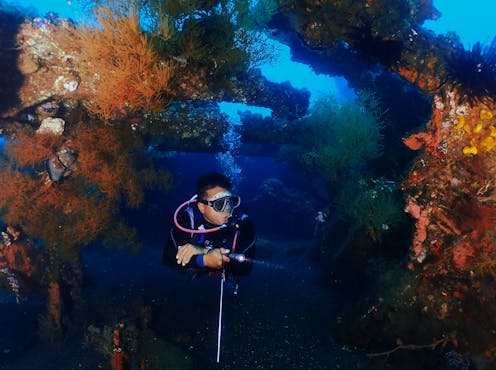
A lot of the recent talk about maritime issues in Southeast Asia has focused on issues such as security, the Blue Economy, law enforcement and climate change. But there’s one maritime challenge that’s gone underdiscussed: underwater heritage.
We are co-investigators on a research project called Reuniting Cargoes: Underwater Cultural Heritage of the Maritime Silk Route.
Since the 1960s, Southeast Asia has seen a big rise in both commercial and illicit salvage of underwater cultural heritage. These items are often taken from unprotected sites and sold through middlemen and auction houses to collectors and museums. In this process, the connection to their original locations is lost or obscured, diminishing their cultural and historical significance.
This project aims to address that challenge by working out which object came from what shipwreck, and how it came to be out of the water and in collections.
To do this, we need to figure out where an item originally came from by applying the latest methods of archaeological science. Talking with local communities and authorities is another important way of gathering information about which shipwreck a particular object might have come from.
Learning more about and reconnecting items like this can change how communities relate to them. It can enhance everyone’s understanding of these artefacts beyond their commercial value.
Read more: The race to save up to 50 shipwrecks from looters in Southeast Asia
What we are doing
We are studying two ceramic collections.
The first is in Australia, consisting of about 2,300 objects purchased from antique markets across Indonesia by a private collector over many decades.
The second is in Indonesia, consisting of about 230,000 objects. This collection was amassed by the Indonesian government and is now at a shipwreck artefact warehouse in Jakarta.
Our goal is to work out which shipwrecks the items came from.

Why?
Ancient shipwrecks, sunken cargoes and the submerged past are underwater cultural heritage.
A 2001 UNESCO convention prioritises protection and preservation of these sites, and international cooperation to achieve those goals. The central idea is that cultural heritage (including the kind found underwater) can help foster local, national and regional identity.
We see taking these “orphaned objects” languishing in private or institutional collections and reconnecting them with their original countries and communities as an important part of that broader goal.
Shipwrecks and their cargo can be sites of conflict
From South America to the South China Sea, state and non-state actors (such as curious tourists or people seeking to profit from shipwrecks) are making various claims on ancient shipwrecks. Some are motivated by nationalism, others by money.
It’s also important to remember local communities engage with heritage in unique ways. What makes sense to policy makers, scientists or communities in one place won’t always make sense to those in another place.
Our project seeks to reconnect “orphaned” objects – cultural objects that have been recovered unethically, illegally or in some other problematic way. One example is underwater sites that have been commercially salvaged (meaning items that were recovered and then sold for profit) rather than scientifically excavated.
Identifying the original find-spots for these orphaned objects won’t be without its scientific, political and legal challenges.
But challenges can also represent opportunities. This project requires collaboration between Indonesian and Australian project partners. That builds capacity on both sides. Along the way, we’re helping develop mechanisms that could guide the return of other heritage items more broadly to their places of origin.
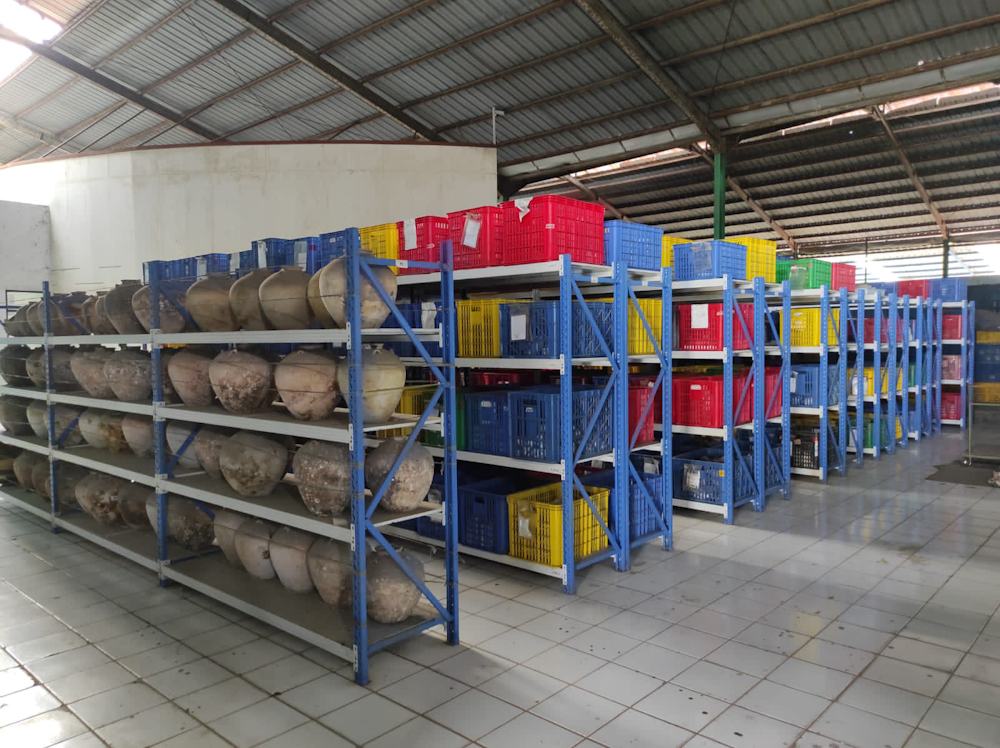 These ceramics are among the ‘orphaned objects’ we are researching.
Ministry of Marine Affairs and Fisheries, Indonesia
These ceramics are among the ‘orphaned objects’ we are researching.
Ministry of Marine Affairs and Fisheries, Indonesia
Maritime heritage tourism and sustainable development
Shipwrecks are fascinating scientifically and historically. But they can also reveal local, national and international tensions.
Take, for example, the 9th century shipwreck discovered in 1998 in waters near Belitung Island, Indonesia. Indonesian laws at the time clearly allowed commercial operators to salvage shipwrecks in its territorial waters, even if this went against international standards established by UNESCO.
Then there’s the 18th century Spanish ship, the San José, which lies in the waters of the Caribbean and is the subject of a multi-country legal fight over who should get the treasure it carried.
On the other hand, shipwrecks have political value. They can bring people together around shared goals or identities. They can be better integrated into sustainable development strategies, including through community-based marine tourism.
Marine heritage tourism initiatives will enable local communities to benefit financially from heritage. Adopting environmentally sustainable practices can also help protect marine ecosystems and ensure the long-term viability of underwater cultural heritage.
This will help to grow local economies by offering different kinds of jobs, not just fishing, while also minimising underwater cultural heritage looting and illicit trafficking.
Successful initiatives along these lines are already underway in Indonesia, in places such as Karawang, Abang Island and Tidore.
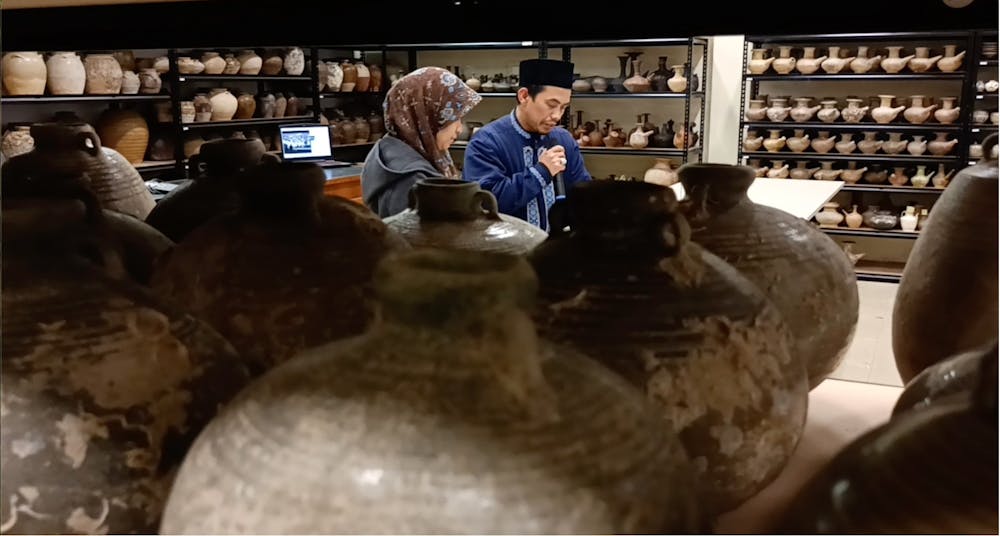 Ancient shipwrecks, sunken cargoes and the submerged past are underwater cultural heritage.
Priyambudi Sulistiyanto
Ancient shipwrecks, sunken cargoes and the submerged past are underwater cultural heritage.
Priyambudi Sulistiyanto
Reconnecting orphaned objects
Orphaned objects have not received the attention they deserve.
Such objects are generally anathema to scholars, because of concerns that to study them is to legitimise them.
We agree there are important ethical considerations at play. But we also recognise these orphaned objects are a crucial part of broader geopolitical and maritime security debates.
To exclude them from scholarly study, as has largely been the case to date, is to risk missing an essential piece of the maritime puzzle.
Read more: Ghost ships: why are World War II naval wrecks vanishing in Indonesia?
Authors: Natali Pearson, Senior Lecturer, Sydney Southeast Asia Centre, University of Sydney


















