

How to cut stray cat numbers in a way that works better for everyone
- Written by: Jacquie Rand, Emeritus Professor of Companion Animal Health, The University of Queensland
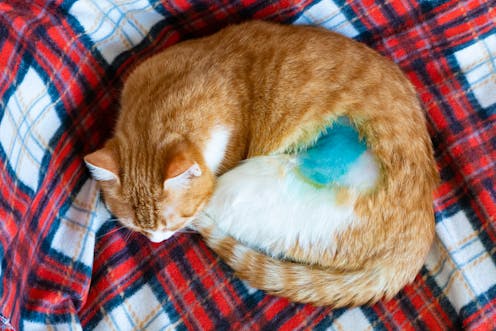
Stray cats are a big problem across most Australian cities and towns. They cause many complaints related to nuisance behaviours and concerns about urban wildlife, as well as straining government resources. Ratepayers ultimately pay for the substantial costs created by roaming cats.
Mandatory registration, desexing, microchipping and containment of cats on owners’ properties have had limited effect. We see owned cats and strays roaming across most urban areas. Most strays are in disadvantaged suburbs, where compassionate residents (considered semi-owners) feed and care for them.
Discussions about cat overpopulation tend to focus on the cats themselves and the challenges they bring. The limitations of current management strategies to control cat numbers, such as local government trapping programs, are neglected.
Councils keep covering the costs of cat management without asking “why are current practices not working?” or “are we in line with our social licence to operate?” In other words, is there broad support for euthanising huge numbers of cats?
An estimated 50,000 are killed each year. This has devastating effects on the mental health of many animal management staff.
It’s imperative to shift the focus to adopting more effective management methods. The solution is a no-barrier, community cat desexing program. This also requires a shift in mindset so animal management officers give priority to community assistance over enforcement.
Our new research reveals the remarkable results of one such program, entirely funded by one local council. Over eight years, cat intakes fell to a third of what they were and euthanasia to less than a fifth. Cat-related complaints fell too. These outcomes saved the council nearly half-a-million dollars over the eight years.
Tackling a complex problem
Cat overpopulation is a complex issue with far-reaching social implications.
Council practices can create extra problems, particularly for communities where residents struggle to comply with curfews, can’t afford to pay for desexing, or lack transport to get to the vet. Individuals are left feeling overwhelmed and unable to care adequately for their pets.
Council officers spend a lot of time dealing with the repercussions. This work includes trapping and impounding cats. Knowing the likely outcome will be euthanasia harms their mental health.
So, not only is there a lack of support for cat owners and semi-owners, but the mental wellbeing of people in animal care roles is neglected. They include animal management officers, shelter workers, rescue groups and veterinarians who must euthanise healthy animals.
The stark reality is owners reclaim only about 7% of cats taken to pounds and shelters in Australia. That leaves the challenging options of adoption or euthanasia for most of the cats.
Across Australia, one-third of cats and kittens entering shelters and pounds are killed. Most of them are young and healthy.
How one council found a better way
Banyule City Council in Victoria ran a council-funded, no-barriers and targeted community cat desexing program from 2013. Our study reports on the results after eight years.
Cat desexing, microchipping and registration were free in the first year. There were no limits on the number of cats from each household. Free desexing is still offered.
To ensure everyone had access, the program provided free transport to these services. It encouraged semi-owners, who regularly fed stray cats, to take part and make the transition to official cat ownership.
The program also targeted disadvantaged suburbs. These areas were identified as hotspots for cat-related complaints and impoundments.
Two Banyule animal management officers implemented this program. They believed there was a better way to manage cats in their community – and they were right.
Over the eight years, large falls in impoundments (66%), euthanasia (82%) and cat-related calls (36%) were recorded across Banyule. In the three target suburbs, an average 4.1 cats a year per 1,000 residents were desexed.
Desexing costs totalled A$77,490. The council saved an estimated $440,660. This was largely due to reduced charges by Banyule’s contracted service for accepting cats, and savings for officers’ time because of fewer complaints.
A program built on earning public trust
Winning the trust of cat owners and carers is imperative. At first, people were hesitant and suspicious of Banyule’s animal management officers. This was mainly due to their perceived role of enforcement, such as issuing fines, rather than helping the community.
For the first year, many people worried about potential repercussions for owning or feeding more than the legally permitted two cats per property. Residents were reluctant to disclose the actual number of cats they owned or cared for. Some households harboured four or five cats, sometimes more, but concealed their presence at first.
Controlling cat numbers becomes a daunting task when the true extent of the problem remains uncertain. Without desexing all cats on a property, the program’s success will be limited.
The study findings highlight the importance of local councils and communities working together to manage urban cat populations. It’s equally important to minimise barriers to sterilisation and microchipping, and to target areas with the highest rates of cat-related issues and cats impounded.
Cat management is a community problem. It can only be solved by involving everyone who’s affected. Leveraging community centres, local social workers and support services, and other relevant agencies for referrals to the council is imperative.
Understanding each community and its unique needs depends on actively engaging with residents. This means walking the streets and talking with residents in a relatable manner, not as an authority figure. It’s essential to provide assistance, guidance and educational resources to support this approach.
This supportive approach is aligned with the One Welfare philosophy based on evidence that the wellbeing of animals, people and their environments are connected. The targeted free desexing program achieved better outcomes for people, animals, the council and the environment than a traditional compliance-based approach.
Authors: Jacquie Rand, Emeritus Professor of Companion Animal Health, The University of Queensland


















