

do health and safety laws threaten the great Kiwi school trip?
- Written by: Chris North, Associate Professor, Outdoor and Environmental Education, Te Kaupeka Oranga Faculty of Health, University of Canterbury
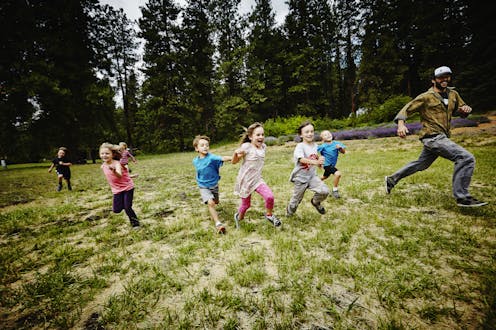
Most of us will remember a school trip – that sense of excitement and anticipation of days spent outside the classroom, away from school and home, making new friends, appreciating teachers and parents in a new light.
Indeed, what is known as “education outside the classroom” (EOTC) provides some of the most important and memorable school experiences. Along with field trips, theatre performances, noho marae and international exchanges, “school camp” can add so much depth to educational experiences.
In 2020, a national study showed more than 96% of schools saw EOTC as an important part of school life. They valued the way it enhances learning and engagement, enriches the curriculum, develops relationships between students and staff, and works for different types of learners.
But school trips also demand a lot of teachers, on top of what we already expect of them. As well as the duty of care to their students, there are the legal requirements governing school trips to consider.
In fact, our research was inspired by the concerns we began hearing from teachers and principals worried about the impact the Health and Safety at Work Act may have on the EOTC experience.
Our newly published research shows how anxiety about legal liability and the burden of paperwork are affecting teacher attitudes to EOTC. Already busy, many feel overworked and under-trusted.
At the same time, some schools continue to run EOTC at similar or even higher levels than previously. We wanted to know what differences exist between these schools.
Risk and reward
EOTC trips take students into environments far less controlled than classrooms. Busy roads, swimming pools, machinery and outdoor hazards all contribute.
So, EOTC is not without its dangers. In the past 24 years, there have been 22 fatalities during school trips in New Zealand, with 20 of those drownings.
International studies of fatalities on school and youth group excursions conclude most could have been prevented. Clearly it’s important teachers plan these trips carefully.
The purpose of health and safety law is that everyone comes home healthy and safe. The law creates expectations that all practicable steps will be taken to avoid accidents. And it allows for fines or imprisonment for serious breaches.
These penalties can be applied to school board trustees, principals, teachers, parents and even students in some situations.
As with all laws, of course, those governing EOTC can have a variety of effects. They can make people think and act differently, or they can encourage the appearance of compliance without real behavioural change.
How schools are responding
Importantly, we found strong evidence teachers and principals cared deeply for the learning and safety of their students.
They spoke of their anxiety when “driving other people’s babies” and how they lost sleep when their students were away on trips. In short, they did not take the responsibility of EOTC lightly.
However, the Health and Safety at Work Act adds legal and bureaucratic responsibilities to those natural human anxieties. We found three responses to this from teachers and principals.
1. Stop offering EOTC
In our survey, 44% of schools indicated the law was reducing EOTC, while only 35% said EOTC was not affected.
Stopping EOTC obviously removes the safety risk, fear of legal liability and need for extra paperwork. But it also deprives students of valuable learning experiences.
2. Put little effort into paperwork
The time between filling out forms and the actual school trip can be considerable, and some teachers found it difficult to see the links between paperwork and any benefit to students. Some saw it as simply “butt covering and box ticking”.
While understandable at one level, this clearly raises concerns about depth of engagement. If an incident were to occur and the paperwork didn’t show proper planning, or was not relevant to what was actually happening on the trip, it could contribute to legal liability.
3. Continue to run EOTC programs
We found around a third of teachers and principals were now offering EOTC at the same or a higher level than they had in the past.
In these cases, there was some combination of four enabling factors: competent staff, systems to minimise paperwork, a specialised EOTC coordinator to support teachers, a whole-school commitment to EOTC, and attending professional development courses.
Saving the school trip
Schools are influenced in different ways by health and safety law, with secondary schools less affected than primary or intermediate ones. We think larger school size and more staff, including specialist teachers, may explain some of this difference.
For small or rural schools, limited staffing can make EOTC more challenging. Schools in the highest 20% of socioeconomic areas had fewer concerns. This may be due to them having more resources, but further research into this is needed.
We understand the law governing EOTC adds to the workload on teachers and principals already struggling with resource constraints and other demands on their energies.
But the research shows how perception and observance of the law is limiting student access to the rich and diverse educational experiences available through EOTC. There are ways to overcome this, however.
As well as focusing on the four enablers referred to above, schools can keep trips more local and focus on lower-risk activities. This will reduce the stress and paperwork, and help support EOTC in these challenging times.
Authors: Chris North, Associate Professor, Outdoor and Environmental Education, Te Kaupeka Oranga Faculty of Health, University of Canterbury


















