

Is your smartwatch making you anxious? Wearables can lead people to stress more about their health
- Written by: Caleb Ferguson, Professor of Nursing; Director of Health Innnovations, University of Wollongong
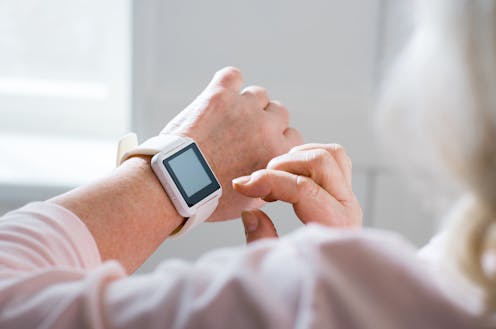
Wearable trackers and monitors (such as smartwatches) are increasingly popular and sophisticated. For people living with heart conditions, they can provide important information, including updates about abnormalities in heart rate and rhythm.
But a recent study published in the Journal of the American Heart Association found using wearables to monitor heart conditions like atrial fibrillation – an irregular heartbeat – can actually make people more anxious about their health.
It’s a catch-22 situation: the wearable device may help you better manage your chronic heart condition, but wearing it could make you anxious – which is bad for those conditions.
So what are the tradeoffs? And how can we get the most out of wearables, without unnecessary worry?
Wearables to monitor heart conditions
Wearables are playing an increasing role in managing and detecting conditions like atrial fibrillation, the most common heart rhythm problem.
Atrial fibrillation affects around 2% of the general population, and about 5% of those aged over 55. Symptoms may include palpitations, fatigue and shortness of breath, although some patients may live relatively symptom-free. Self management is important to improve quality of life and prevent complications, such as stroke and heart failure.
People with atrial fibrillation also often experience high rates of anxiety linked to their condition. Psychological distress – including anxiety, depression and worry about symptoms – affects between 25% and 50% of those living with the condition.
Wearable devices can help people understand and monitor their condition by providing heart rate and rhythm data and alerts to detect atrial fibrillation episodes. This can be helpful to understand the impact of their disease, particularly for those living with paroxysmal (or episodic) atrial fibrillation.
One study found smartwatches were very effective at detecting irregular heart rhythms – and could help manage and even prevent them.
But any benefits of using wearables to monitor atrial fibrillation need to be balanced with the high rates of anxiety people with this condition experience, to make sure their use doesn’t exacerbate psychological distress.
Wearables can empower patients
For many people, the sense they are receiving reliable, objective and personalised health data can encourage feelings of confidence, safety and assurance, especially when combined with symptom trackers or patient diaries.
This may allow patients to self-manage their condition at home with their families, rather than spending time in hospital – reducing anxiety and stress.
In a clinical setting, data may also encourage patients to take part in shared decision-making. Interpreting health data together with doctors or other health-care professionals, they can develop goals and action plans, including when to seek help from a GP – and when to go to hospital.
Patients who understand their condition tend to report fewer atrial fibrillation symptoms.
But wearables can induce anxiety
The study published by the Journal of the American Heart Association examined the behaviour and wellbeing of 172 people with atrial fibrillation over a nine-month period.
It found the 83 people who used wearables to monitor their condition were more worried about their symptoms and treatment, with one in five experiencing “intense anxiety”.
Chronic anxiety can contribute to stress, burnout and poor physical health, which in turn can exacerbate heart conditions.
Previous research has also explored the impacts of wearables on patients with long-term conditions, including heart disease. Patients in this study similarly reported increased anxiety while using these devices, as one explained:
I am one of these people who do worry about things. I do get concerned about myself […] and I just thought this is silly. This is reminding me every day, […] I wonder what my reading is, how good it is or how bad it is […]. Every time as soon I started thinking about it, I started thinking about my illness.
Some people also describe being a “prisoner of the numbers”. They feel they “need to keep checking the device to know how they were doing, leading to the device dominating their lives”.
The volume and frequency of notifications, alarms and vibrations from wearable devices can be overwhelming and make people worry about their health.
Information overload can also discourage self-management, with notifications instead prompting people to seek health advice more often than they otherwise would. But this isn’t necessarily a bad thing.
For other people, low levels of health or digital literacy – not knowing how to use the devices or interpret the data – may make them feel so stressed or anxious they abandon wearables altogether.
The future of wearables
In the future, digital devices may help paint a holistic picture of health and wellbeing through a “digital phenotype” that combines data like sleep patterns, weight changes and physical activity.
But more research is needed to understand the effects of wearables – including their notifications and alarms – on patients’ anxiety levels.
If you already use a wearable device for health monitoring, it can be helpful to regularly review the data and notification settings. You may wish to discuss how you are using your device to help you self-manage your condition with your doctor or nurse.
With any chronic disease, having a management action plan is important. This includes discussing with your health-care professional when to seek care (such as attending the emergency department or GP).
Meanwhile, there’s still work to be done to help make nurses and doctors feel more confident integrating wearables – and the data they provide – into patient care.
Authors: Caleb Ferguson, Professor of Nursing; Director of Health Innnovations, University of Wollongong


















