

Creative arts therapies can help people with dementia socialise and express their grief
- Written by: Joanna Jaaniste, Career Development Fellow, Western Sydney University
People with dementia can flourish and show creativity in ways they, their caregivers and loved ones never thought possible. Under the guidance of a trained therapist, creative arts therapies use painting, drama, dance and music to help improve quality of life for people with dementia.
Around 50 million people worldwide have dementia and it’s on the rise. The condition affects the brain and can result in memory loss and inability to carry out everyday activities, recognise faces or remember words.
Every person with dementia has a different experience of the disease and their own life stories. This is where creative arts therapies come in.
Read more: Why people with dementia don't all behave the same
What are creative arts therapies?
Each arts therapy has its own way of engaging the imagination:
art therapy brings imagery and self-awareness to people, some of whom don’t think they can make art. Participants work with paints and clay, and have the opportunity to extend their world with colour
drama therapy uses performance, role play and improvisation to recreate memories, encourage problem-solving, and reawaken social skills
dance-movement therapy engages rhythm and body gesture, helping integrate the mind and spirit, and enabling non-verbal communication
music therapy can help ground anxious participants, and allow tolerance for tension and the expression of joy and sadness.
What can these therapies do?
Coming together to play music or sing increases social interaction and communication, and reduces the risk of social withdrawal. It can also help reduce depression.
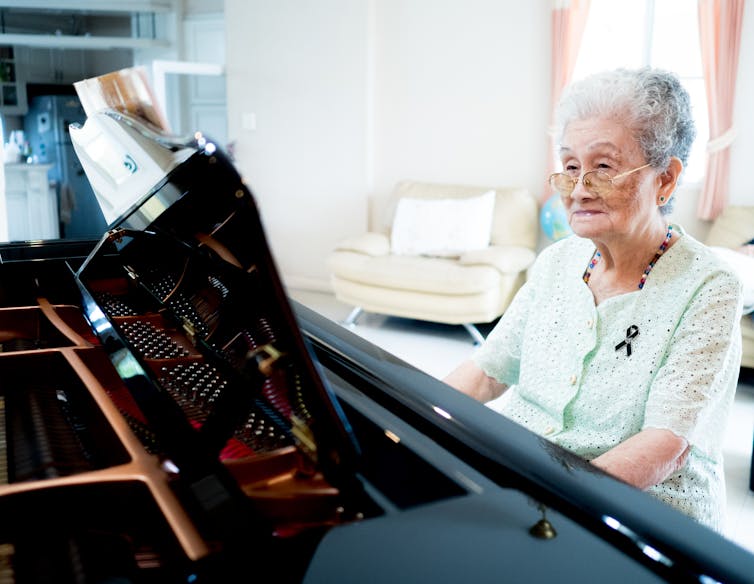 Music brings people together.
Thanrada Sirirattrakul/Shtterstock
Music brings people together.
Thanrada Sirirattrakul/Shtterstock
Drama therapy can improve quality of life for people with dementia by awakening memories and helping patients “work through” troubling issues from their past. It helped one study participant, for example, let go of an obsessional memory of being emotionally abused by a teacher at the age of nine, even a year after the drama therapy ended.
Drama therapy can also help people with dementia to cope with grief, loss, and cognitive and physical decline.
Read more: Looking for a nursing home place for your parent with dementia? Here's what to consider
In terms of visual arts, research shows participation in art therapy results in significant improvements in mood and cognition, which last long after the sessions have finished.
One such program in Western Australia encourages Indigenous Noongar elders to make dolls, sharing birthing stories from a time when birthing happened on reserves, in missions, or under the stars because mothers were not allowed to give birth in hospital in their part of the country.
Finally, dance-movement therapy stimulates many of the senses and exercises both the body and mind. An important role of these therapies is to help older people reflect on the final stages of life, and express their grief about losing friends and loved ones.
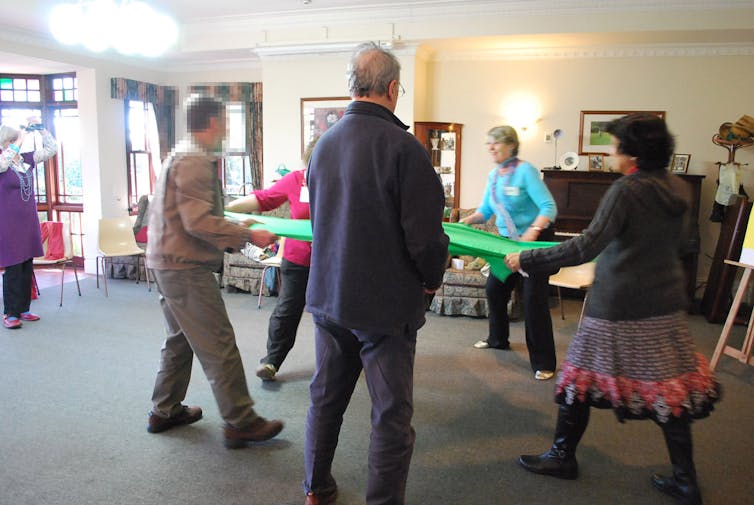 Movement exercise such as these, where participants work with stretchy cloth, work the body and mind.
Joanna Jaaniste, Author provided (No reuse)
Movement exercise such as these, where participants work with stretchy cloth, work the body and mind.
Joanna Jaaniste, Author provided (No reuse)
An alternative to medical intervention
Hearings in the aged care royal commission have begun to focus on how to improve the quality of life for older people with dementia and reducing the overuse of drug interventions. This is possible – and creative arts therapies can play an important role.
We still need further research with greater numbers of participants to continue to rigorously evaluate creative arts therapies. But so far, we know these therapies are a safe and holistic way to deliver a level of creativity and calm to people with dementia in aged care.
Read more: Finding momentary pleasure: how viewing art can help people with dementia
Authors: Joanna Jaaniste, Career Development Fellow, Western Sydney University

















