

Traditional medicines must be integrated into health care for culturally diverse groups
- Written by: Josephine Agu, PhD candidate, University of Technology Sydney
This article is the fifth part in a series, Where culture meets health.
Many people seek complementary treatments for various ailments. Perhaps herbal remedies to cure a cold, or acupuncture to ease lower back pain.
“Complementary medicine” refers to practices outside Western medicine, adopted from other cultures, and often used in high-income countries.
But “traditional medicine” covers a range of practices and therapies indigenous to their practising population. Based on historical and cultural foundations, it operates outside of mainstream health care.
So for example, traditional Chinese medicine is indigenous to the Chinese and is therefore classified as a traditional medicine. But when it’s used by non-Chinese ethnicities, we’d call it a complementary medicine.
While many people use complementary medicines, traditional medicines form a particularly important influence on the way migrants look after their health.
This can present a challenge in the delivery of Western medical care to diverse communities in their destination countries.
But even where there’s little consensus around their efficacy, as we strive to achieve better health outcomes for culturally and linguistically diverse people, we must recognise traditional and complementary medicines as an essential component of their health care.
A holistic approach
Traditional and complementary medicines used among culturally and linguistically diverse populations include herbal medicine, acupuncture, massage, traditional Chinese medicine, yoga, ayurveda, homeopathy, and tai chi. Different modalities are favoured in different communities.
Ayurveda is more than 5,000 years old and native to India. It combines lifestyle, diet, exercise and predominantly plant products as treatment options. Translating to “life science”, it aims to cleanse a person of disease-causing substances and restore balance in the body.
Ayurvedic practitioners believe this approach is effective in managing a number of acute and chronic conditions including diabetes, cancer, anxiety and rheumatoid arthritis.
Read more: Does traditional Chinese medicine have a place in the health system?
While some studies point to its efficacy – one found ayurvedic formulations were comparable to conventional medicines such as glucosamine to treat knee osteoarthritis – varied results and limited study designs make it difficult to draw firm conclusions.
Meanwhile, traditional Chinese medicine has evolved since it was first used more than 2,000 years ago. But it remains grounded in its aim to treat the whole body, rather than targeting the problem alone.
 Traditional remedies often accompany migrants to their destination countries.
From shutterstock.com
Traditional remedies often accompany migrants to their destination countries.
From shutterstock.com
Encompassing practices including tai chi, acupuncture, and a variety of herbal remedies, Chinese medicine is today used to prevent and treat many conditions.
Patients with knee osteoarthritis who practised tai chi recorded significant improvements, while there have been positive results for acupuncture in relieving lower back pain and nausea associated with chemotherapy.
Traditional Chinese medicine has also been used for the prevention of heart disease and stroke, and to improve quality of life for people with chronic heart failure.
A recent review found certain Chinese medicines may control some risk factors for heart disease, like diabetes and high blood pressure. But several studies were limited by small sample sizes and flawed research designs.
Read more: Do you know what's in the herbal medicine you're taking?
Herbal remedies from Chinese medicine and beyond are employed to treat a range of conditions. St John’s wort has been used to treat mild depression, Ginkgo Biloba for memory loss, and ginseng for musculoskeletal conditions.
Despite some promising results, a substantial gap still exists between the strength of evidence supporting many of these practices and consumers’ use and acceptance of traditional and complementary medicines.
If the evidence is limited, why should we pay attention?
Some migrant communities experience poorer health than their host populations. For example, the rates of type 2 diabetes are higher among migrants than in the wider Australian population.
It’s important to recognise that for minority groups, feeling as though a doctor doesn’t understand their cultural needs can be a barrier to help-seeking.
For instance, if a person doesn’t believe their doctor will approve of their use of traditional medicines, they may not disclose it. We know non-disclosure of traditional and complementary medicine use is common among culturally diverse groups.
This can be dangerous, as some traditional and complementary medicines can negatively interact with other drugs.
Read more: Going to the naturopath or a yoga class? Your private health won't cover it
Where patients feel their practitioners are non-judgemental or even accepting of their traditional medicine use, they are more likely to disclose it.
So medical providers may benefit from education around different types of traditional and complementary medicines, including culturally sensitive methods to enquire about their use.
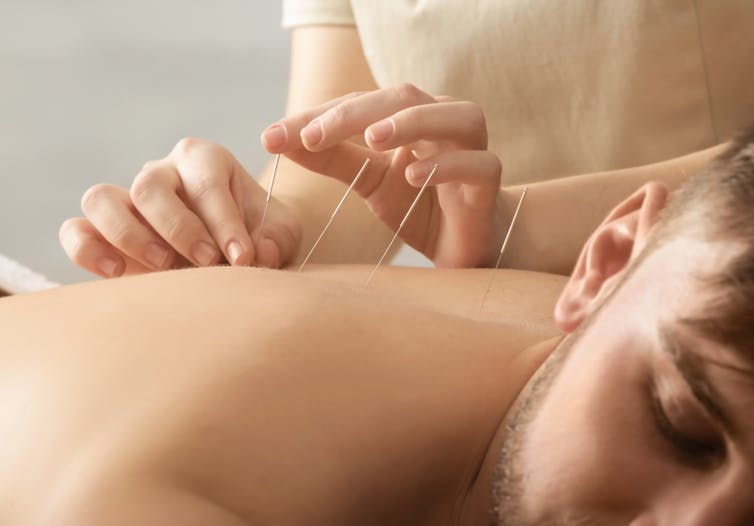 Acupuncture, a popular complementary therapy, has its roots in Chinese medicine.
From shutterstock.com
Acupuncture, a popular complementary therapy, has its roots in Chinese medicine.
From shutterstock.com
What does Australia need to do?
The most mature integrative health care systems are evident in Asia. Countries like South Korea and India have regulated traditional and complementary medicines into their national health policies.
To effectively tackle health inequities, our health systems need to consider and address the impact of cultural influences on patients’ health-care decisions. This is vital even when the treatments they value may not be grounded in evidence.
Investigating and considering these practices will ultimately help us to design and facilitate safe, effective, culturally sensitive and coordinated care for all patients and communities across Australia.
Professor Jon Adams contributed to this article.
Authors: Josephine Agu, PhD candidate, University of Technology Sydney


















