

A marine heatwave in northwest Australia is killing huge numbers of fish. It’s heading south
- Written by: Sina Pinter, PhD Candidate in Ocean Dynamics, The University of Western Australia
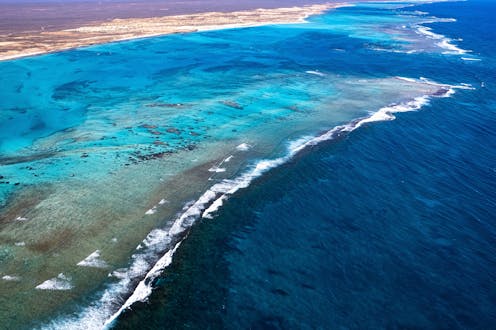
Tens of thousands of fish have died off northwestern Australia, as a large and long-lasting marine heatwave intensifies.
The fish kill at Gnoorea Beach near Karratha is concerning our team of scientists, as the hot mass of water heads south towards Ningaloo Reef and the seagrass gardens in Shark Bay. That’s because we’ve seen this before. An enormous marine heatwave in 2010-11 devastated fisheries and ecosystems further down the WA coast.
This marine heatwave began in September, with temperatures up to 3°C warmer than usual off Broome. There’s no end in sight.
The heatwave comes as oceans worldwide experience recordbreaking heat, driven by climate change. More than 90% of all heat trapped by greenhouse gases goes into the oceans.
The fish kill is a visible way to glimpse a disaster often out of sight and out of mind. But these marine heatwaves do much more, from wiping out seagrass meadows and kelp beds to trashing fisheries.

How bad is this marine heatwave?
Marine heatwaves are periods of at least five consecutive days when ocean temperatures are significantly higher than the long-term average for the region and season.
Since September 2024, temperatures off Australia’s northwest coast have been high enough to be considered a heatwave.
In late December, the area of hotter water expanded southward along the Pilbara coast and became more intense. Temperatures hit 4–5°C above normal at the surface. Our research group has gathered data from satellite measurements, which tells us it’s hotter than usual. Data from autonomous ocean gliders also show unusual levels of heat as far down as 200 metres.
In January, this heatwave has become bad enough to be classified in some areas as a severe marine heatwave.
There’s no relief in sight yet. The Bureau of Meteorology forecasts marine heatwave conditions to continue through February.

Will it be worse than the 2010 heatwave?
The current marine heatwave is, so far, the second-worst in Western Australia’s recorded history.
Over the 2010–11 summer, a severe marine heatwave devastated seas off the state. Temperatures hit up to 5°C above average, peaking in February and March.
The worst-hit areas were seas off the central West Australian coastline, leaving those to the north largely unaffected. But the heatwave stretched 2,000 kilometres, from the Pilbara all the way down to Denmark in the southwest.
The reason the 2010 heatwave spread so far south was due to the Leeuwin Current, which was stronger than usual due to weak southerly winds linked to a low pressure system off the coast.
 The 2010-11 marine heatwave hit Central West Australian waters hardest. The Leeuwin Current ferried heat southward.
Author provided, CC BY
The 2010-11 marine heatwave hit Central West Australian waters hardest. The Leeuwin Current ferried heat southward.
Author provided, CC BY
The heat led to local extinction of kelp species along a 100km stretch of coastline. Scallop and blue swimmer crab fisheries had to close. Seagrass meadows in Shark Bay collapsed. Tropical species were sighted in new areas. And coral bleached at Ningaloo.
By contrast, this current marine heatwave has concentrated on the northern coastline, but may spread south in coming weeks.
Unfortunately, there are strong similarities between the 2010–11 heatwave and this one. Both occurred during a La Niña year.
A similar low pressure system in December 2024 weakened southerly winds during this heatwave, though not as pronounced as in 2010-11. We can expect to see the Leeuwin Current intensify and carry more warm water than usual south, but perhaps not as far as in 2010–11.
Weather systems at present are developing slightly differently to 2010–11, but they could still lead to weaker southerly winds and produce a stronger current channelling heat.
What does this mean for ocean life?
Marine heatwaves at this size and intensity can profoundly damage marine ecosystems and fisheries. The Karratha fish kill is the most visible sign of ecosystem distress.
We have already seen signs of bleaching in the coral reefs of the Kimberley region, while corals are experiencing heat stress at world-famous Ningaloo Reef.
The heat is now affecting the Gascoyne region between Carnarvon and Exmouth, and is likely to head further south.
Damage from the heatwave could threaten valuable industries such as the rock lobster fishery and marine tourism on the Coral Coast.
 Bleached corals in Cygnet Bay north of Broome. Photo taken on 16th January.
Kayleigh Foste, CC BY
Bleached corals in Cygnet Bay north of Broome. Photo taken on 16th January.
Kayleigh Foste, CC BY
More heatwaves will come
As the climate changes, modelling indicates marine heatwaves will hit more often and to intensify.
Worldwide, marine heatwaves have devastated ecosystems. One of the worst, the Pacific “blob” heatwave of 2014-2016, killed an estimated 100 million Pacific cod and four million birds from a single seabird species, as well as contributing to the starvation of about 7,000 humpback whales. The intense heat killed off cold-loving species and paved the way for tropical species to enter and even thrive.
Right now, 28% of the world’s oceans are in heatwave conditions, based on surface temperatures.
While there is a clear link between the 2010-11 marine heatwave and climate change, we cannot conclusively say this current heatwave off Western Australia is linked to climate change.
That’s because we don’t have enough data about what’s happening under the surface. Temperatures in the ocean vary greatly by depth, and a hot surface doesn’t always mean heat has reached deeper water.
So while we know a marine heatwave is in progress, we don’t know how bad it is or how far down the heat has reached in different regions. We need better ways to measure temperatures at depth, to be able to gauge how bad a heatwave is. Installing more temperature sensors along the WA coastline would allow us to better monitor and respond to temperature extremes.
The earlier we know about a heatwave, the more we can do to prepare. The 2010-2011 heatwave made many people aware of what damage heat can do to an ocean, as fishing boats sat idle and tourists steered clear of dying coral.
More, and worse, is likely to come. Better conservation and management of our oceans can help. But tackling the root cause of intensifying heat – unchecked greenhouse gas emissions – is still far and away the most important challenge.
Authors: Sina Pinter, PhD Candidate in Ocean Dynamics, The University of Western Australia

















