

This is Australia’s only icebreaker. Here’s why experts say we need another
- Written by: Jane Younger, Lecturer in Southern Ocean Vertebrate Ecology, Institute for Marine and Antarctic Studies, University of Tasmania
Australia’s Antarctic territory represents the largest sliver of the ice continent. For decades, Australian scientists have headed to one of our three bases – Mawson, Davis and Casey – as well as the base on sub-Antarctic Macquarie Island, to research everything from ecology to climate science.
But despite our role as leaders in Antarctic science, Australian funding and logistics for Antarctic research hasn’t kept pace. Our single icebreaking vessel spends most of its time on resupply missions, restricting its use for actual science. And funding is often piecemeal, which makes it hard to plan the complex, multi-year efforts it takes to do research down on the ice.
This week, we saw a welcome change. The federal parliamentary committee on Australia’s external territories delivered a report calling for a second icebreaking vessel and more reliable funding. It also urged the government to progress work on marine protected areas in east Antarctica as well as resume fishing patrols, due to concern over illegal or exploitative fishing.
These measures are long overdue. For those of us who work and study on the ice continent, logistics and funding have long been a challenge. Illegal fishing in Antarctica must be stamped out, and a second vessel would support our ambitious, world-leading science.
Why is Antarctic science so important?
Antarctica is often out of sight, out of mind for many Australians. But what happens on the ice doesn’t stay there.
For climate science, Antarctica matters a great deal. For decades, much of the concern about melting ice focused on the Arctic and Greenland, while Antarctica stayed relatively stable. But this is now changing. Sea ice is melting more quickly than in the past. Glacial ice is retreating. Increased melting will affect sea level rise and ocean currents.
I study diseases such as the lethal strain of bird flu which has devastated bird and some mammals populations around the world. It recently reached Antarctica, where it killed large numbers of penguins, skuas, crabeater seals and more. I saw the devastation myself on my recent journey there.
If this strain makes it to Australia – the last continent free of it – it could come from the south and devastate both Australian wildlife and poultry.
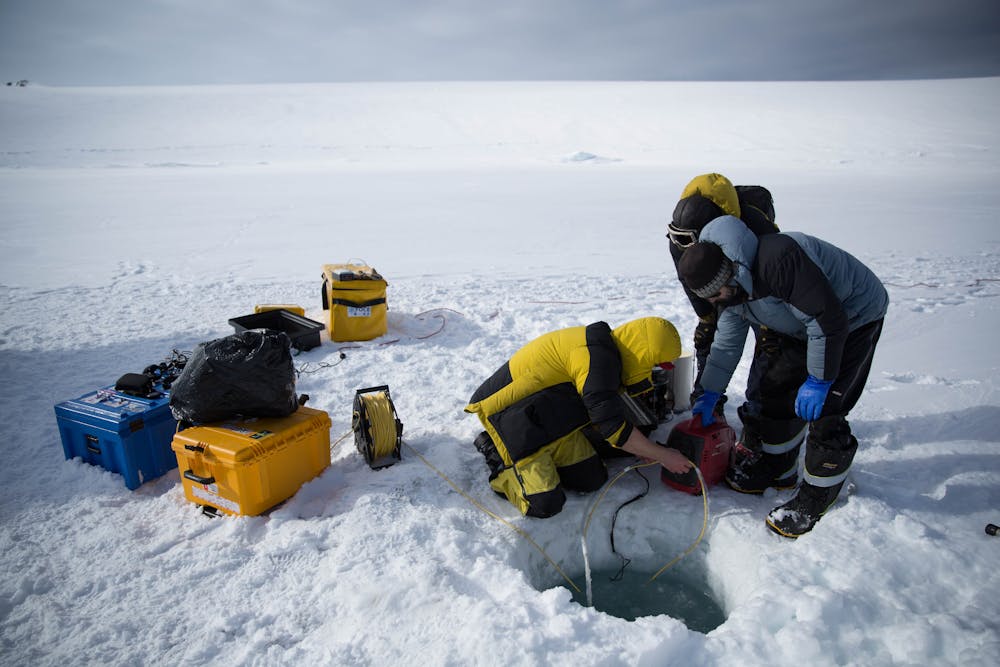
To study these large and important changes, we need to be down there on the ice. It’s not an easy task. Keeping our bases functional means we need regular resupply missions. Repairs and extensions require tradies. Scientists and other workers need to be brought home.
Antarctic science has long relied on just one vessel, now the RSV Nuyina, which the Australian Antarctic Division describes as the “main lifeline to Australia’s Antarctic and sub-Antarctic research stations and the central platform of our Antarctic and Southern Ocean scientific research”.
The problem is, resupply can trump science. After all, no one wants bases running short of food or fuel. This is, in fact, what the Nuyina is largely doing.
Australia’s role is key
The Australian Antarctic Territory represents about 40% of the ice continent – the largest territory by far.
Territory, here, doesn’t mean exclusive rights. In 1959, 12 nations with a scientific interest in the ice continent signed the Antarctic Treaty. This treaty was an agreement that Antarctica – the only landmass with no indigenous human presence – would be reserved for peaceful, scientific purposes.
But in recent years, this treaty has come under pressure. Nations such as Norway and China have expanded fishing operations for krill. Illegal and unregulated fishing from various nations continues.
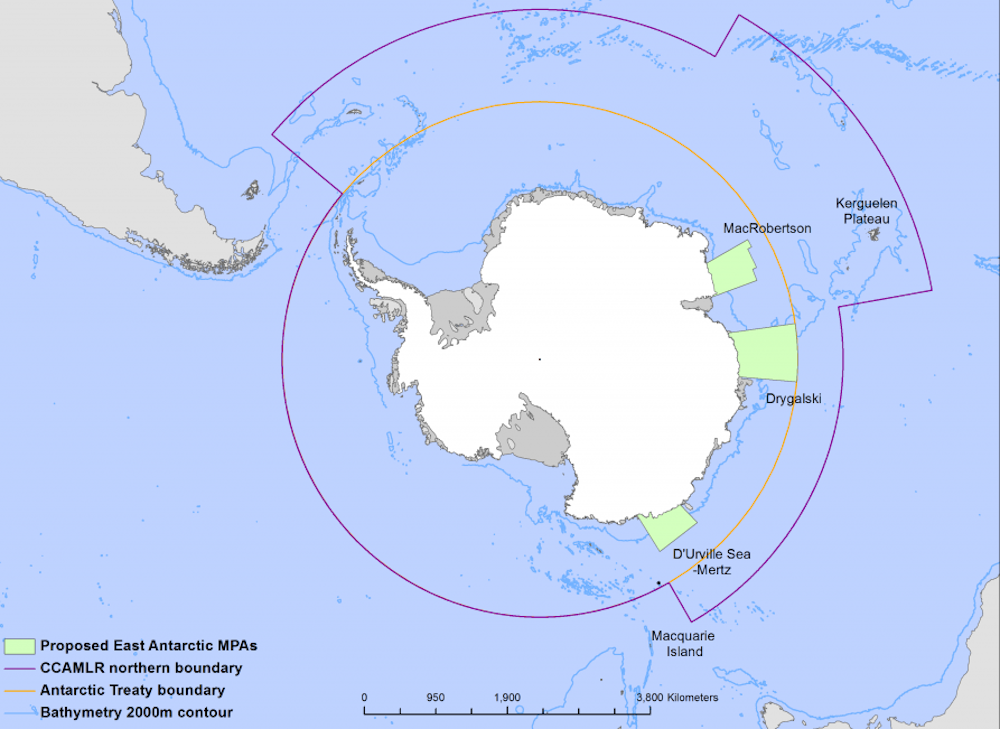
The report recommends the Australian government continue efforts to establish a marine protected area off East Antarctica – where fishing would be restricted – as well as reopening fishing patrols. China – which recently opened its fifth Antarctic base – is opposed to the idea of fishing-free zones and is pushing to expand fishing in the Southern Ocean.
Under Antarctica’s ice lie many resources. Mining is banned in Antarctica indefinitely. But a review of the Antarctic Treaty’s environment protocols is due in 2048.
In future, parties to the treaty may push to exploit Antarctica’s mineral resources. The race to tap critical minerals in Greenland signals the pressures that may lie ahead for Antarctica. But any overturning of the mining ban for Antarctica would need agreement from all treaty parties, which is highly unlikely.
This complex picture, however, points to why Australia’s leadership in Antarctic science matters. Australia was an original signatory to the Antarctic Treaty, and has a long history of exploration and science. Hobart has long been the home of Australia’s Antarctic vessels.
As Antarctica changes, Australian scientists must be there to analyse, understand and report back. To do that, improvements are needed, including new vessels and longer-term funding. This report is the first step.
The government is yet to formally respond to the report’s recommendations. Let’s hope it takes heed of the findings.
Correction: This article has been amended to correct an earlier misspelling of RSV Nuyina, and to clarify the terms of the ban on Antarctic mining.
Authors: Jane Younger, Lecturer in Southern Ocean Vertebrate Ecology, Institute for Marine and Antarctic Studies, University of Tasmania


















