

new research shows how the Vesuvius eruption turned a man’s brain to glass
- Written by: Louise Zarmati, Senior Lecturer in Humanities and Social Sciences Education, Faculty of Education, University of Tasmania
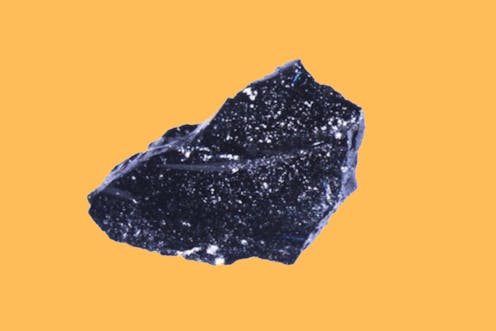
A young man killed in the eruption of Mount Vesuvius in 79 CE was likely overcome by a fast-moving cloud of gas at a temperature of more than 500°C in a process that transformed fragments of his brain into glass, according to new research.
The man’s remains were discovered in 1961, and in 2020 researchers confirmed that parts of his brain had been turned into glass. This is the only example of vitrified brain matter found to date at any archaeological site.
The new study, led by Guido Giordano of Roma Tre University and published in Scientific Reports, explains how the unusual sequence of rapid heating and cooling required to turn organic matter into glass may have occurred.
Pompeii’s less famous neighbour
The city of Pompeii is one of the most famous archaeological sites in Italy and the world. Fewer people know about its smaller neighbour, Herculaneum, which was also destroyed by the devastating eruption of Mount Vesuvius in 79 CE.
Herculaneum was settled during the sixth century BCE by Greek traders who named it after the Greek hero Herakles (whom the Romans called Hercules). By the first century CE, it had developed into a typical Roman town.

Built on a grid plan, Herculaneum boasted a forum, theatre, elaborate bath complexes, multi-storey buildings and luxurious private seafront villas with spectacular views over the Bay of Naples.
The town’s population is estimated to have been around 5,000 people at the time of the eruption. They consisted of wealthy Roman citizens, merchants, artisans, and current and freed slaves. About 7 kilometres to the east, Mount Vesuvius loomed.
A tale of two destructions
Although Pompeii and Herculaneum were both destroyed, their experiences of the eruption were different.
Located about 8km southeast of Vesuvius, Pompeii was violently pelted by falling pumice and ash for about 12 hours before its final destruction by what are called “pyroclastic surges”: fast-moving, turbulent clouds filled with hot gases, ash and steam. Pompeii’s end arrived some 18–20 hours after the eruption began.
Herculaneum’s destruction came much sooner. During the first hours it experienced light ash and pumice fall. Most of the population is believed to have left during this time.
Then, about 12 hours after the eruption began, in the early hours of the morning, Herculaneum was engulfed by a swift-moving, deadly pyroclastic surge. The deadly cloud of gas, ash and rock swept over the town at speeds greater than 150km per hour. Anyone who had not already escaped died rapidly and violently as the town was buried.
A rain of ash, a sudden heat

Because of the differences in how the eruption hit the two towns, those who died in each were preserved in different ways.
At Pompeii, victims were buried under ash that hardened around their bodies. This allowed archaeologist Giuseppe Fiorelli to develop a technique in the 1860s for creating the now-famous plaster casts that dramatically preserved the victims’ final positions at the moment of death.
At Herculaneum, extreme heat (400–500°C) from pyroclastic surges caused instant death. As a result, we see skeletal remains with signs of thermal shock: skulls fractured from boiling brain tissue and rapidly carbonised flesh.
Victims found in boat houses and along the shore at Herculaneum in the 1980s appear to have died quickly while waiting to escape by sea.
‘The custodian’
In 1961, Italian archaeologist Amedeo Maiuri discovered a skeleton in a small room of the College of the Augustales, a public building dedicated to worship of the emperor. The victim was lying face-down on the charred remains of a wooden bed.
Maiuri identified the person as male and about 20 years old, and dubbed him “the custodian” of the Augustales. What was unusual about this skeleton was the appearance of glassy, black material scattered within the cranial cavity, something archaeologists had not seen before at either Herculaneum or Pompeii.
 The carbonised remains of ‘the custodian’ found at Herculaneum.
Guido Giordano et al. / Scientific Reports
The carbonised remains of ‘the custodian’ found at Herculaneum.
Guido Giordano et al. / Scientific Reports
In 2020, a scientific team led by anthropologist PierPaolo Petrone and volcanologist Guido Giordano conducted the first study of the glassy material using a scanning electron microscope and a neural network image-processing tool. They identified traces of the victim’s brain cells, axons and myelin in the well-preserved sample.
Petrone and Giordano concluded that the conversion of the man’s brain tissue into glass was the result of its sudden exposure to scorching volcanic ash followed by a rapid drop in temperature.
Brain of glass
The follow-up study, released today in Scientific Reports, provides a more detailed analysis of the vitrification process. The scientists estimate the temperature at which the brain transformed into glass had to be above 510°C, followed by rapid cooling.
The researchers propose the following scenario to describe the victim’s death and explain how his brain was vitrified.
The victim died when he was engulfed by the fast-moving, extremely hot ash cloud of the pyroclastic surge. His brain rapidly heated to a temperature exceeding 510°C. The thick bones of the skull may have protected the brain tissue from turning to gas and vaporising.
 Fragments of the man’s brain were turned into glass by a very particular process of rapid heating and cooling.
Guido Giordano et al. / Scientific Reports
Fragments of the man’s brain were turned into glass by a very particular process of rapid heating and cooling.
Guido Giordano et al. / Scientific Reports
Within minutes, the ash cloud dissipated and the temperature quickly dropped to around 510°C, a temperature suitable for vitrification. The researchers also believe the fact the brain was broken into small pieces allowed it to cool quickly and therefore vitrify.
In the final phase of the eruption, Herculaneum was buried by thick, lower-temperature deposits that preserved what remained of the man’s body in cement-like material. The vitrification resulted in the preservation of complex neural structures such as neurons and axons.
This research makes a significant contribution to scientific knowledge. After centuries of archaeological research, this is still the only known example of human brain matter preserved by vitrification.
Authors: Louise Zarmati, Senior Lecturer in Humanities and Social Sciences Education, Faculty of Education, University of Tasmania



















