

climate change is pushing amphibians to their limits
- Written by: Patrice Pottier, Postdoctoral researcher in Ecology and Evolutionary Biology, UNSW Sydney
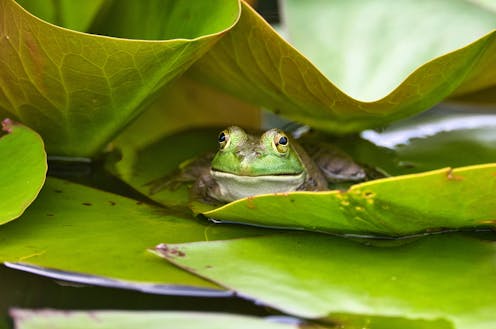
Frogs and other amphibians rely on the surrounding environment to regulate their body temperature. On hot days they might seek shade, water or cool spaces underground. But what if everywhere is too hot?
There is a limit to how much heat amphibians can tolerate. My colleagues and I wanted to work out how close amphibians are to reaching these limits, globally.
Our new research, published today in Nature, shows 2% of the world’s amphibians are already overheating. Even when they have access to shade and moisture, more than 100 species are struggling to maintain a viable body temperature.
If global temperatures rise by 4°C, nearly 400 species (or 1 in 13 amphibians) could be pushed to their limits. However, this assumes access to shade and water, so it’s probably an underestimate. Habitat loss, drought and disease will likely make even more amphibians vulnerable to heat stress.
Here is why that matters — and what we can do about it.
Finding the missing pieces of the puzzle
The critical thermal maximum is the temperature beyond which an ectothermic (“cold-blooded”) species simply cannot function.
In laboratory experiments, it is defined as the temperature that renders the frog or salamander unable to right themselves when flipped on their back, or when they start having muscular spasms.
At this temperature, they are incapacitated and unable to escape. If amphibians stay under those conditions for extended periods, they will eventually die.
First, we searched the scientific literature for data on heat tolerance in amphibians and compiled a database. This database covers more than 600 species, but that’s only 7.5% of amphibians on Earth. Knowledge of the heat tolerance of amphibians from tropical regions and the Global South is especially sparse.
To build a global picture, we needed to fill those gaps. We used statistical models to predict the heat tolerance of species missing from the database.
Think of it like solving a puzzle: if a piece is missing, we can make an educated guess of what it looks like, based on the pieces around it.
By using what we know about a species’ biology and how its relatives cope with heat, we can predict how much heat it is likely to tolerate. With this approach, we estimated heat tolerance limits for more than 5,000 amphibian species — around 60% of all known species.
We then compared each species’ tolerance limits to temperatures experienced over the past decade, as well as future conditions under different climate scenarios. That allowed us to see which species could be pushed over the edge by extreme heat events.

Intensifying threats
We found 2% of amphibians (about 100 species) are probably already overheating. This is an optimistic scenario, assuming they always have access to shaded and humid conditions. In reality, many amphibians live in disturbed habitats, where shade and water are in short supply.
If global temperatures rise by 4°C, the number of vulnerable species jumps from 2% to about 7.5%. That’s nearly a fourfold increase, meaning almost 400 species — 1 in 13 amphibians — could be pushed to their heat tolerance limits.
We also found some interesting regional patterns. In the southern hemisphere, tropical species are most exposed to overheating. However, in the northern hemisphere, species outside the tropics often face higher risk. This underscores how local temperatures and species-specific tolerance limits matter more than just the distance from the equator, challenging common assumptions about the greater vulnerability of tropical species.
Local extinctions — where a species can no longer survive in a particular area — may occur if extreme heat events become too frequent. Amphibians often cannot just hop to cooler places. Many cannot relocate to different areas because they depend on specific wetlands, steams and ponds to breed and feed. If these habitats disappear or become too hot, some amphibians may have nowhere else to go.

Thermal refuges
Dense vegetation and reliable water sources act like natural air conditioners for amphibians. Our results show that if amphibians can stay hydrated and cool, many can survive heatwaves. Yet climate change is rapidly making these moist refuges more scarce.
With increasing deforestation, habitat disturbance, and droughts, amphibians are losing their ability to cope with the heat. Active efforts to protect, restore, and connect forested areas and wetlands are increasingly needed to boost their chances of survival.
Cutting greenhouse gas emissions is also crucial. It’s clear every fraction of a degree counts. Keeping climate warming as low as possible will reduce the risk of sudden, widespread overheating events, not only for amphibians but also for countless other species.
Time to act
More than 40% of all amphibians are already threatened with extinction, making them especially vulnerable to climate change.
But if we protect and restore forests, wetlands, ponds, and streams — and reduce carbon emissions — many species may stand a chance.
More research on amphibians is needed. Our statistical models help us predict which species are most at risk, but these predictions cannot replace on-the-ground research.
By studying these species directly, we can better understand the threats they face and optimise conservation efforts. This is particularly needed in the lesser-studied areas of South America, Africa and Asia.
Amphibians have been around for millions of years. They are part of our cultural heritage and play vital roles in balancing ecosystems. Let’s not lose them to a climate crisis we hopefully still have time to fix.
Authors: Patrice Pottier, Postdoctoral researcher in Ecology and Evolutionary Biology, UNSW Sydney


















