

Old drains and railways are full of life. Here’s how to make the most of these overlooked green spaces
- Written by: Hugh Stanford, Researcher Associate, Centre for Urban Research, RMIT University
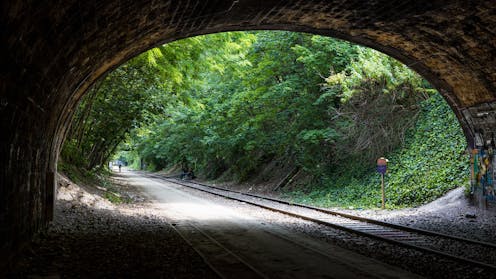
Across Australian cities, leftover and overlooked green spaces are everywhere. Just think of all the land along stormwater drains, railway lines and vacant lots. While often dismissed as useless or unsightly, there’s a growing understanding of the value these spaces bring to cities.
These informal green spaces can support biodiversity and offer rare freedom to explore, play or connect with nature in a less controlled way than formal spaces such as parks. They also help to cool our cities.
My new research looks at how cities globally are rethinking overlooked green spaces. I identified three ways to unlock the value of these areas: leaving spaces intentionally unmanaged, supporting temporary or informal uses, or formalising them as parks or other public places. Each approach offers different benefits and challenges for cities trying to create greener, more liveable neighbourhoods.
Local councils are under increasing pressure to create more formal green space, with residents, at times, calling on councils to buy land for new parks. But let’s start with what’s already there.
1: Hands off: the case for doing less
In some cases, doing nothing can be surprisingly powerful.
When governments step back, communities and nature can step in, with potentially joyful, creative and ecologically rich results. In the Belgian capital of Brussels, for example, disused railway land, left unmanaged, has become a haven for biodiversity, offering valuable insights into how ecosystems can regenerate without human interference.
Closer to home, there are many examples of railway land being used informally as green space. One site, in the Melbourne suburb of Northcote, has become a makeshift trail used by walkers, dog owners and children on bikes. Though not officially a park, it functions like one, with its informal character fostering a sense of ownership and spontaneity among users. In the past few months, local residents have started planting native vegetation and putting up makeshift art installations, and even a swing.
But this hands-off approach has limitations. It works best where a strong sense of community, or ecological value, already exists. And while nature can bounce back in surprising ways, it often needs a helping hand.

2. Helping out: supporting informal or temporary uses
Where informal installations already exist – such as art installations or unauthorised plantings known as guerrilla gardens – councils can support and even help grow these initiatives.
Some councils may see local-led efforts as a liability, but these efforts represent an opportunity to bring life to underused land at minimal cost. By recognising and supporting such activities, including financially, councils can empower residents to shape their own neighbourhoods in meaningful ways. This can include expanding existing installations or establishing new installations on other underused sites.
There is also benefit in local councils creating their own temporary installations such as pop-up parks. This has been shown to be an effective way to activate underused space and trial initiatives before more permanent plans are developed.
Examples include the creation of a temporary park in Ballarat Street, Yarraville in 2012. Community support for the temporary park led to the construction of a permanent park in 2014.

3. Stepping in: when formalising makes sense
There are times where formal intervention is warranted – for example, where land is contaminated or supports invasive weeds. In such cases, transforming a site into a fully developed park can deliver significant benefits. Land alongside a river, road or railway line, can be readily transformed into a long “linear park” with walking trails and bike paths.
In Paris, the conversion of a former industrial railway line into a linear park is a great example, attracting both locals and tourists.
Melbourne, too, has its own success in revitalising disused infrastructure. The Greening the Pipeline project in Melbourne’s west involves converting a disused sewer main into a vibrant linear park. These projects demonstrate the benefits that can be achieved from developing high-quality, permanent public green spaces from underused land.
But formalising public use of urban green space comes at a cost, financially and otherwise: a highly designed park can crowd out the quirky, unplanned character that makes many informal spaces feel special. That’s why it’s crucial to see formalising green space as one option among many, and to reserve it for sites where potential benefits justify the investment.
 The Greening the Pipeline project in Melbourne’s west highlights what can be achieved.
Hugh Stanford
The Greening the Pipeline project in Melbourne’s west highlights what can be achieved.
Hugh Stanford
A call to action
If you work in urban planning or local government, resist the urge to control and replace. Look at what’s already available. Sometimes the best thing you can do is observe, step back and support. Not all public spaces need a master plan.
If you’re a resident, get out there. Start small: plant something native, or set up a swing (where safe to do so). By engaging with the green spaces already around you, you might help create your own slice of urban paradise – no land purchase required.
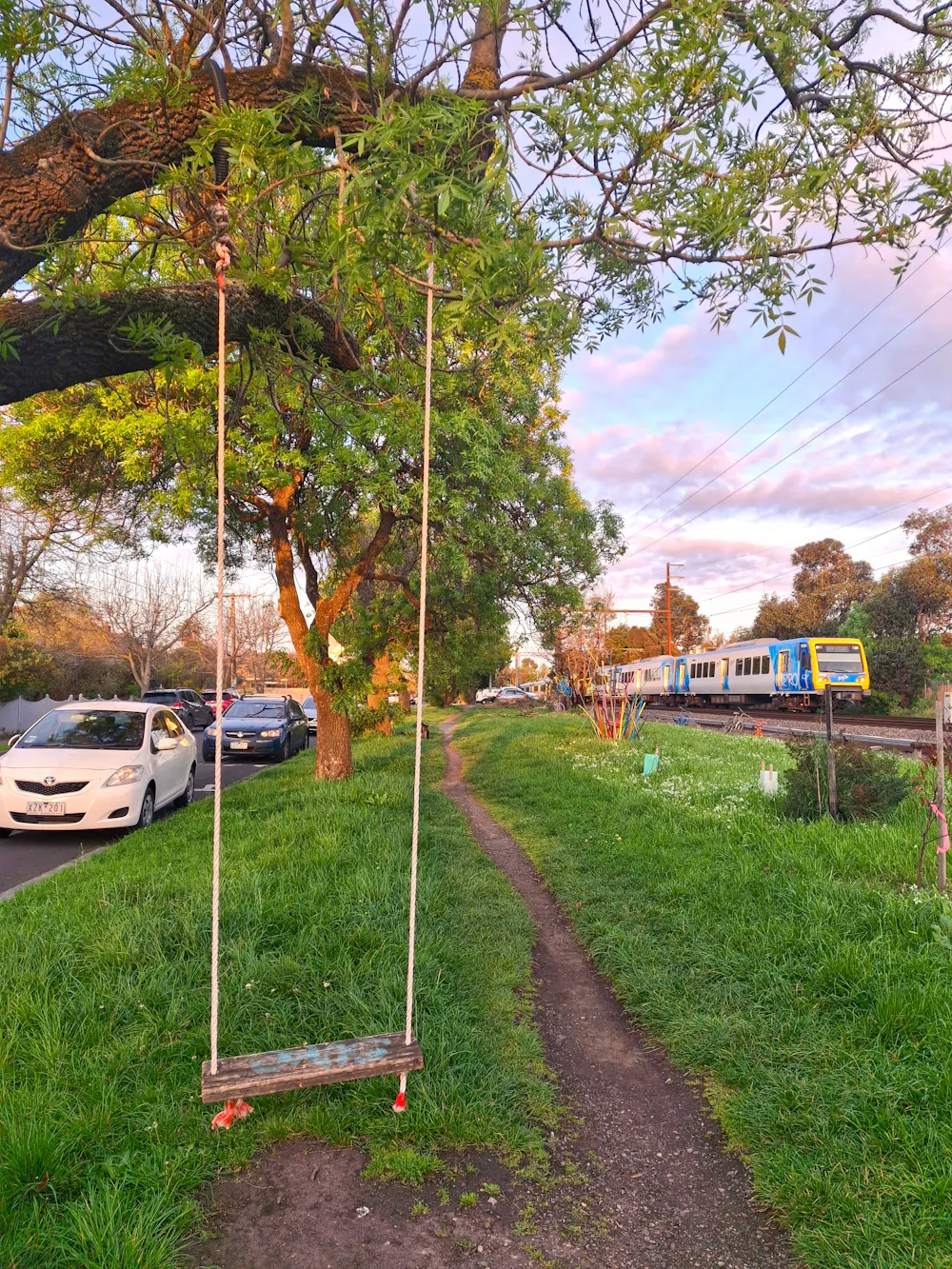 Start small and set up a swing, where safe to do so.
Hugh Stanford
Start small and set up a swing, where safe to do so.
Hugh Stanford
Authors: Hugh Stanford, Researcher Associate, Centre for Urban Research, RMIT University


















