

You usually need more than a few drops of blood, saliva or urine to detect illnesses. Here’s why
- Written by: Amali Cooray, PhD Candidate in Genetic Engineering and Cancer, WEHI (Walter and Eliza Hall Institute of Medical Research)
In the 2000s, biotech company Theranos promised to revolutionise blood testing. Founder Elizabeth Holmes claimed Theranos technology could perform hundreds of tests using just a finger-prick drop of blood. If true, their diagnostics would be faster, cheaper and more accessible.
Theranos raised hundreds of millions of dollars from investors and was valued at more than US$9 billion in 2015.
However, the technology never worked, leading to one of the biggest scandals in biotech history. Theranos was secretly using traditional machines to run many tests, then claiming the results came from its own (non-functional) device. Holmes was eventually convicted of fraud and sentenced to 11 years in prison.
Today, a new startup, Haemanthus, claims to have developed a similar technology. Co-founded by Billy Evans (Holmes’ partner), this new company says it can detect and diagnose illnesses using tiny amounts of blood, urine, or even saliva.
While technology has advanced since Theranos’ time, it’s important to consider these claims carefully.
Clinicians and lab techs can currently detect many conditions with blood, and some with urine or saliva. These are important tools in modern medicine. However, the volumes required are usually much greater than a few drops or a dab.
What can blood detect?
Blood circulates through all organs, transporting cells, nutrients, hormones and waste products. Blood tests collect several millilitres of blood from a vein and send this to a laboratory for analysis.
Blood tests can check if a person has signs of infection or disease, to monitor organ function, or to show how a person is responding to medical treatment. Blood tests are widely used to monitor heart disease, diabetes, kidney disease, or deficiencies in iron or vitamins.
A significant proportion of medical decisions are based on laboratory analysis of blood tests. Making them more affordable and accessible would have great benefits.
What about urine?
Urine is produced by the kidneys and contains waste filtered from the blood. The colour and composition of urine gives you a snapshot of any problems the body might be trying to fix.
Urine analysis can detect urinary tract infections, kidney disorders, diabetes and liver diseases by measuring sugars, proteins and cells.
As urine tests are non-invasive and easy to administer, they can be used to quickly screen for some conditions.
However, factors such as how much you’ve had to drink and what you’ve eaten can influence urine composition, potentially affecting test results.
Saliva can also be used for diagnoses
Saliva is the clear, watery liquid produced by salivary glands in the mouth. It’s mostly water (around 99%), but also contains various substances such as hormones, antibodies, enzymes, DNA, RNA and metabolites.
Saliva testing is already used in clinical settings to detect HIV antibodies, monitor levels of cortisol (a marker of stress) and to diagnose viral infections such as COVID.
The potential of saliva as another non-invasive diagnostic tool is growing, especially as researchers identify more markers of disease that it can contain.
However, saliva production varies between individuals. The composition of saliva can be impacted by what you eat and drink, the time of day, or even stress. These variations can limit how consistent and reliable saliva can be for making a diagnosis.
But how much of it do you need?
While diagnosing diseases using bodily fluids isn’t new, Haemanthus and other startups differentiate themselves by aiming (and claiming) to need only small amounts for multiple tests: a drop of blood, a swab of saliva, or a few milliliters of urine. This would mean faster, cheaper, more convenient tests that cause less discomfort.
But there are physical limitations of small samples. Many diagnostic markers (called biomarkers) are only present in very low amounts in our body fluids.
When the sample amount decreases, so do the amounts of the biomarkers, making it harder to detect them reliably. This is particularly true for biomarkers such as hormones, cancer markers, or early-stage disease indicators.
What can you detect with a few drops?
Of course, some conditions can be diagnosed using small samples, but generally only one condition is tested for with each small sample, unlike the claims of companies like Theranos.
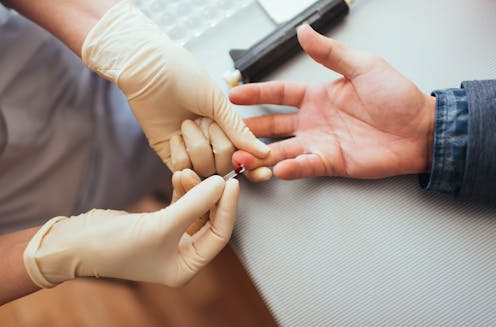
Finger-prick blood samples, for example, can monitor blood glucose levels of people with diabetes.
Small urine samples can detect urinary tract infections, but not all types of infections at once.
The specific biomarkers for these conditions can be reliably detectable in small amounts of fluid.
To diagnose more complex conditions, or even unknown conditions, multiple tests may be required, each needing different sample preparations. This requires both volume and precision – two things tests with small sample volumes struggle to deliver.
What happens next?
While the idea of diagnosing illnesses with small fluid samples is promising, especially for remote or resource-limited settings, the science suggests we should be cautious.
Most human diseases are complicated, and we usually need comprehensive testing approaches to diagnose them. Relying only on small fluid samples could lead to misdiagnosis, delayed treatments, or unnecessary interventions.
Innovations in biosensor technology, machine learning algorithms and biomarker discovery continue to advance the field. And one day, fast and reliable small volume testing may be possible.
However, a lot more peer-reviewed research and regulatory approvals will be essential to ensure patient safety and diagnostic accuracy.
Read more: Worried about getting a blood test? 5 tips to make them easier (and still accurate)
Authors: Amali Cooray, PhD Candidate in Genetic Engineering and Cancer, WEHI (Walter and Eliza Hall Institute of Medical Research)


















