

Access to land is a barrier to simpler, sustainable living. Public housing could offer a way forward
- Written by: Alex Baumann, Casual Academic, School of Social Sciences & Psychology, Western Sydney University
Many of us do not need to hear any more warnings from the IPCC, David Attenborough or climate activists like Greta Thunberg. We have seen enough to be convinced that limitless economic growth and the globalisation of high-consumption lifestyles have brought our planet’s life-support systems to the brink of collapse.
In response to today’s urgent ecological and social problems, we often hear calls from sustainability advocates about the need to “downshift” away from consumer lifestyles, to practise permaculture and to embrace simpler ways to live. When these movements scale up, the argument goes, we will “degrow” our economies to a sustainable scale.
Read more: Life in a 'degrowth' economy, and why you might actually enjoy it
Important though these analyses and perspectives are, they almost always leave something critical out of the conversation. There is a very powerful reason we are currently unable to move toward a simpler and sustainable society: the costs of securing access to land for housing often mean only the relatively affluent can afford such “green lifestyles”.
In response to this problem, we offer some ideas to show how public land could be used for sustainable forms of community-led development.
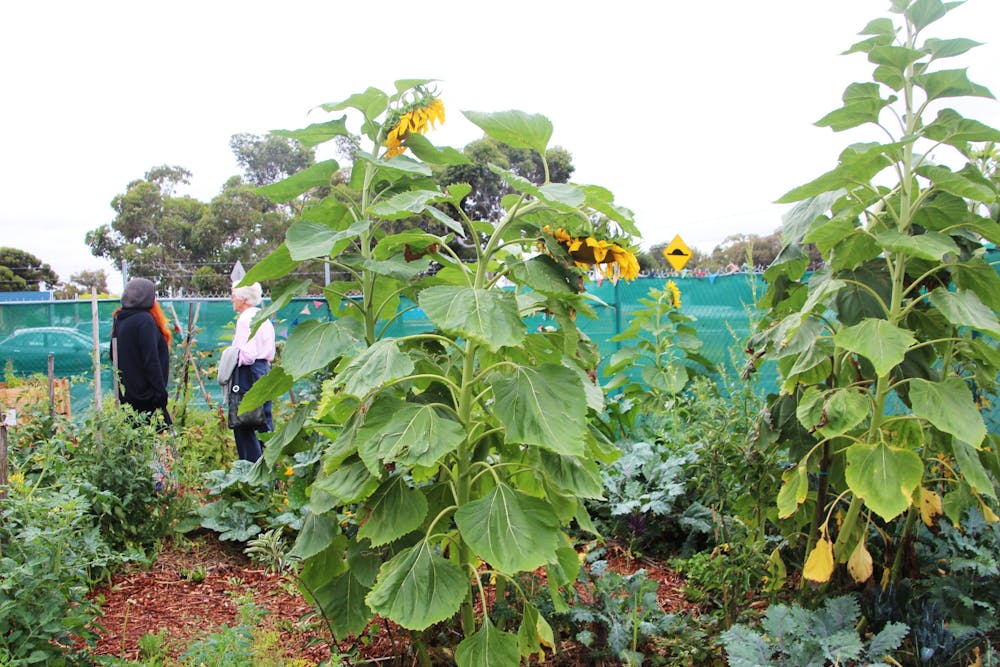 Creating a place like Sustainable Fawkner’s ‘Dandelion Patch’ depends on access to suitable land. More creative public housing policies could lead the way in developing more community food gardens (for example, see www.ntwonline.weebly.com).
Takver/Flickr, CC BY-SA
Creating a place like Sustainable Fawkner’s ‘Dandelion Patch’ depends on access to suitable land. More creative public housing policies could lead the way in developing more community food gardens (for example, see www.ntwonline.weebly.com).
Takver/Flickr, CC BY-SA
The property system makes simple living hard
Recognition of the need for system change is growing. But those arguing for high-impact societies to downshift toward cultures of sustainable consumption need to acknowledge a fundamental problem more clearly: simply keeping a roof over our heads can demand an energy-intensive lifestyle and a dependence on market growth.
Why? Having to buy or rent a home in capitalist societies like Australia has huge implications for most of us. It affects what we do for work, how much we work, our need for a car, etc. And, if you can barely afford land or your own home, putting solar panels on the roof, working part-time or growing your own organic food all become very unlikely.
In short, securing the basic need for housing is putting people in more and more debt. This often means any attempt at “dropping out” of market consumerism first involves a whole lot of “dropping in”. The consequences of this reality are anything but simple, local and sustainable.
Read more: The suburbs are the spiritual home of overconsumption. But they also hold the key to a better future
A different type of land and housing opportunity is needed for reasons of sustainability and equity. Central here is the recognition that access to land, just as with air and water, is not a market product. It is a human right and should be recognised as such.
Even discussing land reform in terms of “affordable housing” still frames land as a market commodity. These discussions often rely on notions of charity and welfare to increase access to land when it really should be available as a right.
But in a nation where simply abolishing negative gearing appears to be politically unpalatable, it would be pragmatic, as a first step, to explore less controversial but still effective policy approaches.
Pointers to rethinking how we govern land
There are many conceptions of property, which means we do not simply have to choose between free market capitalism and state socialism. In Singapore, for example, more than 80% of residents live in state-provided housing.
Societies can govern access to land in an infinite variety of ways. Each way distributes or concentrates wealth and power in progressive or regressive ways.
Read more: A century of public housing: lessons from Singapore, where housing is a social, not financial, asset
One policy deserving of attention involves attempting to transcend the “welfare” framing of existing uses of public housing. Already, secure access to public land has empowered some residents to participate in programs such as community food gardens, resources repair/share programs, housing management, maintenance and, in the UK, even housing construction.
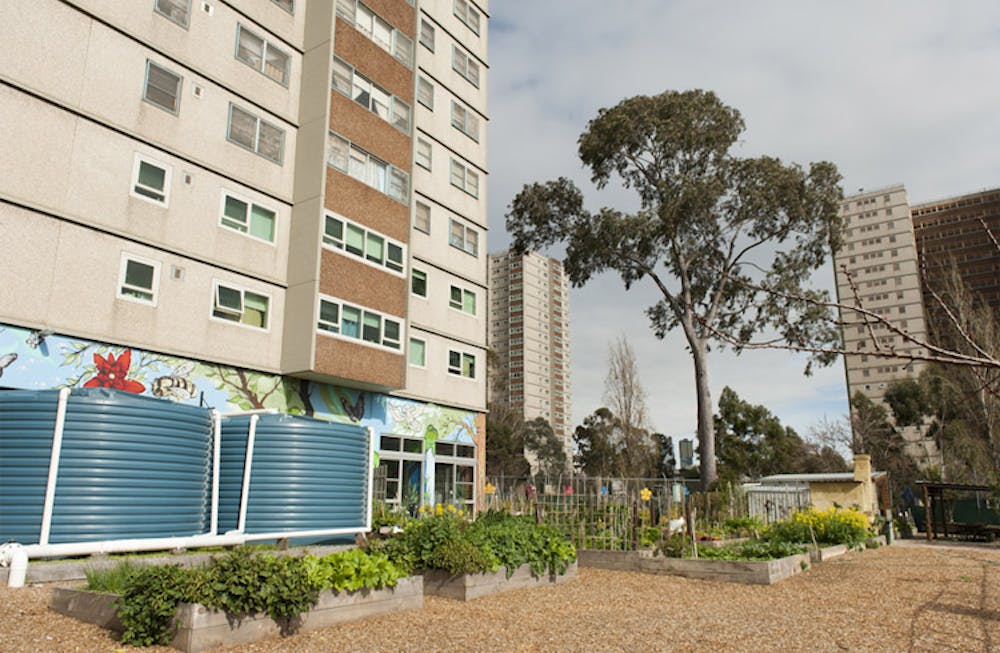 Public housing residents in Fitzroy, Melbourne, maintain this community garden.
BSL/Cultivating Community
Public housing residents in Fitzroy, Melbourne, maintain this community garden.
BSL/Cultivating Community
In New South Wales, 50,000 public housing residents have converted many hectares of land in social housing areas into gardens growing vegetables, fruit and flowers. In Victoria, more than 20 public housing estates have established community gardens.
If these self-selecting residents could be better supported and validated, their status in society (and how they might conceive of themselves) could move from being regarded as “social dependants” to “pioneers of a new economy”. By showing that access to public land can help with the emergence of local and sustainable community economies, such experiments could be the cultural driver of a broader policy rethink of how we govern land.
For example, more public land could be made available for housing construction collectives, where people participate in building their own homes under the guidance of experts. Australia could seek inspiration from Senegal, where 14,000 ecovillages are being developed.
In governing land we are limited only by our imaginations. Currently, a chronic lack of imagination is being shown. It is time to experiment with new frameworks that can increase access to land and thereby empower more people to explore lifestyles of reduced consumption and increased self-sufficiency.
Read more: Farming the suburbs – why can’t we grow food wherever we want?
The first step is recognising the obstacle
We call on the simple living, permaculture and degrowth movements – and the sustainability movement more generally – to better recognise the obstacle that access to land presents to achieving their goals. More energy and activism should be dedicated to envisioning, campaigning for and experimenting with alternative property and housing arrangements.
Our purpose is not to dismiss the importance of the various downshifting movements. We need as many people as possible pushing against the tide of consumerism and showing that low-impact living can be good living.
These social movements will help create the culture of sufficiency that is needed to support a politics of sustainability. But any such politics must include more empowering and creative land policies.
Authors: Alex Baumann, Casual Academic, School of Social Sciences & Psychology, Western Sydney University


















