

Modern Australian
Times Advertising

Little World, what are you? Josephine Rowe’s latest novel is a precisely drawn enigma

  • Written by Tony Hughes-d'Aeth, Professor, Chair of Australian Literature, The University of Western Australia
Little World, what are you? Josephine Rowe’s latest novel is a precisely drawn enigma

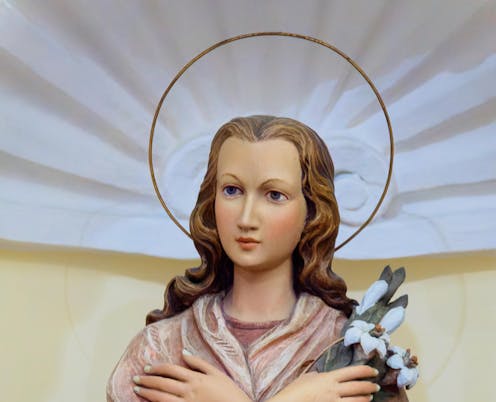
The unusual element of Josephine Rowe’s short novel Little World is that the heroine remains utterly impassive throughout the events of the narrative. This is for the simple reason that she is dead.

This does not mean she does not act, though. In fact, she acts exactly in the way that the dead are wont to do, which is to present themselves in the form of a question to the living.

Irina, if that is indeed her name, was born in Panama in the townships that serviced the canal at some point early in the 20th century. Her life came to its end at the tender age of 14, whereupon something miraculous occurred: her body failed to decay. Or as it is put in the novel, there is “a failing of entropy”.

The inexorable passage of this incorruptible body gives this strange, spare story its shape.

Review: Little World – Josephine Rowe (Black Inc.)

The novel begins with the girl’s body arriving by horse float at the remote home of Orrin Bird, somewhere near Broome, not long after the second world war. The perfectly preserved human form has been bequeathed to Orrin by his recently departed friend Kaspar Isaksen, whom he had met when the two worked on Nauru in the 1930s.

Isaksen had brought the girl’s body from Panama to Nauru in the hope that he might help with her canonisation. Though he is not religious, Orrin sees no other course than to hold on to the girl’s body, hoping that the termites will not devour the coffin. He lives on for another 17 years, protecting and being protected by his dead yet undead companion. When he dies, the house falls into disrepair, but the girl remains preserved in her incorruptible state.
The novel then skips forward to the 1970s, where we meet three women travelling across Australia by van. The group consists of a young lesbian couple, Alex and Suze, both daughters of rich parents, and a slightly older woman, Mathilde, or “Matti” as she is called by the other two. Matti increasingly feels like a third wheel. Sexually excluded from the couple, she also knows that she is beneath them socially. She has spent her life cleaning the kinds of houses that these two women have grown up in. Matti’s childhood was far from idyllic. Her home life was marred by an emotionally abusive mother. She fell pregnant while still a teenager and was taken to a home for unmarried pregnant girls. As was the expectation, she gave up her son for adoption. She often dreams of this boy she was able to hold so briefly. As the group reach the Kimberley, they come upon an abandoned house with a horse float, and we realise they have stumbled on the home of the long-dead Orrin Bird. Giving Alex and Suze the privacy of the van, Matti decides to sleep in the ruined house. It is there she comes face to face with the body of the girl. The feminine image I’ve taken time to narrate the events of the novel to this point, confident this will not deprive the reader of moments of surprise or revelation. This is because Little World does not depend on things happening, so to speak. Instead, the static body at the heart of the narrative is its point of immanence. It is the “little world” of the title. The events of the story, which unfold surely enough despite some cryptic moments, are not what is being revealed; the novel seeks the enigmatic truth of this living-dead feminine image. The comparison that came to mind was Oblivia Ethylene from Alexis Wright’s The Swan Book. In Wright’s novel, an abused Indigenous girl has become magically encased in a tree. Oblivia is not dead; in fact, she narrates the prologue. Her presence in the tree is a kind of absolute subjective retreat from the harm that assailed her to that point. Oblivia is rescued and comes back to life, but remains mute once the novel switches to the third person.
Josephine Rowe. Dom Krapski/Black Inc.

The situation in Little World is of a still more radical quality, in that the feminine centre remains embalmed and immobile. Because Irina is silent and unmoving, it is impossible to draw on her words or actions to interpret her views or intentions. We are restricted to tentative inferences that stem from her appearance – “appearance” meaning, in this context, not so much how she looks, but how she comes to appear in the places that she appears.

Her incorruptible female body represents a paradox, because it has the quality of an announcement – a wordless comment on her surroundings. Her arrival into the scene resembles the visitation of a saintly personage. Those before her stand in mute awe. She is there to deliver her silent message and she stays until that message has worked itself into the recipients.

Irena’s trajectory takes her from the Panama Canal – that marvel of civil engineering that quietly violates the sanctity of oceans and continents – across the Pacific to Nauru, where she lies beside the industrial dismantling of the island. (Before it became the centrepiece of Australia’s offshore gulag archipelago, Nauru had its pristine surface hacked into a tropical moonscape by a century of extractive phosphate mining.)

From there, Irena travels to Australia and into the bemused possession of Orrin, a man who had tried to disappear in the outback. She found him all the same.

What message she delivers to him we never quite know. Nor to Kaspar either. All we know is that she outlasts both of them. And then she waits once more, while Matti, a figure from the margins of 1970s, moves unwittingly from one side of the continent to the other. Again, we do not know the message that Irina has for Matti, or if Matti will ever know its contents.

Oceanic realisation

In the end, it falls to Matti to free the girl: “She knows only that it is for her alone to right something.”

Leaving her friends stranded in the nearest town, Matti commandeers their van and rigs up the horse float. She drives headlong to the sea, crashing and bumping her way in a singular derangement. There, she releases the girl into the ocean.

This moment of oceanic realisation is the decisive point in the novel. The story doesn’t end there, but its unendingness ends there. The body’s lacquer dissolves and the ocean flows through its tissues and vessels. This event is unwitnessed – it seems it must remain foreclosed to sight – but is instead imagined in touching detail:

The water will press in, against the frail seal of eyelids and lips, rushing past the small teeth and flooding the speechless mouth with brine, spilling on into airways, down the long-dormant corridors of arteries, fallow passageways, to reach the dry hollows of lungs and stomach, the empty ventricles of the silent, fist-sized muscle

the ocean like a great hand opening inside her

            Her own hands unclenching in response

Why is it Matti who is called upon to release the girl? Why could neither of the grizzled men, who had held her conscientiously enough in their care before they died, perform this simple act? This is probably the central question of Little World.

The answer the novel offers is that Matti resembles the girl. Both have struggled through a world which had little care for them. The relentless and premature sexual attention of men has blighted their lives. As well as being the object of this external hunger, which must be constantly repelled, there is also a gnawing and all-consuming internal hunger in Matti. This hunger is the concentration of Matti’s being:

Her hunger was its own clarifying force, a secret but not, not anymore a shameful one. She had decided, long ago, to form an allegiance with it.

Indeed, the key correspondence in the novel is between Matti’s hunger and the way the dead girl insinuates herself into the arms of reluctant men. These men hold the girl on the condition that they cannot touch her. Their intimacy depends on the fact that she is already a corpse.

These principles form the strict, perverse coordinates of the novel. But the ethical dimension of Little World is also quite clear. The whole novel orchestrates a sequence of meetings that culminate in Matti consigning the dead girl to a proper death. Little World is a novel for those who find satisfaction in precisely drawn enigmas. The lyricism of the novel is often exquisite, but still more impressive is its fidelity to the dream logic that provides the story with its insistence.

Authors: Tony Hughes-d'Aeth, Professor, Chair of Australian Literature, The University of Western Australia


Read more https://theconversation.com/little-world-what-are-you-josephine-rowes-latest-novel-is-a-precisely-drawn-enigma-254209

What People Mean by “Alternative Doctor” And Why Expectations Around Care Are Changing

When people search for an “alternative doctor,” they’re usually looking for something specific, even if they haven’t fully defined it yet. I...

Why Does My Power Keep Tripping? Common Causes Explained by Electricians Sydney

The electrical system is the lifeblood of your home, powering everything from your phones to cooking utensils and more. But from time to time, your po...

Interstate Car Transporter Urges Buyers to Book Early

As the conflict in the Middle East continues to put increasing pressure on local fuel supply, Australian transport companies are experiencing increasi...

Digital Minimalism for Business Owners: Fewer Tools, Better Systems

Be honest. How many apps are open right now? One for scheduling, another for invoices, a third for customer notes, plus a spreadsheet someone email...

The Importance Of Proactive NDIS Renewal Preparation For Sustaining Your Provider Business

Your NDIS renewal notice is not a signal to start preparing. By the time it arrives, preparation should already be well underway. For new providers, s...

Why Fire Extinguisher Testing in Sydney Is Becoming a Records Game, Not Only a Maintenance Job

A fire extinguisher used to feel like one of the simpler parts of building safety. It hung on the wall, wore a service tag, and sat there quietly unle...

The Switchboard Upgrade Question Every Melbourne Renovator Should Ask Before the Walls Close Up

Renovations have a funny way of making people think on surfaces first. Splashback, stone, joinery, tapware, paint. Fair enough too. That is the exciti...

Winter Sanitation Gaps in Parramatta Kitchens: A Hidden Pest Risk

Winter brings a host of changes to our homes, from the chill in the air to the cozy warmth indoors. However, this season also introduces sanitation ch...

When to Seek Advice from Employment Lawyers in Melbourne

Australian employment law is detailed and, at times, complex, with rights and obligations that aren't always obvious to employees or employers witho...

7 Benefits of Professional Gutter Cleaning for Australian Homeowners

Gutters aren't exactly glamorous. They sit up there on the edge of your roof, doing their job quietly - until they stop working. Clogged, overflowing ...

Pipe Floats Strengthening Pipeline Performance In Demanding Environments

Pipelines often travel through environments that are anything but predictable, water currents shift, terrain changes, and materials keep moving unde...

Why Ceiling Fans Are Essential For Comfort, Efficiency, And Modern Living

Creating a comfortable indoor environment is not just about temperature; it is about how air moves, how a room feels, and how efficiently energy is ...

Why Duct Cleaning In Melbourne Is A Smart Investment For Healthier Living Spaces

Behind your walls, ceilings, and vents lies a network quietly working every day to keep your home comfortable. Yet over time, this system can become...

Disability Service Providers Supporting Inclusive And Independent Living

Finding the right support system can feel like assembling a puzzle where every piece must fit just right. For individuals and families navigating di...

A Beginner's Guide to Owning a Caravan in Australia

Owning a caravan opens up a style of travel that's hard to match for freedom and flexibility. However, for those just starting out, the process of c...

Preparing Your Air Conditioner for Summer: What Most Homeowners Overlook

As temperatures rise, many homeowners switch on their air conditioning for the first time in months — only to find it’s not performing the way i...

What Actually Adds Value to Properties in Newcastle

Newcastle has seen steady growth over the past few years, with more buyers looking beyond Sydney for lifestyle, space, and long-term value. As dema...

What is Design and Build in Construction?

Imagine you’re about to start a new construction project, maybe it’s a custom home or a commercial building. You’ve got the idea, the land, an...
















