

Modern Australian
Times Advertising

Astronomers thought the Milky Way was doomed to crash into Andromeda. Now they’re not so sure

  • Written by Ruby Wright, Forrest Fellow in Astrophysics, The University of Western Australia
Astronomers thought the Milky Way was doomed to crash into Andromeda. Now they’re not so sure

For years, astronomers have predicted a dramatic fate for our galaxy: a head-on collision with Andromeda, our nearest large galactic neighbour. This merger – expected in about 5 billion years – has become a staple of astronomy documentaries, textbooks and popular science writing.

But in our new study published in Nature Astronomy, led by Till Sawala from the University of Helsinki, we find the Milky Way’s future might not be as certain previously assumed.

By carefully accounting for uncertainties in existing measurements, and including the gravitational influence of other nearby galaxies, we found there is only about a 50% chance the Milky Way and Andromeda will merge in the next 10 billion years.

Why did we think a collision was inevitable?

The idea that the Milky Way and Andromeda are on a collision course goes back more than a century. Astronomers discovered Andromeda is moving toward us by measuring its radial velocity – its motion along our line of sight – using a slight change in the colour of its light called the Doppler shift.

But galaxies also drift sideways across the sky, a movement known as proper motion or transverse velocity. This sideways motion is incredibly difficult to detect, especially for galaxies millions of light years away.

Earlier studies often assumed Andromeda’s transverse motion was small, making a future head-on collision seem almost certain.

What’s different in this study?

Our study did not have any new data. Instead, we took a fresh look at existing observations from the Hubble Space Telescope and the Gaia mission.

Unlike earlier studies, our work incorporates the uncertainty in these measurements, rather than assuming their most likely values.

We simulated thousands of possible trajectories for the Milky Way and Andromeda trajectories, slightly varying the assumed initial conditions – things such as the speed and position of the two galaxies – each time.

When we started from the same assumptions the earlier studies made, we recovered the same results. However, we were also able to explore a larger range or possibilities.

We also included two additional galaxies that influence the future paths of the Milky Way and Andromeda: the Large Magellanic Cloud, a massive satellite galaxy currently falling into the Milky Way, and M33, also known as the Triangulum Galaxy, which orbits Andromeda.

A detailed photo of a white-and-pink pinwheel-shaped galaxy.
The new study took into account the gravitational effect of the Triangulum Galaxy, which orbits Andromeda. ESO, CC BY

These companion galaxies exert gravitational tugs that change the motions of their hosts.

M33 nudges Andromeda slightly toward the Milky Way, increasing the chance of a merger. Meanwhile, the Large Magellanic Cloud shifts the Milky Way’s motion away from Andromeda, reducing the likelihood of a collision.

Taking all of this into account, we found that in about half of the simulated scenarios, the Milky Way and Andromeda do not merge at all within the next 10 billion years.

What happens if they do – or don’t – collide?

Even if a merger does happen, it’s unlikely to be catastrophic for Earth. Stars in galaxies are separated by enormous distances, so direct collisions are rare.

But over time, the galaxies would coalesce under gravity, forming a single, larger galaxy – probably an elliptical one, rather than the spirals we see today.

If the galaxies don’t merge, they may settle into a long, slow orbit around each other – close companions that never quite collide. It’s a gentler outcome, but it still reshapes our understanding of the Milky Way’s distant future.
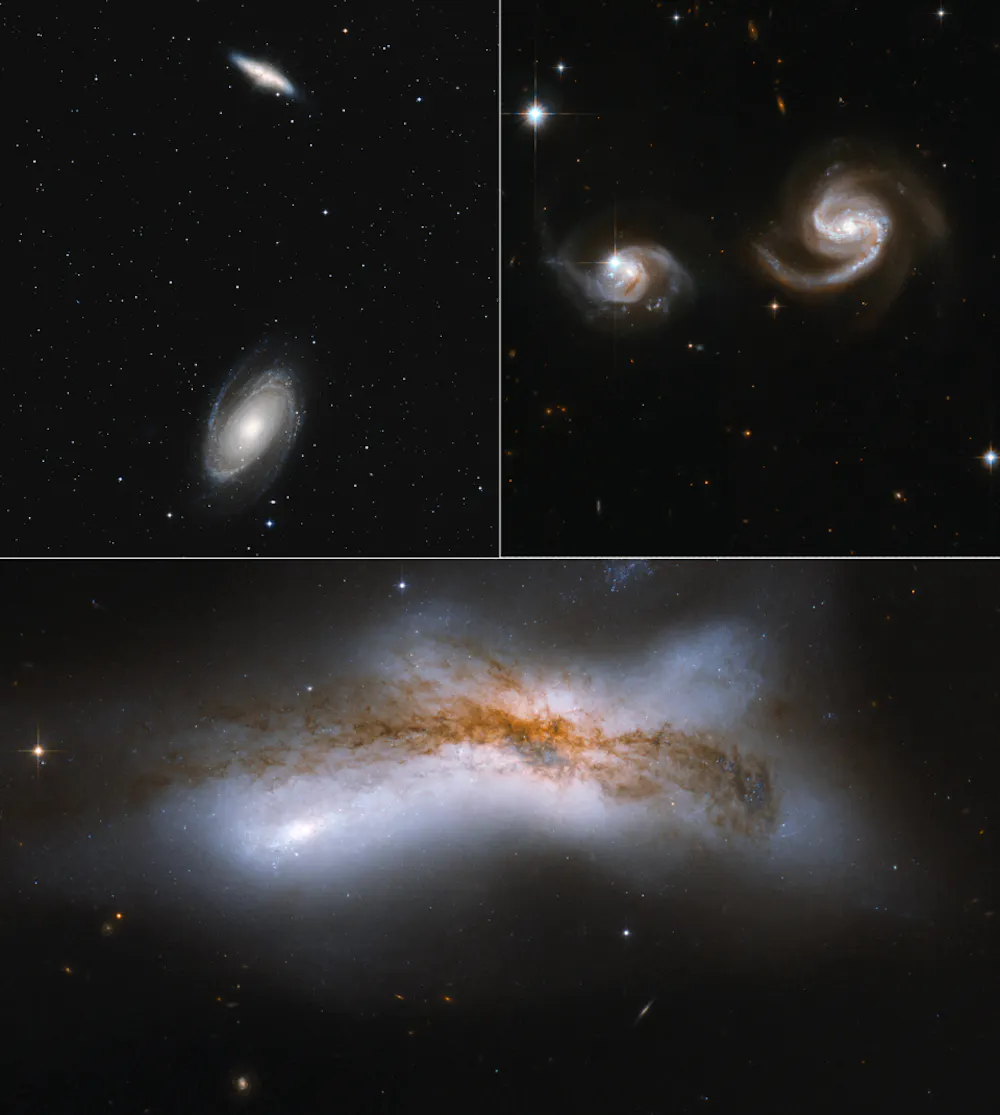
Three images of pairs of galaxies in increasingly close proximity.
Other galaxies show examples of three future scenarios for the Milky Way and Andromeda: galaxies passing in the night, a close encounter, a full collision and merger. NASA / ESA

What comes next?

The biggest remaining uncertainty is the transverse velocity of Andromeda. Even small changes in this sideways motion can make the difference between a merger and a near miss. Future measurements will help refine this value and bring us closer to a clearer answer.

We don’t yet have a definitive answer about our own galaxy’s future. But exploring these possibilities shows just how much we’re still learning about the universe – even close to home.

Authors: Ruby Wright, Forrest Fellow in Astrophysics, The University of Western Australia

Read more https://theconversation.com/astronomers-thought-the-milky-way-was-doomed-to-crash-into-andromeda-now-theyre-not-so-sure-257825

7 Benefits of Professional Gutter Cleaning for Australian Homeowners

Gutters aren't exactly glamorous. They sit up there on the edge of your roof, doing their job quietly - until they stop working. Clogged, overflowing ...

Pipe Floats Strengthening Pipeline Performance In Demanding Environments

Pipelines often travel through environments that are anything but predictable, water currents shift, terrain changes, and materials keep moving unde...

Why Ceiling Fans Are Essential For Comfort, Efficiency, And Modern Living

Creating a comfortable indoor environment is not just about temperature; it is about how air moves, how a room feels, and how efficiently energy is ...

Why Duct Cleaning In Melbourne Is A Smart Investment For Healthier Living Spaces

Behind your walls, ceilings, and vents lies a network quietly working every day to keep your home comfortable. Yet over time, this system can become...

Disability Service Providers Supporting Inclusive And Independent Living

Finding the right support system can feel like assembling a puzzle where every piece must fit just right. For individuals and families navigating di...

A Beginner's Guide to Owning a Caravan in Australia

Owning a caravan opens up a style of travel that's hard to match for freedom and flexibility. However, for those just starting out, the process of c...

Preparing Your Air Conditioner for Summer: What Most Homeowners Overlook

As temperatures rise, many homeowners switch on their air conditioning for the first time in months — only to find it’s not performing the way i...

What Actually Adds Value to Properties in Newcastle

Newcastle has seen steady growth over the past few years, with more buyers looking beyond Sydney for lifestyle, space, and long-term value. As dema...

What is Design and Build in Construction?

Imagine you’re about to start a new construction project, maybe it’s a custom home or a commercial building. You’ve got the idea, the land, an...

Commercial roof leak detection: why early action protects your building

Water ingress is one of the most disruptive and costly issues facing commercial properties. For property managers and facilities teams, even a minor...

Custom Photo Frames: Turning Everyday Moments into Lasting Displays

Photos capture moments, but how you display them determines how they’re experienced every day. A meaningful photograph deserves more than a generi...

Managed IT Services: A Smarter, More Predictable Way to Run Your Business Technology

If you’ve ever had your systems go down in the middle of a busy day, you’ll know how quickly things can unravel. Phones stop ringing, emails sto...

Landscaping Geelong — Coastal Elegance Meets Practical Design

A Landscape Shaped by Location Geelong occupies a unique position within Victoria’s broader landscape. It carries the energy of a growing city, y...

Electric Adjustable Beds: A Simpler Way To Sleep Better

Sleep should feel natural. It should come easily, without discomfort, without constant repositioning, and without waking up feeling sore. But for ma...

Healthy Snacking Sorted: Premium Beef Jerky

In today's fast-paced world, finding a snack that's both satisfying and genuinely good for you can feel like a mission. Many readily available optio...

What to Know Before Getting Dental Implants: A Guide for First-Time Patients

Dental implants Perth patients often look for a long-term solution for missing teeth without the hassle of dentures or bridges. If you are thinking ...

Why Protective Packaging Matters More Than Ever In Modern Shipping

In today’s fast-paced world of logistics and eCommerce, ensuring that products reach customers safely is a top priority. This is where a bubble wrap...

Pest Control Albury: Protecting Your Property From Hidden Damage And Health Risks

Pests rarely announce their arrival. They creep into spaces quietly, turning small, unnoticed corners into breeding grounds for bigger problems. Tha...

















