

A Ukranian writer – her life cut short – and a seasoned reporter show the heroism of the ‘people’s war’
- Written by: Darius von Guttner Sporzynski, Historian, Australian Catholic University
“I have just bought my first gun in downtown Lviv,” begins Ukranian writer and war crimes researcher Victoria Amelina’s book, on February 17, 2022. “I’ve heard that everyone is capable of killing and those who say they aren’t just haven’t met the right person yet. An armed stranger entering my country might just be ‘the right person’.”
A week later, on February 24, Russia invaded Ukraine. The following July, Amelina died from injuries sustained in a Russian missile strike on a pizza restaurant in Kramatorsk, eastern Ukraine.
Yet the war she bore witness to continues, with no ceasefire in sight. This week, Russia attacked the Ukranian capital Kiev with missiles and drones, killing at least 16 people. The European Union has launched a new package of sanctions, against Russia, saying its daily drone attacks show it is not interested in peace.
Amelina wryly observed that Russia’s full-scale invasion of Ukraine had been “rescheduled” since 2014, when it invaded Crimea. Her writing highlights the urgency of Ukraine’s defiance.

The ethics of witnessing
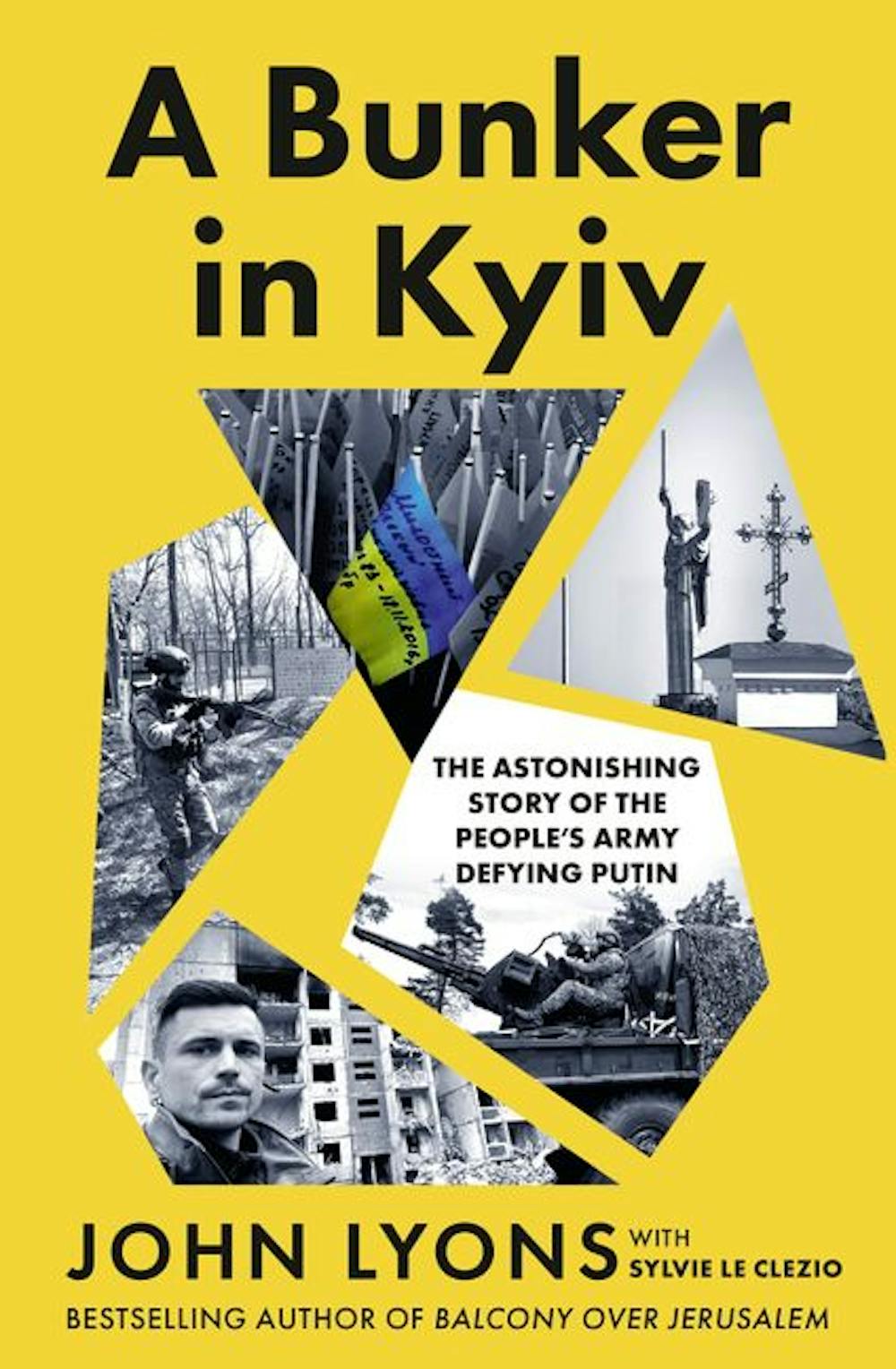
The ongoing war has produced a formidable body of frontline writing. Two recent titles stand out for the way they splice immediacy with reflective depth: Amelina’s Looking at Women Looking at War and ABC global affairs editor John Lyons’ A Bunker in Kyiv.
These books are radically different in style and perspective. Amelina’s is an unfinished notebook salvaged from a life cut short. Lyons’ previous book, Balcony in Jersalem, about his years reporting from Israel, is an acclaimed bestseller. In this new book, he offers a polished panorama, composed in press-room semi-darkness.
Both volumes interrogate the same moral problem: how to describe a war that is busy remaking the world, even as one writes. Together, they form a diptych of complementary gazes.

Amelina looks outward from inside Ukraine’s traumatised civic body, tracing the concentric circles of harm that ripple from shattered museum glass showcases to improvised war-crimes dossiers. Lyons looks inward from the relative safety of a foreign correspondent’s bunker, mapping the logistical, technological and diplomatic scaffolding that prevents Kyiv’s fall.
Amelina’s pages vibrate with the ethics of witnessing. “The response to truth is often even more truth,” she writes. Lyons measures that truth against the cold arithmetic of missile ranges and presidential phone calls. The result is a paired testimony that refuses both sentimentalism and geopolitical abstraction.
Together, they remind Anglophone readers the fate of Europe is being negotiated not only in summit chambers, but in the quotidian heroism of librarians, drone coders and sleep-starved reporters queuing for generators.
Moral stakes of documenting violence
Amelina’s writing resists easy categorisation. Part field notebook, part literary meditation, part forensic brief, her book chronicles Russia’s full-scale invasion of Ukraine through a gendered lens, at once intimate and juridical.
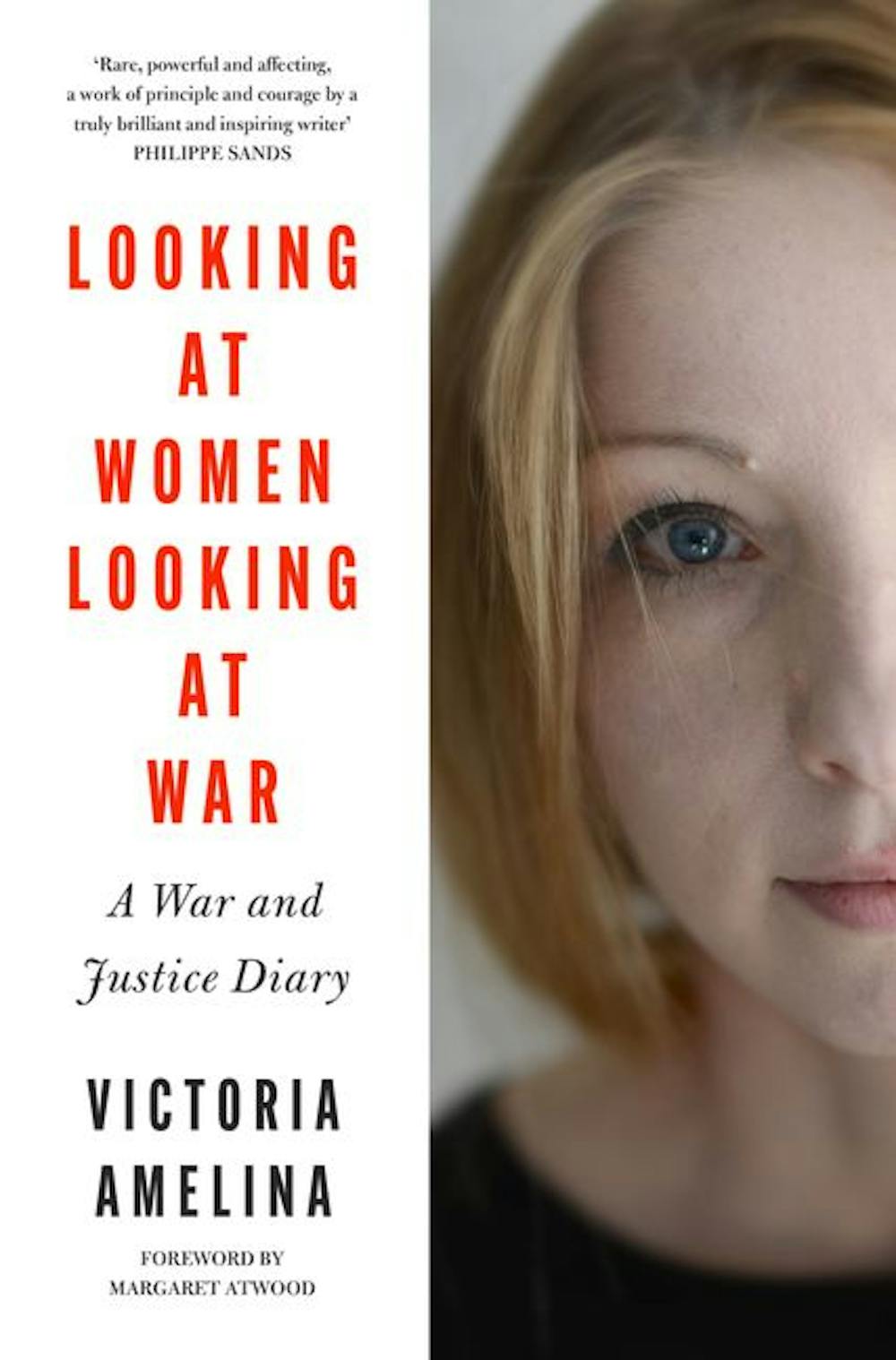 Written between February 2022 and Amelina’s death in July 2023, the diary exposes the moral and mental stakes of documenting violence, while insisting the very act of writing can become a legal intervention.
What emerges is a polyphonic narrative in which the private minutiae of wartime life (brewing coffee, rescuing a restless family dog) cohabit with precise shell-hole measurements and footnotes to the Rome Statute.
Is the Rome Statute relevant to Amelina’s story? Oh, yes. This is the treaty that established the International Criminal Court.
Central to Amelina’s project is a theory of the double gaze: “looking at women looking at war.” She traces how female lawyers, librarians, archivists and medics occupy (often against their will) the position of both observing subject and vulnerable object.
By turning her notebook back on the notetakers, Amelina interrogates the politics of witnessing itself. She reminds her reader that testimony is never angelically disembodied; it emerges from embodied lives marked by exhaustion, fear – and, crucially – ethical resolve.
The diarist’s own presence (at once recorder and recorded) becomes a meta-commentary on the iterative violences of observation and representation.
Against prevailing stereotypes of passive female victimhood, the diary foregrounds the muscular agency with which women contest the war’s gendered division of labour.
Evhenia Zakrevska, a prominent lawyer turned soldier, compiles chains-of-command charts for future tribunals. Oleksandra Matviichuk, who leads the Centre for Civil Liberties documenting tens of thousands of war crimes, tours freshly liberated cities to collect testimonies.
Written between February 2022 and Amelina’s death in July 2023, the diary exposes the moral and mental stakes of documenting violence, while insisting the very act of writing can become a legal intervention.
What emerges is a polyphonic narrative in which the private minutiae of wartime life (brewing coffee, rescuing a restless family dog) cohabit with precise shell-hole measurements and footnotes to the Rome Statute.
Is the Rome Statute relevant to Amelina’s story? Oh, yes. This is the treaty that established the International Criminal Court.
Central to Amelina’s project is a theory of the double gaze: “looking at women looking at war.” She traces how female lawyers, librarians, archivists and medics occupy (often against their will) the position of both observing subject and vulnerable object.
By turning her notebook back on the notetakers, Amelina interrogates the politics of witnessing itself. She reminds her reader that testimony is never angelically disembodied; it emerges from embodied lives marked by exhaustion, fear – and, crucially – ethical resolve.
The diarist’s own presence (at once recorder and recorded) becomes a meta-commentary on the iterative violences of observation and representation.
Against prevailing stereotypes of passive female victimhood, the diary foregrounds the muscular agency with which women contest the war’s gendered division of labour.
Evhenia Zakrevska, a prominent lawyer turned soldier, compiles chains-of-command charts for future tribunals. Oleksandra Matviichuk, who leads the Centre for Civil Liberties documenting tens of thousands of war crimes, tours freshly liberated cities to collect testimonies.
 Oleksandra Matviichuk representing the Ukrainian organization Center for Civil Liberties CCL gives her Nobel lecture at the awarding of the Nobel Peace Prize for 2022.
Javad Parsa/AAP
Human rights lawyer Kateryna Rashevska drafts amicus briefs – legal documents submitted to a court by someone who is not a party to the case, but who has a strong interest in the matter – for the International Criminal Court.
Kharkiv curator Tetyana Pylypchuk bundles manuscripts into black plastic rubbish bags for evacuation.
These women flit restlessly between “front” and “rear”, refusing geographic and symbolic boundaries alike. Their labour unmasks a politics of conflict in which gender is less a social category than a strategic terrain. The pursuit of justice, in the face of entrenched impunity, forms the diary’s ethical spine.
Home improvised, rather than lost
Amelina is acutely aware the documentary impulse may be nullified by geopolitical realpolitik, that constitutional niceties risk appearing grotesque beside charred apartment blocks. Yet she insists on that precision itself. Names spelled correctly, dates triple-checked, fragments of shrapnel preserved in labelled bags. This constitutes a mode of resistance.
The diary sets up a stark contrast between the slow pace of international law and the sudden, devastating speed of a missile strike. It is a kind of drama where the law always comes too late, yet still must come.
The book situates the 2022–25 invasion within the long genealogy of colonial violence: the Holodomor, or Russian-made famine, of 1932–33, the “executed renaissance”, a contemporary revival of works by the pioneering Ukranian literary artists purged by Stalin in the 1930s, and the Soviet-era suppression of the Sixtiers (the literary generation who began to publish in the second half of the 1950s and reached their literary peak in the early 1960s).
In May 2022, the Literary Memorial Museum of Ukrainian philosopher Hryhorii Skovoroda in Skovorodynivka, near Kharkiv, was struck by a Russian missile. The 18th-century building housing the museum was destroyed. Amelina reads this destruction through the prism of Russia’s attempt to erase Ukrainian cultural identity.
Oleksandra Matviichuk representing the Ukrainian organization Center for Civil Liberties CCL gives her Nobel lecture at the awarding of the Nobel Peace Prize for 2022.
Javad Parsa/AAP
Human rights lawyer Kateryna Rashevska drafts amicus briefs – legal documents submitted to a court by someone who is not a party to the case, but who has a strong interest in the matter – for the International Criminal Court.
Kharkiv curator Tetyana Pylypchuk bundles manuscripts into black plastic rubbish bags for evacuation.
These women flit restlessly between “front” and “rear”, refusing geographic and symbolic boundaries alike. Their labour unmasks a politics of conflict in which gender is less a social category than a strategic terrain. The pursuit of justice, in the face of entrenched impunity, forms the diary’s ethical spine.
Home improvised, rather than lost
Amelina is acutely aware the documentary impulse may be nullified by geopolitical realpolitik, that constitutional niceties risk appearing grotesque beside charred apartment blocks. Yet she insists on that precision itself. Names spelled correctly, dates triple-checked, fragments of shrapnel preserved in labelled bags. This constitutes a mode of resistance.
The diary sets up a stark contrast between the slow pace of international law and the sudden, devastating speed of a missile strike. It is a kind of drama where the law always comes too late, yet still must come.
The book situates the 2022–25 invasion within the long genealogy of colonial violence: the Holodomor, or Russian-made famine, of 1932–33, the “executed renaissance”, a contemporary revival of works by the pioneering Ukranian literary artists purged by Stalin in the 1930s, and the Soviet-era suppression of the Sixtiers (the literary generation who began to publish in the second half of the 1950s and reached their literary peak in the early 1960s).
In May 2022, the Literary Memorial Museum of Ukrainian philosopher Hryhorii Skovoroda in Skovorodynivka, near Kharkiv, was struck by a Russian missile. The 18th-century building housing the museum was destroyed. Amelina reads this destruction through the prism of Russia’s attempt to erase Ukrainian cultural identity.
 In May 2022, the Literary Memorial Museum of Ukrainian philosopher Hryhorii Skovoroda was destroyed by a Russian missile.
Sergey Kozlov/AAP
By linking contemporary Russian aggression and its historical continuities, she rejects the framing of the war as an aberrant “new” crisis. She recasts it as the latest paroxysm of a centuries-long campaign to erase Ukrainian cultural sovereignty.
Amelina’s most lyrical passages dwell upon displacement and what artist Svetlana Boym would term the “portable home”. A makeshift bomb shelter in Kharkiv becomes a classroom. An apartment in Lviv transforms into a refuge for evacuated people and their pets.
Such vignettes elevate daily gestures into acts of civic authorship: waiting for a green pedestrian light, drawing a map of safe corridors in crayon. Home, in this poetics, is improvised rather than lost, deferred rather than destroyed.
Formally, the diary is marked by fracture. Roughly 40% of the manuscript survives only as bullet-point field notes, or bracketed reminders to “insert testimony here”. This incompleteness is not a failure of craft, but a deliberate ethical posture: an acknowledgement that aesthetic closure would misrepresent an unfinished war – and an uncompleted pursuit of justice.
The text thus performs its subject. It is interrupted because the author’s life was interrupted.
Amelina devotes a searing chapter to the semiotics of dehumanisation, analysing a Russian missile inscribed “FOR THE CHILDREN”. She demonstrates how genocidal discourse migrates from television studio to warhead, rendering propagandists co-conspirators in atrocity.
By insisting on future accountability for such speech acts, the diary aligns itself with emerging doctrines of expressive violence in international criminal law.
In May 2022, the Literary Memorial Museum of Ukrainian philosopher Hryhorii Skovoroda was destroyed by a Russian missile.
Sergey Kozlov/AAP
By linking contemporary Russian aggression and its historical continuities, she rejects the framing of the war as an aberrant “new” crisis. She recasts it as the latest paroxysm of a centuries-long campaign to erase Ukrainian cultural sovereignty.
Amelina’s most lyrical passages dwell upon displacement and what artist Svetlana Boym would term the “portable home”. A makeshift bomb shelter in Kharkiv becomes a classroom. An apartment in Lviv transforms into a refuge for evacuated people and their pets.
Such vignettes elevate daily gestures into acts of civic authorship: waiting for a green pedestrian light, drawing a map of safe corridors in crayon. Home, in this poetics, is improvised rather than lost, deferred rather than destroyed.
Formally, the diary is marked by fracture. Roughly 40% of the manuscript survives only as bullet-point field notes, or bracketed reminders to “insert testimony here”. This incompleteness is not a failure of craft, but a deliberate ethical posture: an acknowledgement that aesthetic closure would misrepresent an unfinished war – and an uncompleted pursuit of justice.
The text thus performs its subject. It is interrupted because the author’s life was interrupted.
Amelina devotes a searing chapter to the semiotics of dehumanisation, analysing a Russian missile inscribed “FOR THE CHILDREN”. She demonstrates how genocidal discourse migrates from television studio to warhead, rendering propagandists co-conspirators in atrocity.
By insisting on future accountability for such speech acts, the diary aligns itself with emerging doctrines of expressive violence in international criminal law.
 Makeshift bomb shelters, such as this one in Kyiv in 2022, have become classrooms.
Dolzhenko/AAP
A rehearsal for accountability
The intellectual architecture of Looking at Women Looking at War operates across three temporal registers.
First is the immediacy of frontline reportage: dust, concussive sound, the tremor of an approaching drone. Second is the historical palimpsest, in which present ruins overlay the spectral remains of earlier repressions. Third is a prospective theory or philosophy of law, which projects the reader forward to a tribunal not yet convened, a reckoning not yet made. The fusion of these registers produces a text that is at once history and anticipatory, memorial and summons.
In its fractured intensity, the diary refuses to choose between lullaby and indictment, anecdote and affidavit.
It insists literature can function simultaneously as memory archive, educational practice and evidentiary dossier.
By centring women’s labour (intellectual, logistical, affective), Amelina dismantles lingering hero-myths. She reorients the historiography of the invasion toward those who quite literally bear witness, while bearing the state.
To read Amelina’s diary is to confront an unfinished justice, but also to recognise the labour of documentation is itself a rehearsal for accountability. The book stands, therefore, as both testament and tool: a monument to lives interrupted and a blueprint for the tribunal that might one day speak in their stead.
Makeshift bomb shelters, such as this one in Kyiv in 2022, have become classrooms.
Dolzhenko/AAP
A rehearsal for accountability
The intellectual architecture of Looking at Women Looking at War operates across three temporal registers.
First is the immediacy of frontline reportage: dust, concussive sound, the tremor of an approaching drone. Second is the historical palimpsest, in which present ruins overlay the spectral remains of earlier repressions. Third is a prospective theory or philosophy of law, which projects the reader forward to a tribunal not yet convened, a reckoning not yet made. The fusion of these registers produces a text that is at once history and anticipatory, memorial and summons.
In its fractured intensity, the diary refuses to choose between lullaby and indictment, anecdote and affidavit.
It insists literature can function simultaneously as memory archive, educational practice and evidentiary dossier.
By centring women’s labour (intellectual, logistical, affective), Amelina dismantles lingering hero-myths. She reorients the historiography of the invasion toward those who quite literally bear witness, while bearing the state.
To read Amelina’s diary is to confront an unfinished justice, but also to recognise the labour of documentation is itself a rehearsal for accountability. The book stands, therefore, as both testament and tool: a monument to lives interrupted and a blueprint for the tribunal that might one day speak in their stead.
 A memorial service for Amelina. To read her diary is to confront an unfinished justice.
Jae C. Hong/AAP
Writing from a bunker in Ukraine
John Lyons made three trips to Ukraine during the time covered in A Bunker in Kyiv: two short stints in his capacity as global affairs editor for the ABC (where he had access to Ukraine’s intelligence services and soldiers), and one “during my holidays”, where he spent time talking to Ukrainians “from all walks of life”. (On this third trip, he was accompanied by his wife, Sylvie Le Clezio, a documentary filmmaker and photographer, who is credited as a secondary author of the book.)
The book’s introduction opens:
It’s the middle of the night and I’m writing this from a bunker in Ukraine. Russians have just fired a new barrage of missiles towards us and no-one is sure where they’re going to land.
A Bunker in Kyiv is simultaneously a frontline dispatch, a meditation on courage and a warning about the fragile geopolitical scaffolding that keeps Ukraine standing.
Framed by the author’s nocturnal reflections in Lviv and Kyiv bunkers, the narrative weaves between the thunder of incoming missiles and the quieter rhythms of a society that refuses to be reduced to rubble.
A memorial service for Amelina. To read her diary is to confront an unfinished justice.
Jae C. Hong/AAP
Writing from a bunker in Ukraine
John Lyons made three trips to Ukraine during the time covered in A Bunker in Kyiv: two short stints in his capacity as global affairs editor for the ABC (where he had access to Ukraine’s intelligence services and soldiers), and one “during my holidays”, where he spent time talking to Ukrainians “from all walks of life”. (On this third trip, he was accompanied by his wife, Sylvie Le Clezio, a documentary filmmaker and photographer, who is credited as a secondary author of the book.)
The book’s introduction opens:
It’s the middle of the night and I’m writing this from a bunker in Ukraine. Russians have just fired a new barrage of missiles towards us and no-one is sure where they’re going to land.
A Bunker in Kyiv is simultaneously a frontline dispatch, a meditation on courage and a warning about the fragile geopolitical scaffolding that keeps Ukraine standing.
Framed by the author’s nocturnal reflections in Lviv and Kyiv bunkers, the narrative weaves between the thunder of incoming missiles and the quieter rhythms of a society that refuses to be reduced to rubble.
 John Lyons made three trips to Ukraine during the time covered in A Bunker in Kyiv.
HarperCollins
From the outset, Lyons positions the war not only as a clash of armies, but as a duel between two visions of the future: Russian president Vladimir Putin’s reactionary empire-building and Ukranian president Volodymyr Zelensky’s democratic promise for the next generation.
The book’s animating theme is civilian mobilisation. Lyons shows how an entire nation of roughly 38 million has become what he calls “a volunteer army of millions” – each citizen asking, What can I do for the war effort today?
Chapter after chapter illuminates ordinary people doing extraordinary things: Evgeniya Emerald, the sniper who exchanges her rifle for a wedding dress during a brief lull on the frontline. Chefs who batch-cook stews for trench kitchens. Punk musicians who repurpose their basement rehearsal space into a drone factory.
These vignettes build a persuasive portrait of a society whose greatest weapon is collective ingenuity.
Running parallel is a study of identity forged under fire. Young Ukrainians cease speaking Russian and embrace their language with fresh intensity: an irony Lyons underscores when he notes that Putin’s attempt to extend Russian culture has instead ignited a surge of Ukrainian patriotism.
The chapter Life in Wartime captures this psychological act of defiance: cafes still open, cheeses still curated, even as patrons keep half an ear tuned for sirens. Preserving joy becomes, in Lyons’ telling, an act of resistance as vital as any counteroffensive.
John Lyons made three trips to Ukraine during the time covered in A Bunker in Kyiv.
HarperCollins
From the outset, Lyons positions the war not only as a clash of armies, but as a duel between two visions of the future: Russian president Vladimir Putin’s reactionary empire-building and Ukranian president Volodymyr Zelensky’s democratic promise for the next generation.
The book’s animating theme is civilian mobilisation. Lyons shows how an entire nation of roughly 38 million has become what he calls “a volunteer army of millions” – each citizen asking, What can I do for the war effort today?
Chapter after chapter illuminates ordinary people doing extraordinary things: Evgeniya Emerald, the sniper who exchanges her rifle for a wedding dress during a brief lull on the frontline. Chefs who batch-cook stews for trench kitchens. Punk musicians who repurpose their basement rehearsal space into a drone factory.
These vignettes build a persuasive portrait of a society whose greatest weapon is collective ingenuity.
Running parallel is a study of identity forged under fire. Young Ukrainians cease speaking Russian and embrace their language with fresh intensity: an irony Lyons underscores when he notes that Putin’s attempt to extend Russian culture has instead ignited a surge of Ukrainian patriotism.
The chapter Life in Wartime captures this psychological act of defiance: cafes still open, cheeses still curated, even as patrons keep half an ear tuned for sirens. Preserving joy becomes, in Lyons’ telling, an act of resistance as vital as any counteroffensive.
 Preserving joy becomes, in Lyons’ telling, an act of resistance as vital as any counteroffensive.
Ukrinform NurPhoto/Getty Images
Complex geopolitics as ground-level stories
Lyons is at his best when distilling complex geopolitics through ground-level stories. A former ABC Middle East correspondent, he toggles confidently from a child’s PTSD in Chernihiv to the grand chessboard of NATO and Donald Trump’s second presidency. The capriciousness of the latter looms like a storm cloud over Ukraine’s fate.
His portraits of leadership are nuanced. Zelensky carries the moral weight of sleep-deprived parents sheltering in basements, while Putin, with “5977 nuclear warheads at his disposal”, toys with that fear.
Technology threads through the narrative as both menace and lifeline. Lyons details cybersecurity specialists racing to seal digital breaches and “drone busters” hacking commercial quad-copters for battlefield use. These passages remind the reader 21st-century wars are fought as much with code and circuitry as with artillery.
Preserving joy becomes, in Lyons’ telling, an act of resistance as vital as any counteroffensive.
Ukrinform NurPhoto/Getty Images
Complex geopolitics as ground-level stories
Lyons is at his best when distilling complex geopolitics through ground-level stories. A former ABC Middle East correspondent, he toggles confidently from a child’s PTSD in Chernihiv to the grand chessboard of NATO and Donald Trump’s second presidency. The capriciousness of the latter looms like a storm cloud over Ukraine’s fate.
His portraits of leadership are nuanced. Zelensky carries the moral weight of sleep-deprived parents sheltering in basements, while Putin, with “5977 nuclear warheads at his disposal”, toys with that fear.
Technology threads through the narrative as both menace and lifeline. Lyons details cybersecurity specialists racing to seal digital breaches and “drone busters” hacking commercial quad-copters for battlefield use. These passages remind the reader 21st-century wars are fought as much with code and circuitry as with artillery.
 The prose is brisk and cinematic, occasionally veering into breathless commentary on global events: Trump renaming the Gulf of Mexico “the Gulf of America”, or canvassing ownership of Greenland.
But Lyons largely reins in hyperbole with meticulous on-the-ground reporting and judicious endnotes. A minor reservation lies in the breadth of his canvas.
The whirlwind of anecdotes can feel episodic, leaving some threads, such as the systemic challenges of Ukraine’s medical sector, to fade before they fully develop. Yet the mosaic approach reinforces his central claim: this is a people’s war, diffuse and improvisational.
A Bunker in Kyiv ultimately succeeds as both testimony and analysis. It captures the grit of trench-line soldiers, the creativity of basement innovators and the psychological toll of nightly sirens, all while situating Ukraine’s struggle within a perilous global moment.
Lyons’s book does not predict when the missiles will stop, but it makes one conclusion inescapable: whatever happens on the diplomatic stage, the Ukrainian spirit has already redrawn the map of what ordinary citizens can achieve under existential threat.
Refusing the paralysis of despair
Taken together, Looking at Women Looking at War and A Bunker in Kyiv re-enchant a genre too often reduced to embedded reportage or dispassionate policy analysis.
Amelina’s fragmentary diary exhorts us to confront the moral voltage of individual testimony: those small bits of truth that terrify regimes precisely because they multiply. Lyons’ panoramic dispatches remind us such shards must still be slotted into the larger machinery of strategy, deterrence and diplomatic brinkmanship.
Their juxtaposition therefore refuses both the paralysis of despair and the cool remove of geopolitics.
Instead, we are offered a bifocal lens through which the war appears simultaneously granular and systemic. Thanks to Amelina, we feel the grit beneath a librarian’s fingernails as she packs charred manuscripts, even as we hear the subterranean thrum of artillery statistics and treaty clauses.
For Anglophone readers, the lesson is inescapable. To understand this conflict (and, by extension, Europe’s uncertain future), one must listen at once to the unfinished sentence of a murdered writer and to the muffled phone calls that reverberate through a foreign correspondent’s bunker.
Here lies both the record of what has been endured – and the sketch of what remains to be secured.
Authors: Darius von Guttner Sporzynski, Historian, Australian Catholic University
The prose is brisk and cinematic, occasionally veering into breathless commentary on global events: Trump renaming the Gulf of Mexico “the Gulf of America”, or canvassing ownership of Greenland.
But Lyons largely reins in hyperbole with meticulous on-the-ground reporting and judicious endnotes. A minor reservation lies in the breadth of his canvas.
The whirlwind of anecdotes can feel episodic, leaving some threads, such as the systemic challenges of Ukraine’s medical sector, to fade before they fully develop. Yet the mosaic approach reinforces his central claim: this is a people’s war, diffuse and improvisational.
A Bunker in Kyiv ultimately succeeds as both testimony and analysis. It captures the grit of trench-line soldiers, the creativity of basement innovators and the psychological toll of nightly sirens, all while situating Ukraine’s struggle within a perilous global moment.
Lyons’s book does not predict when the missiles will stop, but it makes one conclusion inescapable: whatever happens on the diplomatic stage, the Ukrainian spirit has already redrawn the map of what ordinary citizens can achieve under existential threat.
Refusing the paralysis of despair
Taken together, Looking at Women Looking at War and A Bunker in Kyiv re-enchant a genre too often reduced to embedded reportage or dispassionate policy analysis.
Amelina’s fragmentary diary exhorts us to confront the moral voltage of individual testimony: those small bits of truth that terrify regimes precisely because they multiply. Lyons’ panoramic dispatches remind us such shards must still be slotted into the larger machinery of strategy, deterrence and diplomatic brinkmanship.
Their juxtaposition therefore refuses both the paralysis of despair and the cool remove of geopolitics.
Instead, we are offered a bifocal lens through which the war appears simultaneously granular and systemic. Thanks to Amelina, we feel the grit beneath a librarian’s fingernails as she packs charred manuscripts, even as we hear the subterranean thrum of artillery statistics and treaty clauses.
For Anglophone readers, the lesson is inescapable. To understand this conflict (and, by extension, Europe’s uncertain future), one must listen at once to the unfinished sentence of a murdered writer and to the muffled phone calls that reverberate through a foreign correspondent’s bunker.
Here lies both the record of what has been endured – and the sketch of what remains to be secured.
Authors: Darius von Guttner Sporzynski, Historian, Australian Catholic University 

















