

Lung cancer screening is about to start. What you need to know if you smoke or have quit
- Written by: Ian Olver, Adjunct Professsor, School of Psychology, Faculty of Health and Medical Sciences, University of Adelaide
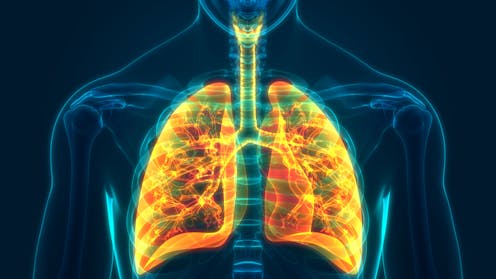
From July, eligible Australians will be screened for lung cancer as part of the nation’s first new cancer screening program for almost 20 years.
The program aims to detect lung cancer early, before symptoms emerge and cancer spreads. This early detection and treatment is predicted to save lives.
Why lung cancer?
Lung cancer is Australia’s fifth most diagnosed cancer but causes the greatest number of cancer deaths.
It’s more common in Aboriginal and Torres Strait Islander people, rural and remote Australians, and lower income groups than in the general population.
Overall, less than one in five patients with lung cancer will survive five years. But for those diagnosed when the cancer is small and has not spread, two-thirds of people survive five years.
Who is eligible?
The lung cancer screening program only targets people at higher risk of lung cancer, based on their smoking history and their age. This is different to a population-wide screening program, such as screening for bowel cancer, which is based on age alone.
The lung cancer program screens people 50-70 years old with no signs or symptoms of lung cancer such as breathlessness, a persisting cough, coughing up blood, chest pain, becoming very tired or losing weight.
To be eligible, current smokers must also have a history of at least 30 “pack years”. To calculate this you multiply the number of packets (of 20 cigarettes) you smoke a day by the number of years you’ve been smoking them.
For instance, if you smoke one packet (20 cigarettes) a day for a year that is one pack year. Smoking two packets a day for six months (half a year) is also a pack year.
People who have quit smoking in the past ten years but have accumulated 30 or more pack years before quitting are also eligible.

What does screening involve?
Ask your GP or health worker if you are eligible. If you are, you will be referred for a low-dose computed tomography (CT) scan. This uses much lower doses of x-rays than a regular CT but is enough to find nodules in the lung. These are small lumps which could be clumps of cancer cells, inflammatory cells or scarring from old infections.
Imaging involves lying on a table for 10-15 minutes while the scanner takes images of your chest. So people must also be able to lie flat in a scanner to be part of the program.
After the scan, the results are sent to you, your GP and the National Cancer Screening Register. You’ll be contacted if the scan is normal and will then be reminded in two years’ time to screen again.
If your scan has findings that need to be followed, you will be sent back to your GP who may arrange a further scan in three to 12 months.
If lung cancer is suspected, you will be referred to a lung specialist for further tests.
What are the benefits and risks?
International trials show screening people at high risk of lung cancer reduces their chance of dying prematurely from it, and the benefits outweigh any harm.
The aim is to save lives by increasing the detection of stage 1 disease (a small cancer, 4 centimetres or less, confined to the lung), which has a greater chance of being treated successfully.
The risks of radiation exposure are minimised by using low-dose CT screening.
The other greatest risk is a false positive. This is where the imaging suggests cancer, but further tests rule it out. This varies across studies from almost one in ten to one in two of those having their first scan. If imaging suggests cancer, this usually requires a repeat scan. But about one in 100 of those whose imaging suggests cancer but were later found not to have it have invasive biopsies. This involves taking a sample of the nodule to see if it contains cancerous cells.
Some people will be diagnosed with a cancer that will never cause a problem in their lifetime, for instance because it is slow growing or they are likely to die of other illnesses first. This so-called overdiagnosis varies from none to two-thirds of lung cancers diagnosed, depending on the study.

How much will it cost?
The Australian government has earmarked A$264 million over four years to screen for lung cancer, and $101 million a year after that.
The initial GP consultation will be free if your GP bulk bills, or if not you may be charged an out-of-pocket fee for the consultation. This may be a barrier to the uptake of screening. Subsequent investigations and consultations will be billed as usual.
There will be no cost for the low-dose CT scans.
What should I do?
If you are 50-70 and a heavy smoker see your GP about screening for lung cancer. But the greater gain in terms of reducing your risk of lung cancer is to also give up smoking.
If you’ve already given up smoking, you’ve already reduced your risk of lung cancer. However, since lung cancer can take several years to develop or show on a CT scan, see your GP if you were once a heavy smoker but have quit in the past ten years to see if you are eligible for screening.
This is the first article in our ‘Finding lung cancer’ series, which explores Australia’s first new cancer screening program in almost 20 years.
More information about the program is available. If you need support to quit smoking, call Quitline on 13 78 48.
Authors: Ian Olver, Adjunct Professsor, School of Psychology, Faculty of Health and Medical Sciences, University of Adelaide


















