

How we plan for animals in emergencies
- Written by: Ashleigh Best, PhD Candidate in Law, University of Melbourne
Animals are desperately vulnerable to natural disasters. An estimated 350 koalas have died during catastrophic bushfire conditions across eastern Australia and reports of injured animals continue to pour in.
It’s not just wildlife at risk. February’s Townsville floods claimed the lives of some 600,000 cattle. People are often injured while attempting to rescue pets, and the thought of leaving a dependent animal to face fire alone is devastating.
Read more: Drought and climate change were the kindling, and now the east coast is ablaze
The good news is there are already disaster management plans for animals in some states in Australia. Knowing about these plans can help you reduce the risk to your loved ones – human and otherwise.
Know your state’s rules
Since the 2009 Royal Commission into Victorian bushfires, New South Wales, Victoria, Western Australia and South Australia have adopted animal welfare plans for pets, livestock and wildlife.
Animal disaster management plans try to anticipate how the needs of animals will be managed in the event of a disaster. They assign roles to government agencies and non-government organisations to administer relief for animals.
During a disaster, however, animal owners remain responsible for them. A legal duty of care remains, although what that demands obviously changes during an emergency.
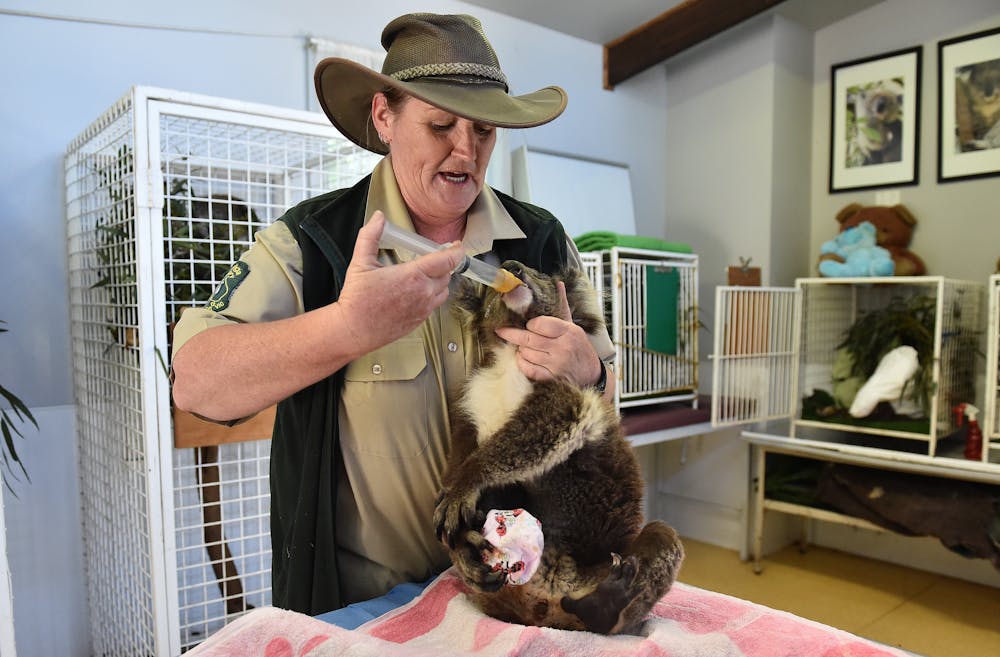 Koalas are extremely vulnerable to fast-moving bushfires, and hundreds have died in recent fires. Survivors are often dehydrated or burned, requiring some care.
AAP Image/Julian Smith
Koalas are extremely vulnerable to fast-moving bushfires, and hundreds have died in recent fires. Survivors are often dehydrated or burned, requiring some care.
AAP Image/Julian Smith
What about pets?
In NSW, people are advised to keep their pets with them in an emergency. Contained animals, such as dogs on a leash or cats in a carrier, may be taken to “animal friendly” evacuation centres.
Likewise, the Victorian plan directs councils either to ensure evacuation centres are equipped for animals or to advise people of alternative arrangements.
Unfortunately, SA and WA do not allow pets in evacuation centres (with the exception of assistance animals), meaning they must be housed outside or at a different location. Animal management plans in these states cite fairly vague “health and safety” reasons for the exclusion.
If you’re at any risk of future evacuation it’s vital you check whether your nearest relief centre can accommodate your pet. Even if you’re planning to stay with friends or family, unexpected circumstances may force you to spend some time at a relief centre.
Your disaster kit should contain pet food, registration and vaccination details, bedding, and any other equipment and medicine. You should also have a recent photo of your animal on your phone or printed out (puppy photos will not be useful in tracking down your adult dog).
State guidelines also urge pet owners to make sure your animals are properly vaccinated, microchipped, and wearing identification tags. Local councils, veterinarians, the RSPCA and Animal Welfare League are often designated points of contact when companion animals become lost in a disaster.
 You need to know whether your local evacuation shelter will accept your pet, even if you’re not planning to go there.
AAP Image/Rob Blakers
You need to know whether your local evacuation shelter will accept your pet, even if you’re not planning to go there.
AAP Image/Rob Blakers
Livestock and horses
Livestock and large companion animals are obviously harder to manage than small pets. Disaster management guidelines recommend contacting relocation sites well before an emergency happens to arrange accommodation, and ensuring you have access to suitable transport ahead of time.
If you are unable to make advance arrangements – or if your plans have been disrupted – you can generally take large animals, such as horses, to your local evacuation centre for advice on your options.
If your animals cannot be moved off your property, the guidelines call for owners to move the animals to a low-risk area stocked with food and water for several days. Even if you plan to evacuate your horses or livestock, it’s a good idea to identify a suitable spot just in case.
Planning and guidance documents also stress that horses should be microchipped. The National Livestock Identification System may be used to track certain agricultural animals. They also arrange the distribution of emergency fodder following disasters.
Wildlife
Wild animals face unique challenges in disasters. They cannot be systematically evacuated and are highly dependent on natural habitat for their survival.
 After fires pass, wildlife rescue services apply first aid and care as they can. Wild animals depend on pre-planning, such as the creation of safe corridors for travel.
AAP Image/Adelaide Zoo, Minnie McCreanor
After fires pass, wildlife rescue services apply first aid and care as they can. Wild animals depend on pre-planning, such as the creation of safe corridors for travel.
AAP Image/Adelaide Zoo, Minnie McCreanor
Animal emergency plans and guidance therefore tend to focus on providing relief to wild animals affected by disaster, relying on the contribution of charitable organisations.
The NSW plan identifies several partner wildlife rescue organisations, including WIRES, which is the state’s principal avenue for reporting injured wildlife. In SA, animal welfare organisations also lead relief efforts, whereas in Victoria, the government coordinates rescue and triage actions with support from volunteers.
In addition to relief services, holistic planning requires measures for preserving habitat and wildlife corridors. These reduce the risk of animal populations becoming isolated, and improve the availability of viable alternative habitat.
Read more: Bushfires can make kids scared and anxious: here are 5 steps to help them cope
While some states have made good progress, every jurisdiction needs clear processes for managing animal welfare during emergencies. As our fire season continues, make sure you’re familiar with your state or territory and local council animal welfare plans.
Authors: Ashleigh Best, PhD Candidate in Law, University of Melbourne
Read more http://theconversation.com/how-we-plan-for-animals-in-emergencies-126936


















