

the medevac repeal and what it means for asylum seekers on Manus Island and Nauru
- Written by: Alex Reilly, Director of the Public Law and Policy Research Unit, Adelaide Law School, University of Adelaide
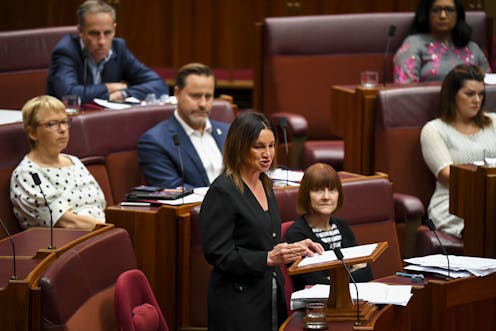
After much negotiation, the government has secured the repeal of the medical evacuation law – known as “medevac” – after making a secret deal with Senate cross-bencher Jacqui Lambie.
So what does this mean for those held in offshore detention?
Understanding the numbers
The number of refugees and asylum seekers in Nauru and Manus Island peaked at 2,450 in April 2014 (1,273 on Manus and 1,177 on Nauru) and has been dropping ever since. As of this week, about 466 asylum-seekers and refugees remain offshore – 208 on Papua New Guinea and 258 on Nauru.
Of the nearly 2,000 who are no longer in offshore detention, 632 have been transferred to the United States, 17 died in detention, mainly due to suicide, several hundred have been deported after their claims had been rejected, or after returning “voluntarily” with financial assistance from the Australian government. Of these returnees, 33 have been reported dead.
Read more: Explainer: how will the 'medevac' bill actually affect ill asylum seekers?
In addition, the majority of those who are no longer on Nauru and PNG have been transferred to Australia for medical treatment. Prior to the Medevac law, 1,246 people had been transferred to Australia for medical reasons, including accompanying family. “Less than a handful” of these were returned to Nauru or PNG. The most recent return was on April 15 2018.
The number of medical transfers jumped dramatically from 2017-18, when there were 35 transfers, to 461 from July 2018 to the passing of the medevac law in February 2019. Since then, a further 288 were transferred under the earlier system of approvals.
According to Senates Estimates, between March 2 2019 when Medevac became law, and October 21 2019, 135 refugees and asylum seekers from Nauru and PNG have been transferred for emergency medical treatment under this process.
Why has there been such a focus on medevac?
The primary failure of the policy of removing asylum seekers to Nauru and PNG for processing has been the inability to find permanent resettlement options for those who are found to be refugees under the UN Convention.
Having ruled out resettlement in Australia, the government has scrambled to find other countries to take in the asylum seekers. In 2016, then-Prime Minister Malcolm Turnbull was fortunate to find President Barack Obama open to a resettlement arrangement, which he subsequently convinced Donald Trump to honour.
But this has been the only option on the table. There was an aborted deal with Cambodia, and a small number have been resettled in Canada through private sponsorship. The government inexplicably refused an offer from New Zealand to resettle 150 refugees each year, concerned they could then enter Australia via New Zealand.
With limited prospects for resettlement, and the mental health of those on Nauru and PNG always vulnerable and quickly deteriorating, medical transfers have been an important strategy. The increasing number of people transferred for medical reasons is a result of the escalating medical emergency.
Prior to medevac, transfers were at the discretion of the minister. When the minister refused a medical transfer to Australia, people were forced to challenge the exercise of the minister’s discretion in the courts.
After protracted legal actions, Australian courts routinely ordered the minister to transfer people for urgent medical treatment to fulfil Australia’s duty of care to people in offshore places. Medevac replaced this cumbersome process with a medical assessment by two doctors that was reviewed by an independent health advice panel. The minister maintained the power to refuse a transfer on security grounds.
Read more: Grattan on Friday: What does “reopening” Christmas Island actually mean and why do it?
Now that the medevac law has been repealed, people will once again rely on ministerial discretion for a medical transfer. One would expect that most, if not all, of those remaining on Nauru and PNG will eventually make an application for a transfer. This is because spending up to six years in these places with limited facilities, and an indefinite timeframe for their detention, will eventually undermine the mental health of even the most robust of those who remain.
Recent figures released by the Department of Home Affairs suggest there are currently 418 applications for a transfer out of the remaining 466 people remaining offshore.
The tragedy is that these applications will not be assessed on purely medical grounds, and are likely to be long and protracted.
Repeal of medevac and the end game for offshore detention
The government’s repeal of the medevac law will do little more than delay transfers of the last remaining refugees held offshore. We may never know the conversations between the government and Jacqui Lambie, but perhaps she was persuaded that there was value in the government maintaining its uncompromising line on asylum seekers arriving by boat, while medical transfers continue unabated.
The majority of those now in Australia as a result of a medical transfer live in community detention, while they access medical treatment. In time, the only realistic option is to grant these people a visa to stay in Australia. This should happen quietly, while the government maintains its firm but unrealistic line of no one ever being resettled in Australia.
These people can then become part of the Australian community, adults can find work, children can go to school. If this happens, there will be no resumption of boats arriving from Indonesia, and we can be rid of the blight of offshore detention.
Authors: Alex Reilly, Director of the Public Law and Policy Research Unit, Adelaide Law School, University of Adelaide


















