

Work is a fundamental part of being human. Robots won't stop us doing it
- Written by: Jean-Philippe Deranty, Professor, Macquarie University
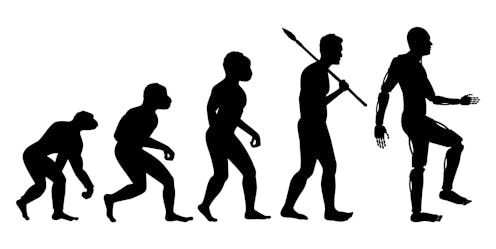
Hardly a week goes by without a report announcing the end of work as we know it.
In 2013, Oxford University academics Carl Frey and Michael Osborne were the first to capture this anxiety in a paper titled: “The Future of Employment: How susceptible are jobs to computerisation?”.
They concluded 47% of US jobs were threatened by automation. Since then, Frey has taken multiple opportunities to repeat his predictions of major labour market disruptions due to automation.
In the face of threats to employment, some progressive thinkers advocate jettisoning our work ethic and building a world without work.
If machines can do our work, why not reduce the working week drastically? We should be mature enough to decide what truly matters to us, without tying our identity to a job, or measuring happiness in dollars and professional status. Right?
Not quite.
The reality is that work is tied to our constitution as a species. And this fact is too often overlooked in discussions about the future of work.
Work is a feature of the human species
Recent studies have raised alarms that advances in automation and artificial intelligence (AI) will leave all sectors open to the threat of machines replacing human workers.
The power of AI will supposedly, according to these studies, even make high-skilled specialists redundant - threatening medical practitioners, bank associates, and legal professionals.
Read more: The benefits of job automation are not likely to be shared equally
Predictions about the rise of the robots either take a pessimistic stance, focusing on disruptions to economic organisations, or view “undoing work” as an opportunity to move to a fairer social model.
However, these views disregard the central role work has played in humanity’s development.
Working on environments
Philosophers including Karl Marx, Henri Bergson, and John Dewey argued that working is a defining trait of humans.
Findings over the past two decades have confirmed that features of modern Homo sapiens are directly tied to their tendency to work.
Three basic ideas of the old philosophers are reaffirmed by contemporary research in archaeology, anthropology and genetics.
First, humans haven’t evolved to fit into their environments as seamlessly as other animals. Humans have had to compensate for a lack of fit.
They did this by learning about the ecosystems around them, the plants and animals they could eat, and the natural processes they could use, or should avoid. This knowledge was applied to create instruments, tools and weapons.
Read more: Resume robot wars: how employees could match employers' use of tech in job applications
Very early on, humans mobilised their knowledge and skills to shape their immediate surroundings and become the dominant animal.
Knowledge of nature, technical skills and intervention in the environment are all characteristics of humans’ capacity to work. These allowed us to adapt to highly diverse geographies and climates.
Working on ourselves, and with others
Each new generation has to learn the skills and knowledge that will enable it to sustain its particular mode of survival.
Australian philosopher Kim Sterelny has shown in detail how evolution selected genetic traits that sustain humans’ capacity to learn, specifically by enhancing social behaviour and tolerance towards the young.
And as humans worked on nature, they also worked in ways that influenced their minds, and their bodies.
It has been demonstrated that cooperation in humans reaches a level unknown in other species. This cooperative capacity has its roots in each individual’s dependency on the knowledge, skills and efforts of others.
No human is able to sustain themself on their own, and collaboration exceeds what each person can produce alone. Even the most brilliant astrophysicist calls the plumber to fix a broken toilet.
Humans have to work to survive, and this entails working with, and for, others.
The future of work
Acknowledging the anthropological depth of work means admitting current scenarios advocating “the end of work” are not the right answer. They take an unrealistic view of who we are.
We need to recognise work as a human need. As Marx said:
… labour has become not only a means of life, but life’s prime want.
The question should not be whether there’s room for human work in an automated future. The question should be: how will human work find its place next to machines and robots?
Even if automation becomes widespread, we’ll still apply our minds, bodies and hands to productive tasks. We’ll still experiment and learn from others.
If machines could truly do all human work, then they’d make humans redundant, as 2001: A Space Odyssey anticipated back in 1968. While this isn’t a pleasant scenario, it’s not a likely one either.
Automation might bring major social and economic disruptions in the short-term, but it won’t get rid of the need for humans to work.
Read more: Don’t be alarmed: AI won’t leave half the world unemployed
Human needs are also infinitely complex. Nobody can foretell what new activities, techniques, and consequent modes of working will fulfil future needs.
Even if we reject the modern work ethic, we’ll still find ways to learn through action and emulate experts.
Human intelligence is geared towards producing useful goods, so we’ll continue to look for purposeful activities, too. And we’ll seek collaboration with others for mutual benefit.
This is the influence of work on us. We are heir to thousands of years of evolution, and it would be pretentious to assume evolution could stop with us.
Authors: Jean-Philippe Deranty, Professor, Macquarie University


















