

If parents designed the new ‘Thriving Kids’ program, it’d look like this
- Written by: Catherine Smith, Senior Lecturer of Wellbeing Science, The University of Melbourne
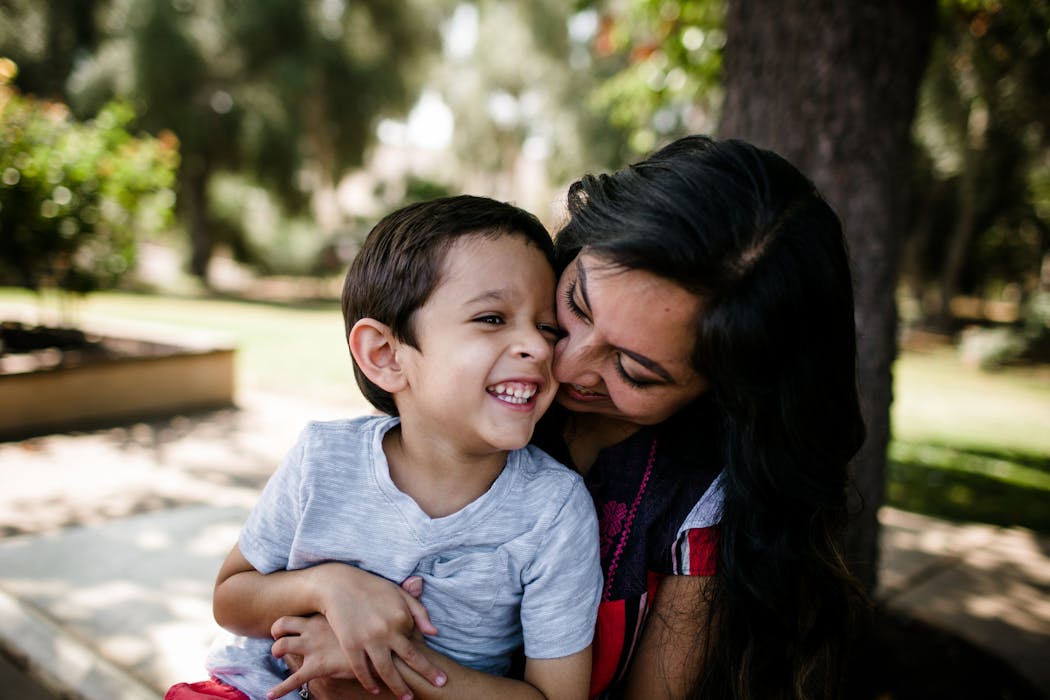
Thriving Kids is a planned national program for children aged eight and under with developmental delay or autism who are assessed as having low to moderate support needs.
The idea is to move these children out of the National Disability Insurance Scheme (NDIS) and into the new program, with its first services expected from July 2026.
The final design of the program, which is to receive A$2 billion in Commonwealth funding over five years, is still being settled with states and territories.
Now a new survey shows parents and carers have strong ideas about how to design Thriving Kids to make it successful.
We asked parents and carers
Many parents and carers of children with disability and the broader disability community have been critical of the Thriving Kids announcement. Some feared that by moving out of the NDIS and into the new program children might lose out on important supports at a crucial point in their development.
A week after Thriving Kids was announced in August 2025, Children and Young People with Disability Australia, the peak organisation representing the rights and interests of children and young people with disability, conducted a national online survey.
The survey asked what supports families use now, what they’d need under Thriving Kids, how often they’d use them, and how they feel about the proposal. We analysed and helped interpret the results.
There were 1,535 responses. This article focuses on the 1,235 responses from children and young people, and their parents and carers.
Of these, 91% were parents or carers, most caring for a child aged nine or under. Among those who identified their disability, 81% reported autism and 60% ADHD (attention-deficit hyperactivity disorder), often together.
Here’s what respondents told us.
1. Families want continuity and clear guarantees
Respondents asked for protection that no child would be worse off by moving to Thriving Kids. They wanted a single point of access and little red tape. They also wanted to keep trusted clinicians through the transitions between Thriving Kids and the NDIS. As one parent said:
my kids will [lose] vital people they have taken a long […] time [to] get to know. They […] trust them and actually help our children.
So Thriving Kids needs to put “no‑worse‑off” protections in writing, and keep current clinicians where relationships are working. The pathway beyond age nine needs to be explicit and seamless.
2. Design it with lived experience
Families were clear that language and process matter, and that people with disability must shape the program from the start, not be consulted after the fact. One person said:
The program is not evidence based and not co-designed with families. Shouldn’t we get a right to say what supports suit our children?
That means co‑designing Thriving Kids with people with lived experience of disability and their families and carers – in governance, safeguards and evaluation, not just in messaging.
3. Supports must be neuro‑affirming
Respondents asked for help that respects neurodivergent ways of being and avoids approaches that teach masking or “passing” as neurotypical. Many carers don’t want autistic children to attend therapies and groups based on a contested approach called “applied behaviour analysis”. One parent said:
I don’t want her disability to be ‘trained out of her’ or encourage masking.
So Thriving Kids needs to publish guardrails that exclude approaches that push for conformity to neurotypical standards.
4. A broad mix across flexible settings works best
Core allied health sits at the heart of what people asked for – occupational therapy, speech pathology, psychology and physiotherapy. They also asked for peer networks, parenting programs, skills groups, assistive technology and support for children who cannot attend school (known as school-can’t responses).
Families want these delivered where children live and learn. As one parent said:
Teachers need a better education program for handling kids with disabilities. I waste [NDIS] funding educating teachers on how to handle autistic children and how not to become part of the problem.
So Thriving Kids needs a broad, flexible menu of supports that help children participate and feel safe – at home, in early learning, at school and in the community.
That includes embedding allied health in early learning and schools to coach staff and adjust environments, while preserving one‑to‑one therapy and out‑of‑school options for home‑schoolers and students unable to attend.
5. Resource for equity
There is less access to supports and services in regional and remote areas and for First Nations, multicultural and LGBTIQA+ families. Waiting lists are long, travel is costly and choice is thin.
One parent said:
In the country, the therapists don’t exist to embed anywhere.
Families from culturally and linguistically diverse backgrounds also asked for interpreters, translated plain-language materials, and options to choose the gender of their clinician.
So Thriving Kids needs to commission services in regional areas, with outreach and telehealth. It needs to invest in culturally safe models, including interpreters and bilingual clinicians. It also needs to train and support schools without shifting costs to families.
What next?
If Thriving Kids delivers on these priorities, it could potentially improve services for children with disability and their families.
If it doesn’t, families will be left to navigate yet another complex system while needs go unmet.
Families, children and young people told us, with striking consistency, what would help. The task now is to build Thriving Kids with them and to guarantee no child is worse off.
Authors: Catherine Smith, Senior Lecturer of Wellbeing Science, The University of Melbourne


















